Well Water Pressure Suddenly Drops? 11 Common Causes Every Homeowner Should Know
What happens if your well water pressure suddenly drops? Nothing grabs a homeowner’s attention faster than turning on a faucet and noticing that the water pressure has suddenly become weak.
Maybe your shower feels less powerful than usual. Perhaps your sprinkler system isn’t reaching the lawn properly. Or maybe several fixtures throughout the house seem to be struggling at the same time.
When well water pressure suddenly drops, it’s natural to worry about expensive repairs. The good news is that many pressure problems have straightforward causes that can often be identified before they become major issues.
Understanding how your well system works can help you troubleshoot problems, avoid unnecessary stress, and make smarter decisions about maintaining your property.
The goal isn’t to become a well expert overnight. It’s learning enough to protect your water system and avoid costly surprises.
⭐ Quick Answer: Well Water Pressure Suddenly Drops
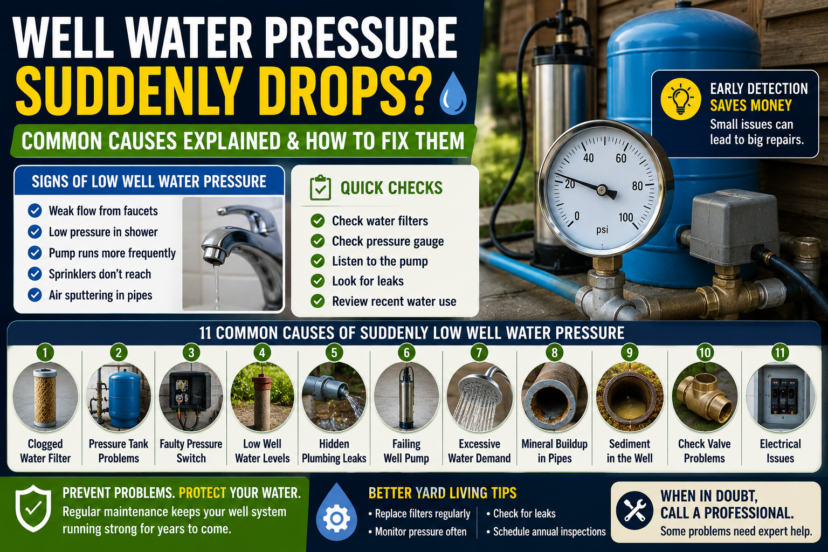
If your well water pressure suddenly drops, the most common causes include a clogged water filter, pressure tank problems, pressure switch issues, leaking pipes, failing well pumps, low well water levels, or excessive water demand.
Start by checking:
- Water filters
- Pressure tank performance
- Pressure switch operation
- Recent plumbing leaks
- Water usage patterns
Many pressure problems can be identified early before they lead to larger repairs.
Key Takeaways
- Most likely cause: A sudden loss of well water pressure is commonly caused by a clogged water filter, pressure tank or pressure switch problems, a plumbing leak, a failing well pump, or a temporary drop in well water levels.
- Usually serious? Not usually. Many pressure issues are minor and can be corrected with routine maintenance, but persistent or worsening pressure loss may indicate a failing pump or another component that needs professional service.
- First thing to check: Inspect the water filter, verify the pressure tank and pressure switch are operating correctly, look for plumbing leaks, and consider whether recent high water usage could be affecting the system.
- Best solution: If your well water pressure suddenly drops, replace clogged filters, repair leaks, test the pressure tank and switch, reduce excessive water demand, and have the well pump inspected if pressure does not return to normal.
🚰 How A Typical Well Water System Works
Before troubleshooting, it helps to understand the basics.
Most residential well systems include:
- The well itself
- A submersible or jet pump
- A pressure tank
- A pressure switch
- Water filters or treatment systems
- Household plumbing
These components work together to deliver consistent water pressure throughout the home.
When one part begins malfunctioning, you may notice that well water pressure suddenly drops throughout the property.
💧 Cause #1: A Clogged Water Filter
This is one of the most common and easiest problems to fix.
Over time, sediment, minerals, and debris can build up inside filters.
As the filter becomes restricted:
- Water flow decreases
- Pressure drops
- Appliances may perform poorly
Signs Of A Clogged Filter
- Gradual pressure reduction
- Better pressure after bypassing the filter
- Visible sediment buildup
What Helps
Replace filters according to manufacturer recommendations.
Many homeowners discover that a simple filter replacement solves the problem immediately.
🔧 Cause #2: Pressure Tank Problems
The pressure tank stores water and helps maintain consistent pressure.
When problems develop, pressure may fluctuate or drop unexpectedly.
Common issues include:
- Waterlogged tanks
- Air charge loss
- Internal bladder damage
Warning Signs
- Pump cycles frequently
- Pressure fluctuates rapidly
- Water pressure drops suddenly
Pressure tank issues are common in aging well systems.
⚡ Cause #3: A Faulty Pressure Switch
The pressure switch tells the pump when to start and stop.
If the switch malfunctions, water pressure may become inconsistent.
Symptoms may include:
- Pump not turning on
- Pressure staying low
- Intermittent water service
What To Check
- Visible corrosion
- Burned contacts
- Loose wiring
Always use caution around electrical components.
🌊 Cause #4: Low Well Water Levels
In some regions, seasonal conditions affect groundwater availability.
Drought conditions can sometimes contribute to situations where well water pressure suddenly drops.
This is more common in:
- Rural areas
- Drought-prone regions
- Shallow wells
Possible Signs
- Pressure decreases after heavy water use
- Pressure improves after resting
- Seasonal patterns
Groundwater conditions vary widely across the United States.
🏡 Cause #5: Hidden Plumbing Leaks
A leak anywhere in the plumbing system can reduce pressure.
Leaks may occur:
- Underground
- Inside walls
- Near outdoor hydrants
- Around irrigation systems
Clues To Look For
- Wet spots in the yard
- Unexpected water usage
- Sounds of running water
- Damp areas indoors
Even small leaks can affect overall system performance.
🔩 Cause #6: Failing Well Pump
The well pump is the heart of the system.
As pumps age, performance may decline.
Common warning signs include:
- Reduced pressure
- Strange noises
- Frequent cycling
- Inconsistent water delivery
Typical Lifespan
Many well pumps last:
- 8–15 years
- Sometimes longer with proper maintenance
A professional evaluation may be needed if pump failure is suspected.
🚿 Cause #7: Excessive Household Water Demand
Sometimes the system is working properly, but demand exceeds capacity.
Examples include:
- Irrigation systems
- Multiple showers
- Laundry equipment
- Outdoor water use
High demand can temporarily reduce pressure throughout the home.
Better Yard Living Tip
Schedule irrigation during off-peak household usage times.
This can improve both comfort and system performance.
🌱 Cause #8: Mineral Buildup In Pipes
Hard water can gradually create restrictions inside plumbing.
Mineral deposits may reduce flow over time.
Common signs include:
- Reduced pressure at certain fixtures
- White mineral deposits
- Older plumbing systems
Hard water is especially common in certain regions of the United States.
🌧️ Cause #9: Sediment In The Well
Sediment can interfere with system performance.
Potential issues include:
- Filter clogging
- Pump wear
- Flow restrictions
If sediment levels increase suddenly, professional inspection may be warranted.
🔍 Cause #10: Check Valve Problems
The check valve prevents water from flowing backward into the well.
A failing valve may cause:
- Pressure loss
- Frequent pump cycling
- Inconsistent performance
This issue often requires professional diagnosis.
⚠️ Cause #11: Electrical Issues
Electrical problems can affect pump performance.
Possible causes include:
- Power fluctuations
- Wiring issues
- Breaker problems
- Control box failures
Electrical components should be evaluated carefully and safely.
🌿 Better Yard Living Strategies For Well System Health
Preventive maintenance is often the smartest investment.
Simple Habits That Help
- Replace filters regularly
- Monitor water pressure
- Inspect for leaks
- Protect well components
- Maintain accurate service records
- Schedule inspections when needed
Small maintenance tasks often prevent larger repairs later.
🌎 Why Early Action Matters
Ignoring pressure issues can lead to:
- Pump damage
- Increased repair costs
- Water interruptions
- Reduced appliance performance
Addressing problems early often saves both money and frustration.
The sooner you investigate when the well water pressure suddenly drops, the easier the solution may be.
🌟 Benefits Of Maintaining Healthy Well Pressure
A properly functioning system provides:
- Better showers
- More effective irrigation
- Improved appliance performance
- Lower repair costs
- Greater homeowner confidence
Reliable water service contributes to a more enjoyable and stress-free property.
👷 When To Consult A Professional
Contact a licensed well contractor, installer, or pump specialist if you experience:
- No water service
- Repeated pressure loss
- Electrical concerns
- Pump failure symptoms
- Sediment problems
- Low well recovery rates
Professional testing can quickly identify issues that are difficult to diagnose without specialized equipment.
FAQs: Well Water Pressure Suddenly Drops
Why did my well water pressure suddenly drop overnight?
Common causes include clogged filters, pressure switch issues, pressure tank problems, leaks, or pump-related concerns.
Can a dirty water filter reduce pressure?
Yes. A clogged filter is one of the most common causes of low well water pressure.
How do I know if my pressure tank is failing?
Frequent pump cycling, pressure fluctuations, and inconsistent water flow are common warning signs.
Can drought affect well water pressure?
In some areas, drought-driven declines in groundwater levels can affect well performance and water pressure.
How long does a well pump usually last?
Many well pumps last between 8 and 15 years, although their lifespan varies based on usage and conditions.
Can a plumbing leak reduce water pressure?
Absolutely. Even small leaks can affect pressure throughout the system.
Should I call a professional immediately?
If pressure loss is severe, recurring, or accompanied by pump or electrical issues, professional evaluation is recommended.
🎯 Final Thoughts on Well Water Pressure Suddenly Drops
When well water pressure suddenly drops, it’s easy to assume the worst.
Fortunately, many pressure problems result from issues that are relatively straightforward to identify and address.
Whether the cause is a clogged filter, pressure tank issue, plumbing leak, or seasonal water conditions, understanding the basics helps homeowners make smarter decisions and avoid unnecessary stress.
The goal isn’t to become a well system expert.
It’s knowing enough to recognize problems early, maintain your system properly, and protect one of the most important resources on your property.
That’s what Better Yard Living is all about—helping homeowners make practical decisions that save money, reduce frustration, and create more reliable, enjoyable properties for years to come.
Disclaimer: This article is for informational purposes only. Well systems, local regulations, groundwater conditions, and electrical requirements vary by location. Consult qualified professionals for inspections, repairs, and system-specific recommendations.
 Explore more:
- Outdoor Fans For Hot And Humid Patios
- Reduce Outdoor Electricity Costs
- Solar Lights That Actually Last Through Rain And Heat