Improve Backyard Drainage Without Expensive Construction: 12 Smart Fixes That Actually Work
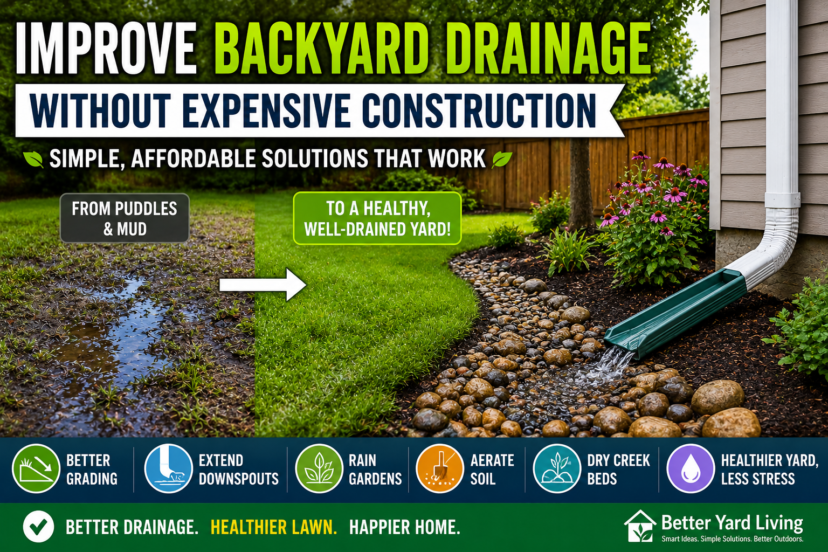
How to improve backyard drainage? Have you ever looked out your back window after a rainstorm and seen puddles covering parts of your yard for days? Many homeowners assume fixing drainage problems requires major excavation, expensive contractors, or thousands of dollars in landscaping work. Fortunately, that’s often not true.
In many cases, you can improve backyard drainage using practical, affordable solutions that work with your property’s natural landscape instead of against it.
A well-drained backyard is easier to maintain, healthier for plants, safer for children and pets, and far more enjoyable throughout the year. Even better, many drainage improvements can be completed over a weekend using basic tools and materials.
The goal isn’t creating a perfect yard. It’s creating a smarter outdoor space that saves time, reduces frustration, and helps protect your property from future problems.
💡 Quick Answer: Improve Backyard Drainage
To improve backyard drainage without expensive construction, start by identifying where water collects and why it stays there.
The most effective low-cost solutions include:
- Filling low spots
- Aerating compacted soil
- Extending downspouts
- Adding compost
- Creating rain gardens
- Installing dry creek beds
- Using water-absorbing plants
- Maintaining drainage paths
Most homeowners can significantly improve drainage without major excavation or professional construction.
Key Takeaways
Most likely cause: Poor backyard drainage is usually caused by compacted soil, low spots, improper grading, clogged drainage paths, or downspouts that discharge water too close to the house.
Usually serious? Not usually. However, unresolved drainage issues can lead to muddy lawns, unhealthy plants, mosquito breeding, soil erosion, and even damage to your home’s foundation over time.
First thing to check: Watch where water collects after a heavy rain, inspect downspouts and drainage paths, and identify areas where puddles remain for more than a day or two.
Best solution: To improve backyard drainage, combine practical solutions such as aerating compacted soil, filling low spots, extending downspouts, adding compost, and installing natural drainage features like rain gardens or dry creek beds.
🌧️ Why Backyard Drainage Matters More Than Most Homeowners Realize
Water is essential for a healthy landscape.
Too much water, however, can create serious issues.
Poor drainage can lead to:
- Dead grass
- Muddy lawns
- Mosquito problems
- Soil erosion
- Plant disease
- Foundation concerns
- Damaged outdoor living spaces
Many drainage problems begin small but become expensive if ignored.
The good news is that learning how to improve backyard drainage early can help prevent these issues while making your yard easier to maintain.
💧 What Causes Poor Backyard Drainage?
Before fixing a drainage issue, it’s important to understand the source.
Compacted Soil
One of the most common causes is compacted soil.
When soil becomes compressed, water cannot easily soak into the ground.
Common causes include:
- Foot traffic
- Lawn equipment
- Heavy clay soils
- Construction activity
Instead of absorbing rainfall, the ground sheds water and creates puddles.
Low Areas In The Landscape
Every yard contains natural high and low points.
Water naturally flows toward low spots.
Even a small depression can collect surprising amounts of water after a storm.
Roof Runoff
Many homeowners overlook how much water comes from their roof.
A typical U.S. home can shed hundreds of gallons during a single rainstorm.
Without proper management, that water often ends up in the backyard.
Poor Grading
If the land slopes improperly, water may collect instead of draining away.
This often contributes to recurring puddles and soggy lawns.
🌱 Method #1: Aerate Your Lawn
Aeration is one of the simplest ways to improve backyard drainage.
Core aeration removes small plugs of soil and creates pathways for water to move deeper into the ground.
Benefits include:
- Improved drainage
- Healthier grassroots
- Better nutrient absorption
- Reduced soil compaction
Many homeowners see noticeable improvements after a single season.
Signs Your Lawn Needs Aeration
- Water puddles after rain
- Hard soil
- Thin grass
- Poor growth
Annual aeration is one of the smartest low-cost yard upgrades available.
🌿 Method #2: Add Organic Matter
Healthy soil absorbs water more efficiently.
Adding organic matter helps loosen compacted soil and improve water infiltration.
Consider:
- Compost
- Shredded leaves
- Aged manure
- Soil conditioners
Over time, soil structure improves naturally.
This approach supports healthier lawns while helping to improve backyard drainage.
🏡 Method #3: Fill Low Spots
Small depressions often create recurring puddles.
The solution is often straightforward.
Use:
- Quality topsoil
- Lawn leveling mix
- Compost blends
Apply gradually to avoid smothering existing grass.
This simple fix often provides immediate improvement.
🚰 Method #4: Extend Downspouts
Roof runoff is frequently responsible for backyard drainage problems.
Many downspouts discharge water too close to the home.
Easy Solutions
- Downspout extensions
- Splash blocks
- Flexible drain tubing
- Rain barrels
Directing water farther from the house can dramatically improve drainage.
🌻 Method #5: Create A Rain Garden
Rain gardens capture and absorb stormwater naturally.
Instead of fighting water, rain gardens put it to work.
Benefits include:
- Reduced runoff
- Improved drainage
- Pollinator habitat
- Attractive landscaping
Popular U.S. rain garden plants include:
- Switchgrass
- Black-eyed Susan
- Joe-Pye Weed
- Purple Coneflower
Rain gardens combine beauty and function.
🌳 Method #6: Use Water-Loving Plants
Some plants naturally absorb significant amounts of moisture.
Strategic planting can help solve wet-area problems.
Examples include:
- River Birch
- Sweetspire
- Dogwood
- Red Maple
- Native grasses
This is one of the most attractive ways to improve backyard drainage.
🏞️ Method #7: Build A Dry Creek Bed
Dry creek beds mimic natural drainage channels.
They guide stormwater through the landscape while adding visual appeal.
Advantages include:
- Low maintenance
- Natural appearance
- Erosion control
- Improved water flow
Many homeowners install them without heavy equipment.
🌎 Method #8: Improve Surface Drainage
Sometimes water simply needs a better path.
Look for areas where runoff becomes trapped.
Simple Improvements
- Remove obstructions
- Create shallow swales
- Maintain drainage routes
- Redirect water flow
Even small adjustments can produce significant results.
🛠️ Method #9: Install A Catch Basin
Catch basins collect surface water and redirect it through drainage pipes.
They are often more affordable than extensive drainage systems.
Best uses include:
- Patio runoff
- Driveway drainage
- Backyard low spots
This solution can prevent repeated pooling after storms.
🌾 Method #10: Use Permeable Materials
Traditional concrete and asphalt prevent water absorption.
Permeable alternatives allow water to soak into the soil.
Examples include:
- Gravel paths
- Permeable pavers
- Crushed stone walkways
These materials reduce runoff while improving drainage.
🔧 Method #11: Keep Gutters And Drains Clean
A clogged drainage system often creates backyard water problems.
Regular maintenance helps prevent issues.
Inspect:
- Gutters
- Downspouts
- Yard drains
- Catch basins
Cleaning debris regularly supports proper water flow.
💡 Method #12: Think Long-Term, Not Just After Storms
The smartest homeowners focus on prevention.
Better Yard Living Drainage Strategy
- Monitor water after rainfall
- Fix small problems early
- Improve soil health annually
- Maintain drainage systems
- Add water-friendly landscaping
Small improvements made consistently often outperform expensive one-time projects.
🌟 Benefits Of Better Backyard Drainage
When you successfully improve backyard drainage, the benefits go far beyond eliminating puddles.
You may enjoy:
- Healthier lawns
- Stronger plants
- Fewer mosquitoes
- Less mud
- Lower maintenance
- Better outdoor usability
- Reduced property risk
A well-drained yard is easier, cleaner, and more enjoyable year-round.
👷 When To Consult A Professional
Some drainage problems require expert evaluation.
Contact a landscaper, drainage contractor, or installer if you notice:
- Water near your foundation
- Recurring flooding
- Severe erosion
- Drainage affecting neighboring properties
- Large areas of standing water
- Persistent wet conditions despite DIY fixes
Professional solutions can protect both your property and investment.
❓ FAQs: Improve Backyard Drainage
What is the cheapest way to improve backyard drainage?
Aerating the lawn, adding compost, filling low spots, and extending downspouts are often the most affordable solutions.
How long should water remain in my backyard after rain?
Most puddles should disappear within 24 to 48 hours. Longer periods usually indicate drainage issues.
Can poor drainage damage my lawn?
Yes. Excess moisture can suffocate grass roots and encourage disease.
Are French drains always necessary?
No. Many homeowners can improve backyard drainage using simpler and less expensive methods first.
Do rain gardens really work?
Yes. Properly designed rain gardens absorb runoff and reduce standing water while enhancing landscaping.
Can clay soil cause drainage problems?
Absolutely. Clay soil drains slowly and is one of the most common causes of water retention.
Will improving drainage increase property value?
It can. Well-managed drainage helps protect landscaping, outdoor living areas, and the home’s foundation.
📌 Final Thoughts
If you’re looking to improve backyard drainage, remember that effective solutions don’t always require expensive construction projects.
Many of the best fixes involve working with your yard’s natural conditions rather than trying to completely redesign the landscape.
Whether you start with aeration, better grading, water-loving plants, or simple downspout extensions, every improvement helps create a healthier, lower-maintenance outdoor space.
That’s what Better Yard Living is all about—helping homeowners make practical improvements that save money, reduce frustration, and create outdoor spaces that are easier and more enjoyable to live with every day.
Disclaimer: This article is for informational purposes only. Drainage regulations, soil conditions, and property requirements vary by location. Always follow local building codes and consult qualified professionals when necessary.
 Explore more: