How To Fix Poor Yard Drainage: 15 Smart Solutions That Don’t Require Digging Up Your Yard
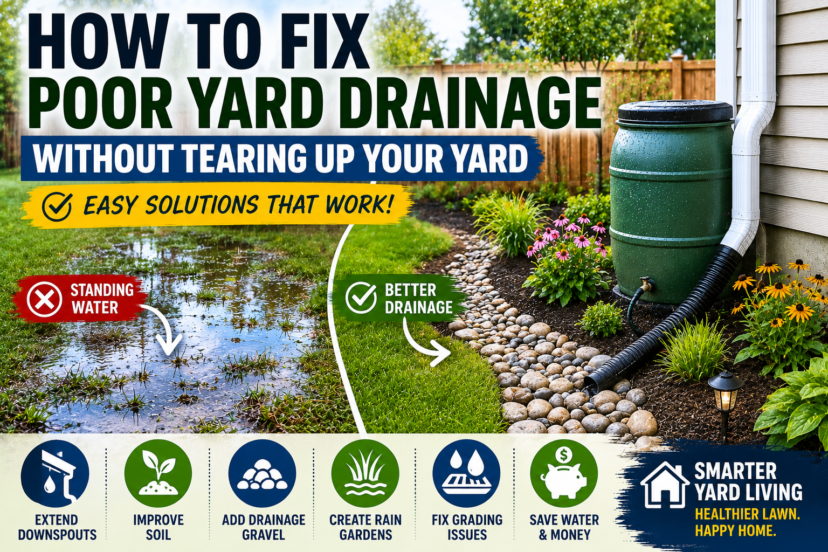
Have you ever walked outside after a rainstorm only to find puddles covering your lawn, muddy walkways, or water collecting near your home’s foundation? Poor drainage is one of the most common backyard frustrations, but it doesn’t always require expensive excavation or a complete landscape makeover. The good news is that learning how to fix poor yard drainage is often easier than homeowners expect. In many cases, a few smart improvements can dramatically reduce standing water, improve lawn health, and protect your property without tearing up your entire yard.
Whether you’re dealing with soggy grass, muddy garden beds, or runoff problems, there are practical solutions that fit almost every budget. The goal is to work with your yard—not against it—to create a cleaner, healthier, and lower-maintenance outdoor space.
💡 Quick Answer: How To Fix Poor Yard Drainage
The easiest way to fix poor yard drainage is to identify where water collects, improve grading where possible, extend downspouts, add drainage gravel, aerate compacted soil, create rain gardens, and install French drains only if simpler methods don’t solve the problem. Many drainage issues can be improved without major excavation.
Key Takeaways
Most likely cause: Compacted soil, poor grading, clay-heavy soil, short downspouts, or low spots that prevent rainwater from draining properly.
Usually serious? Not usually. Most yard drainage problems can be improved with simple, low-cost solutions, but standing water near your home’s foundation or severe erosion should be addressed promptly.
First thing to check: Identify where water collects after rainfall and determine whether the problem is caused by poor grading, compacted soil, clogged drainage paths, or downspouts discharging too close to the house.
Best solution: Start with easy fixes such as extending downspouts, aerating compacted soil, adding drainage gravel, improving soil with compost, and planting deep-rooted vegetation. Consider a French drain only if simpler solutions don’t resolve the problem.
🌧️ Why Poor Yard Drainage Happens
Before choosing a solution, it’s important to understand the cause.
Common reasons include:
- Compacted soil
- Poor grading
- Heavy clay soil
- Low spots in the yard
- Short downspouts
- Blocked drainage paths
- Excessive runoff from neighboring properties
- Overwatering
The right solution depends on identifying the source of the water.
💧 Signs Your Yard Has Drainage Problems
Many drainage issues develop slowly.
Watch for:
- Standing water after rain
- Muddy lawn areas
- Grass is dying in wet spots
- Water near the foundation
- Mosquito activity
- Soil erosion
- Soggy flower beds
- Slippery walkways
Early action helps prevent larger landscaping problems.
🪨 Add Drainage Gravel To Wet Areas
One of the easiest ways to improve drainage is by adding clean drainage gravel.
Best uses include:
- Around downspouts
- Side yards
- Low landscape areas
- Garden borders
- Drainage trenches
Clean crushed stone allows water to move more freely than compacted soil.
🌿 Aerate Compacted Soil
Compacted soil prevents rainwater from soaking into the ground.
Core aeration helps by:
- Loosening soil
- Improving root growth
- Increasing water absorption
- Reducing runoff
Many homeowners benefit from aerating once each year.
🌼 Extend Downspouts Away From Your Home
Short downspouts often dump water directly beside the foundation.
Installing inexpensive downspout extensions helps move water several feet away from the house.
This simple upgrade can dramatically reduce foundation moisture.
🌱 Improve Soil With Organic Matter
Clay-heavy soil drains slowly.
Adding organic material, such as compost helps:
- Improve drainage
- Increase soil structure
- Encourage healthier lawns
- Support deeper root growth
Healthier soil naturally manages water more effectively.
🌸 Create A Rain Garden
Rain gardens capture runoff while improving your landscape.
A typical rain garden includes:
- Native flowers
- Deep-rooted grasses
- Decorative stone
- Moisture-tolerant plants
Rain gardens naturally filter water while reducing standing puddles.
🚿 Redirect Water With A Dry Creek Bed
Dry creek beds offer both beauty and function.
Benefits include:
- Controls runoff
- Prevents erosion
- Adds visual interest
- Requires little maintenance
River rock creates a natural appearance while helping water flow safely across your property.
🏡 Install A French Drain Only If Necessary
Many homeowners think every drainage issue requires a French drain.
In reality, they’re best for:
- Persistent standing water
- Water trapped in low areas
- Foundation drainage
- Heavy clay soils
Try simpler improvements first before investing in larger drainage systems.
🌞 Reduce Watering
Sometimes homeowners unintentionally create drainage problems.
Water smarter by:
- Watering early in the morning
- Using drip irrigation
- Installing rain sensors
- Adjusting sprinkler schedules
Less excess water means healthier lawns.
🌳 Plant More Deep-Rooted Vegetation
Plants naturally help absorb excess moisture.
Good options include:
- Native grasses
- Shrubs
- Trees
- Perennials
- Ground covers
Deep-rooted plants improve soil over time.
🌎 Smart Yard Improvements That Prevent Future Drainage Problems
The best way to fix poor yard drainage is to prevent it from returning.
Helpful long-term improvements include:
- Mulching garden beds
- Cleaning gutters regularly
- Keeping drainage paths clear
- Maintaining healthy soil
- Checking downspouts after storms
- Preventing soil compaction
Small maintenance tasks often prevent costly repairs.
🚫 Common Yard Drainage Mistakes
Avoid these common problems.
Ignoring Small Puddles
Minor drainage issues often become larger over time.
Covering Wet Areas With Soil Alone
Adding soil without improving drainage usually provides only temporary results.
Using Gravel Without Solving The Water Flow
Gravel helps move water, but cannot correct poor grading by itself.
Overwatering Lawns
Too much irrigation creates unnecessary drainage problems.
Waiting Too Long
Addressing drainage early usually costs much less than repairing water damage later.
👷 When To Consult A Professional
Many drainage improvements are DIY-friendly, but consider contacting a landscaper, drainage contractor, or grading specialist if:
- Water reaches your home’s foundation.
- Standing water lasts several days after rain.
- Large sections of the yard require regrading.
- Erosion is damaging retaining walls or landscaping.
- Underground drainage systems need installation.
- You suspect drainage is affecting your septic system.
Professional guidance can prevent costly structural damage.
❓ FAQs: How To Fix Poor Yard Drainage
What is the easiest way to fix poor yard drainage?
Improving downspouts, aerating soil, adding drainage gravel, and filling low spots are among the simplest solutions.
Can I improve drainage without digging up my yard?
Yes. Many homeowners solve drainage issues by improving grading, redirecting runoff, extending downspouts, and improving soil.
Does gravel improve yard drainage?
Yes. Clean crushed stone allows water to flow more easily and works well around downspouts, drainage trenches, and wet landscape areas.
Why does water stay in my yard after rain?
Compacted soil, poor grading, clay soil, blocked drainage paths, or low spots commonly trap water.
Will aerating my lawn improve drainage?
Core aeration can significantly improve water absorption in compacted lawns.
When do I need a French drain?
French drains are helpful when simpler drainage improvements fail or when water repeatedly collects in the same area.
Can poor drainage damage my home?
Yes. Water collecting near foundations may contribute to moisture problems, erosion, or structural concerns over time.
✅ Conclusion
Learning how to fix poor yard drainage doesn’t have to mean hiring heavy equipment or completely redesigning your landscape. Many homeowners can dramatically improve drainage by making a few smart upgrades, such as extending downspouts, improving soil, adding drainage gravel, planting deep-rooted vegetation, and redirecting runoff.
Start with the simplest improvements, monitor how your yard responds after the next rainfall, and continue making gradual upgrades as needed. Every small step creates a healthier lawn, protects your home, and helps you build an outdoor space that’s easier to maintain and more enjoyable throughout the year. That’s what Better Yard Living is all about.
Disclaimer: This article is for informational purposes only. Drainage conditions vary depending on soil type, climate, and local regulations. Always check utility locations before digging and consult a qualified professional for major grading, drainage, or foundation-related work.
 Explore more:
- Cheap Backyard Upgrades: 21 Budget-Friendly Ideas
- Outdoor Lights Not Working After Rain?
- Rainwater Collection Ideas