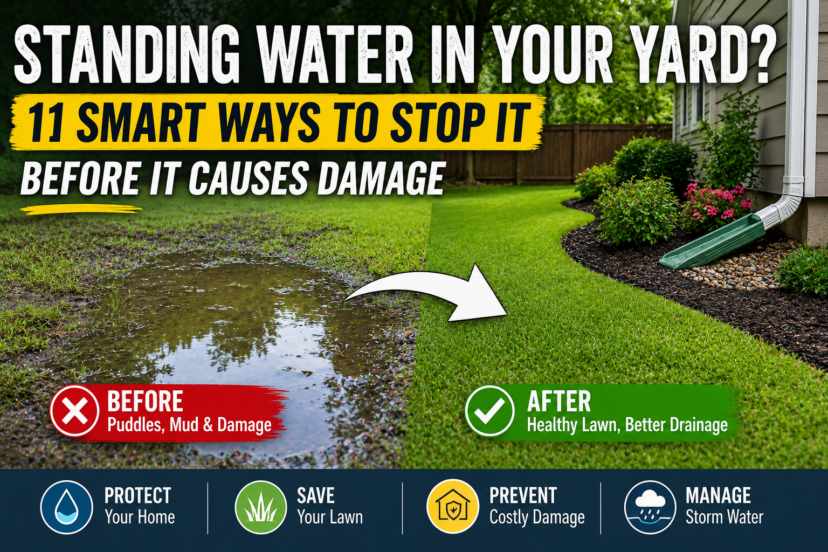
Standing Water In Your Yard: 11 Smart Ways To Stop It Before It Causes Costly Damage
Few things are more frustrating than walking outside after a rainstorm and finding puddles sitting across your lawn for days. At first, it may seem like a minor annoyance. But over time, standing water in your yard can damage grass, kill plants, attract mosquitoes, create muddy areas, and even threaten your home’s foundation.
The good news? You don’t need to be a drainage expert or spend thousands of dollars to solve most water problems. Many homeowners can significantly improve drainage with a few practical changes that make their outdoor spaces healthier, easier to maintain, and more enjoyable year-round.
A smarter yard isn’t just about appearance. It’s about preventing problems before they become expensive repairs while creating an outdoor space that works better after every storm.
💡 Quick Answer: Standing Water In Your Yard
Standing water in your yard is usually caused by poor drainage, compacted soil, low spots, improper grading, clogged drainage systems, or excessive runoff.
The fastest solutions include:
- Filling low areas
- Aerating compacted soil
- Extending downspouts
- Improving grading
- Installing drainage solutions
- Using rain gardens and water-friendly landscaping
Addressing water problems early can help prevent lawn damage, pest issues, and costly property repairs.
Key Takeaways
Most likely cause: Standing water in your yard is most often caused by poor drainage, compacted soil, low spots, improper grading, clogged drainage systems, or excessive runoff after heavy rain.
Usually serious? Not usually. However, if left untreated, standing water can damage your lawn, attract mosquitoes, harm plants, and increase the risk of foundation or drainage problems.
First thing to check: Inspect your yard after rainfall for low areas, compacted soil, clogged drains or downspouts, and places where water remains for more than 24 to 48 hours.
Best solution: Improve drainage by aerating compacted soil, filling low spots, extending downspouts, correcting grading, and installing appropriate drainage features to eliminate standing water and protect your property.
💧 Why Standing Water In Your Yard Is A Problem
Many homeowners assume puddles are harmless.
Unfortunately, water that remains on the surface for more than 24 to 48 hours can create several issues.
Common problems include:
- Mosquito breeding areas
- Lawn disease
- Root rot
- Soil erosion
- Foundation concerns
- Damaged landscaping
- Muddy outdoor spaces
In many parts of the United States, heavy rain events have become more frequent, making proper drainage even more important.
The sooner you address standing water in your yard, the easier and less expensive the solution usually becomes.
🌧️ What Causes Standing Water In Your Yard?
Before fixing the problem, it helps to understand the source.
Low Spots In The Lawn
Small depressions naturally collect water.
These areas may develop over time due to:
- Soil settling
- Tree root decay
- Construction activity
- Natural landscape changes
Even shallow depressions can create persistent puddles.
Compacted Soil
Healthy soil contains air spaces that allow water to move downward.
Compacted soil acts almost like concrete.
Common causes include:
- Frequent foot traffic
- Riding mowers
- Heavy equipment
- Clay-heavy soil
When water cannot penetrate the soil, it stays on the surface.
Poor Yard Grading
A properly graded yard directs water away from structures.
Improper grading can cause water to flow toward:
- Foundations
- Patios
- Walkways
- Landscape beds
This creates both drainage and structural concerns.
Downspout Problems
Many homes discharge roof water too close to the house.
During a storm, a single downspout can release hundreds of gallons of water.
Without proper extensions, water often collects nearby.
🌱 Method #1: Fill Low Areas
One of the easiest solutions for standing water in your yard is correcting low spots.
Small depressions can often be repaired using:
- Quality topsoil
- Compost blends
- Lawn leveling mix
Apply soil gradually and reseed grass as needed.
This simple improvement often produces immediate results.
🌿 Method #2: Aerate Compacted Soil
Aeration creates small holes that allow water, air, and nutrients to reach deeper soil layers.
Benefits include:
- Improved drainage
- Healthier roots
- Better drought resistance
- Stronger grass growth
For many homeowners, annual aeration is one of the most cost-effective lawn improvements available.
Signs You Need Aeration
- Water puddles after rain
- Hard soil
- Thin grass
- Poor lawn growth
Aeration can dramatically reduce standing water in your yard without major landscaping projects.
🏡 Method #3: Improve Yard Grading
Grading determines how water moves across your property.
Ideally, the ground should gently slope away from the house.
Smart Grading Tips
- Build a gradual slope
- Avoid abrupt drops
- Protect existing drainage paths
- Check grading after landscaping projects
Proper grading protects both your lawn and your home’s foundation.
🚰 Method #4: Extend Your Downspouts
This is one of the most overlooked drainage fixes.
Water should discharge several feet away from the foundation whenever possible.
Options include:
- Downspout extensions
- Splash blocks
- Underground drain pipes
- Rain barrels
Many homeowners solve significant drainage problems with this simple upgrade alone.
🌻 Method #5: Install A Rain Garden
A rain garden is a landscaped area designed to absorb excess water naturally.
Benefits include:
- Reduced runoff
- Improved drainage
- Attractive landscaping
- Support for pollinators
Popular U.S. rain garden plants include:
- Black-eyed Susan
- Switchgrass
- Purple Coneflower
- Blue Flag Iris
Rain gardens transform problem areas into useful landscape features.
🛠️ Method #6: Install A French Drain
A French drain is one of the most effective long-term solutions for severe drainage issues.
It consists of:
- A gravel-filled trench
- Perforated pipe
- Fabric barrier
The system captures and redirects water away from trouble spots.
Best For
- Chronic puddles
- Heavy clay soil
- Water near foundations
- Sloped properties
🌳 Method #7: Add Water-Friendly Landscaping
Certain plants naturally absorb large amounts of water.
Examples include:
- River Birch
- Red Twig Dogwood
- Joe-Pye Weed
- Sweetspire
- Native grasses
Strategic planting can reduce standing water while improving curb appeal.
🏞️ Method #8: Create A Dry Creek Bed
Dry creek beds provide both drainage and visual interest.
Benefits include:
- Directing stormwater
- Preventing erosion
- Lower maintenance
- Natural appearance
They work especially well in larger yards with recurring runoff problems.
🌎 Method #9: Improve Soil Health
Healthy soil absorbs water more efficiently.
Add:
- Compost
- Organic matter
- Mulched leaves
- Natural soil amendments
Over time, soil structure improves and drainage becomes more effective.
This approach supports a smarter, lower-maintenance yard.
🔧 Method #10: Keep Drainage Systems Clean
Clogged drainage systems often contribute to standing water in your yard.
Regularly inspect:
- Yard drains
- Catch basins
- Gutters
- Downspouts
- Drainage pipes
A few minutes of maintenance can prevent major drainage issues later.
💡 Method #11: Prevent Future Water Problems
The smartest homeowners focus on prevention.
Better Yard Living Strategies
- Inspect drainage after storms
- Remove debris regularly
- Aerate annually
- Maintain proper grading
- Upgrade drainage before problems worsen
- Use water-friendly landscaping
Small actions today often prevent expensive repairs tomorrow.
👷 When To Consult A Professional
Some drainage issues require expert help.
Contact a landscaper, drainage contractor, or installer if you notice:
- Water near your foundation
- Flooding after every storm
- Severe erosion
- Large areas of standing water
- Drainage problems affecting neighboring properties
- Recurring water issues despite DIY efforts
Professional solutions can protect your property and increase long-term value.
❓ FAQs: Standing Water In Your Yard
How long should standing water stay in a yard?
Most puddles should disappear within 24 to 48 hours. Longer periods usually indicate drainage problems.
Can standing water damage my lawn?
Yes. Excess moisture can suffocate grass roots and promote disease.
Does standing water attract mosquitoes?
Absolutely. Mosquitoes can breed in water that remains for several days.
Is clay soil responsible for drainage issues?
Often, yes. Clay soil drains slowly and commonly contributes to standing water.
Can aeration help with standing water problems?
Yes. Aeration improves water infiltration and reduces surface puddling.
What is the cheapest way to improve yard drainage?
Filling low spots, extending downspouts, and aerating soil are usually among the most affordable solutions.
Can standing water damage a home’s foundation?
Over time, excessive water near the home can contribute to foundation and basement moisture problems.
📌 Final Thoughts
If you’re dealing with standing water in your yard, don’t assume you need a major landscaping overhaul.
Most drainage problems start small and can often be improved with practical, affordable changes.
Whether you choose to aerate your lawn, improve grading, install a rain garden, or upgrade drainage systems, each improvement helps create a healthier, easier-to-maintain outdoor space.
The goal isn’t perfection.
It’s creating a smarter yard that works with nature instead of constantly fighting against it.
That’s the heart of Better Yard Living—helping homeowners save time, reduce stress, avoid costly mistakes, and enjoy their outdoor spaces more every year.
Disclaimer: This article is for informational purposes only. Drainage regulations, soil conditions, and property requirements vary by location. Always follow local codes and consult qualified professionals for site-specific concerns.
 Explore more: