Prevent Septic Tank Problems Before They Become Expensive Repair
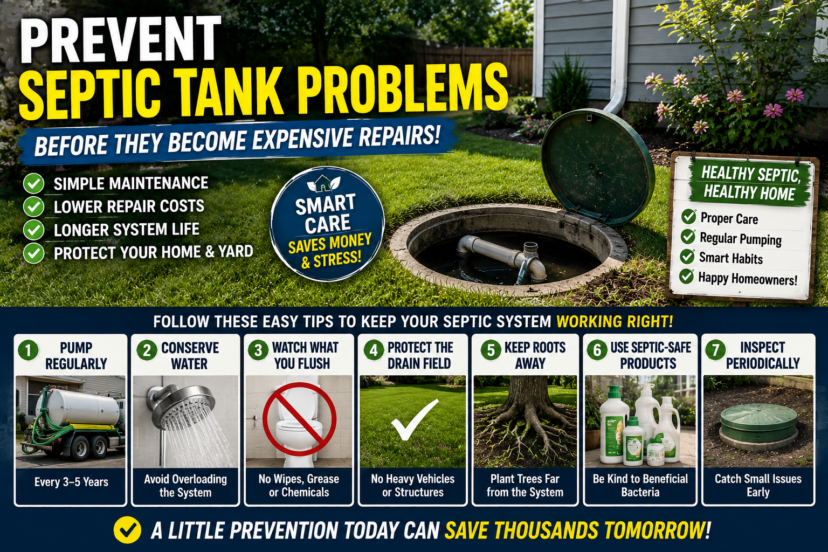
How to prevent septic tank problems before it’s too expensive? Most homeowners rarely think about how they can prevent septic tank problems—until something goes wrong. Unfortunately, septic tank failures are often messy, stressful, and expensive. Repairs can cost thousands of dollars, and major system replacements can become one of the largest unexpected expenses a homeowner faces.
The good news is that most septic issues are preventable.
You don’t need to be a plumber or septic expert to keep your system working properly. A few smart habits can help homeowners avoid costly problems while protecting their property and creating a healthier outdoor environment.
Small preventive steps today can save enormous headaches tomorrow.
⭐ Quick Answer: Prevent Septic Tank Problems
To prevent septic tank problems, homeowners should schedule regular pumping, avoid flushing harmful materials, conserve water, protect the drain field, and inspect the system periodically. Simple maintenance can help prevent expensive repairs and extend the life of your septic system.
Key Takeaways
- Most likely cause: Septic tank problems usually develop because of missed maintenance, flushing inappropriate materials, excessive water use, or damage to the drain field.
- Usually serious? Not if caught early. Routine maintenance can prevent most issues, but neglected systems may lead to sewage backups, drain field failure, and costly repairs.
- First thing to check: Watch for slow drains, unpleasant odors, wet spots near the drain field, and review when your septic tank was last inspected or pumped.
- Best solution: To prevent septic tank problems, follow a regular pumping schedule, use water efficiently, keep harmful materials out of the system, and protect the drain field from heavy vehicles and deep-rooted plants.
🚽 Why Septic Tank Problems Happen
Most septic systems are designed to last for decades.
However, common mistakes often lead to failures.
The biggest causes include:
- Lack of pumping and maintenance
- Excess water usage
- Flushing inappropriate items
- Drain field damage
- Tree root intrusion
- Heavy vehicles driving over the system
- Grease buildup
Many homeowners don’t even know where their septic tank or drain field is located.
Learning the basics is one of the easiest ways to prevent septic tank problems before they become serious.
⚠️ Warning Signs Of Septic Trouble
Recognizing early symptoms can help prevent major damage.
Watch for:
- Slow drains inside the house
- Gurgling sounds in plumbing
- Sewage odors outdoors
- Wet areas above the drain field
- Unusually green grass near the system
- Toilets backing up
Ignoring these signs often leads to larger repairs.
Early action almost always saves money.
🛠️ Prevent Septic Tank Problems With Regular Pumping
Routine pumping is one of the most important maintenance tasks.
Most U.S. households should pump their septic tank every:
- 3 To 5 Years (average homes)
- More Frequently For Larger Families
- As Recommended By Local Professionals
Pumping removes accumulated solids that cannot naturally break down.
Without pumping, these solids eventually clog the system and damage the drain field.
Among all ways to prevent septic tank problems, regular pumping provides the biggest long-term benefit.
💧 Prevent Septic Tank Problems By Conserving Water
Too much water entering the system can overwhelm the tank.
Fix Leaks Quickly
Even small leaks add unnecessary strain.
Inspect:
- Toilets
- Faucets
- Outdoor spigots
Spread Out Laundry Loads
Avoid doing several loads back-to-back.
Spacing water usage allows the system time to process wastewater properly.
Install Water-Efficient Fixtures
Low-flow fixtures help reduce demand on the system.
Popular upgrades include:
1. Low-Flow Toilets
2. Water-Efficient Showerheads
3. ENERGY STAR Appliances
These improvements help homeowners save water and protect their septic systems.
🚫 Prevent Septic Tank Problems By Watching What You Flush
Many common household products should never enter a septic system.
Avoid flushing:
- Baby wipes
- Paper towels
- Feminine hygiene products
- Cotton swabs
- Dental floss
- Cigarette butts
Even products labeled “flushable” may create problems.
Avoid Pouring Grease Down The Drain
Cooking grease hardens over time and contributes to clogs.
Instead:
- Let the grease cool
- Place it in a container
- Dispose of it properly
Good habits inside the home are essential if you want to prevent septic tank problems.
🌳 Protect The Drain Field
The drain field is just as important as the septic tank itself.
Keep Heavy Equipment Away
Avoid parking:
- Cars
- RVs
- Trailers
- Tractors
Heavyweight can crush underground pipes.
Prevent Root Damage
Large trees should not be planted near the system.
Aggressive roots from species such as:
- Willow Trees
- Silver Maples
- Poplars
can invade pipes and create costly damage.
Direct Water Away
Downspouts and drainage systems should not discharge onto the drain field.
Too much water reduces the field’s ability to function.
🌿 Use Landscaping Wisely Around Septic Systems
Proper landscaping supports healthy drainage.
Good choices include:
- Native grasses
- Shallow-rooted plants
- Pollinator gardens
Avoid:
- Deep-rooted shrubs
- Large trees
- Raised structures
Keeping the area simple often provides the best results.
🌎 Environmentally Friendly Ways To Prevent Septic Tank Problems
A healthy septic system protects both your property and the environment.
Use Septic-Safe Cleaning Products
Harsh chemicals may disrupt beneficial bacteria.
Choose products labeled:
- Biodegradable
- Septic Safe
- Environmentally Friendly
Reduce Chemical Usage
Excessive amounts of:
- Bleach
- Paint
- Solvents
- Pesticides
should never enter the system.
Conserve Water
Lower water consumption reduces stress on both the tank and the drain field.
💵 Benefits Of Preventive Septic Maintenance
Homeowners who prevent septic tank problems enjoy several advantages.
Lower Repair Costs
Preventive maintenance is far less expensive than system replacement.
Longer System Life
Many systems can last 25 years or longer with proper care.
Better Property Protection
Healthy systems help avoid unpleasant sewage backups.
Greater Peace Of Mind
Knowing your system is functioning properly reduces stress.
Increased Home Value
Well-maintained systems are attractive to buyers.
📋 Simple Annual Septic Maintenance Checklist
Once each year:
1. Inspect Visible Components
2. Locate The Tank Lid
3. Review Household Water Usage
4. Check For Drain Field Wet Spots
5. Clean Gutters And Downspouts
6. Schedule Pumping When Needed
Small habits help homeowners prevent septic tank problems and avoid emergencies.
👷 When To Consult A Professional
Contact a septic contractor if:
- You smell sewage odors.
- Drains become consistently slow.
- Standing water appears above the drain field.
- Toilets frequently back up.
- The tank hasn’t been pumped in several years.
- Tree roots may be invading pipes.
Professional inspections can identify small issues before they become expensive repairs.
❓ FAQs: Prevent Septic Tank Problems
How Often Should A Septic Tank Be Pumped?
Most systems require pumping every three to five years, depending on household size.
What Should Never Be Flushed Into A Septic System?
Wipes, paper towels, grease, feminine products, and chemicals should never enter the system.
Can Heavy Rain Affect A Septic Tank?
Yes. Excessive rainfall can saturate the drain field and reduce system efficiency.
Do Septic Additives Really Work?
Most properly functioning systems do not require additives. Regular pumping is usually more important.
How Long Does A Septic System Last?
With proper care, many systems last 25 to 40 years.
Can Tree Roots Damage Septic Pipes?
Yes. Large trees can invade underground pipes and create serious problems.
What Is The Most Common Cause Of Septic Failure?
Lack of maintenance and infrequent pumping are among the leading causes.
🌟 Final Thoughts On How To Prevent Septic Tank Problems
Septic systems may be hidden underground, but they play a huge role in protecting your home and outdoor space.
The good news is that you don’t need special expertise to keep your system healthy.
Simple habits—regular pumping, careful water use, and protecting the drain field—can help homeowners avoid costly repairs and enjoy greater peace of mind.
A little prevention today can save thousands of dollars tomorrow.
That’s what Better Yard Living is all about: smarter systems, lower stress, and more enjoyable outdoor living.
Disclaimer: Septic regulations and maintenance requirements vary by state and county. Always follow local codes and consult licensed professionals when inspecting or repairing septic systems.
 Explore more: