Yard Floods After Rain? Here’s How To Stop Standing Water Fast
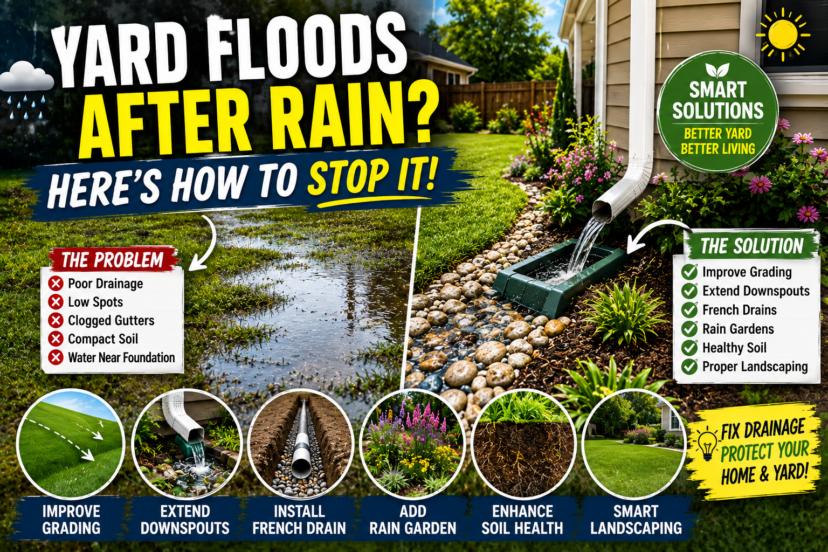
How to stop yard floods after rain? A beautiful yard should make life easier—not create stress every time a storm rolls through. Unfortunately, many homeowners know the frustration of watching puddles form, grass turn muddy, and water collect near patios or foundations after heavy rain.
If your yard floods after rain, you’re definitely not alone.
Across the United States, poor drainage affects millions of properties. From clay soil in Texas to heavy summer storms in Florida and spring rains in the Midwest, standing water is a common problem.
The encouraging news is that most drainage problems can be improved without spending thousands of dollars or becoming a landscaping expert.
Small, practical changes can make a huge difference and help you create a smarter, lower-maintenance outdoor space.
⭐ Quick Answer: Yard Floods After Rain
If your yard floods after rain, the most common causes are poor drainage, compacted soil, improper grading, clogged gutters, or low spots in the lawn. Solutions such as improving grading, installing French drains, extending downspouts, and adding rain gardens can help eliminate standing water and protect your property.
Key Takeaways
- Most likely cause: Poor drainage, compacted soil, improper yard grading, clogged gutters, or low areas that allow rainwater to collect.
- Usually serious? Not usually, but repeated standing water can damage your lawn, encourage mosquitoes, and increase the risk of foundation or landscape problems over time.
- First thing to check: Look for low spots, inspect gutters and downspouts for blockages, and observe where water flows after a rainfall to identify the source of the drainage issue.
- Best solution: To stop yard floods after rain, improve grading, loosen compacted soil, extend downspouts away from your home, install a French drain if needed, and consider adding a rain garden to manage excess water naturally.
🌧️ Why Your Yard Floods After Rain
Several factors can cause excess water to collect in your yard.
Common causes include:
- Poor yard grading
- Heavy clay soil
- Compacted soil
- Short downspouts
- Clogged gutters
- Low areas in the lawn
- Excess concrete surfaces
- Severe rainfall
When water cannot soak into the ground or flow away properly, puddles begin to form.
Some regions naturally experience more drainage challenges than others. Homeowners in states such as Texas, Louisiana, Georgia, and Florida often deal with recurring drainage issues because of heavy rainfall and dense soil conditions.
Understanding why your yard floods after rain is the first step toward finding the right solution.
💧 Problems Caused When Your Yard Floods After Rain
Standing water may seem harmless at first, but repeated flooding can create expensive problems.
Lawn Damage
Grass roots need oxygen to survive.
When soil stays saturated for too long, grass may begin to:
- Turn yellow
- Develop fungus
- Die in patches
Mosquito Breeding
Even small puddles provide breeding areas for mosquitoes.
Foundation Risks
Water that collects near your home can eventually contribute to:
- Foundation cracks
- Basement moisture
- Crawl space issues
Soil Erosion
Moving water slowly washes away valuable topsoil.
Over time, this can damage landscaping and create uneven ground.
🏡 Yard Floods After Rain? Check Your Downspouts
Many homeowners overlook one of the simplest causes of flooding.
Short downspouts often dump large amounts of water directly beside the house.
Extend Downspouts Away From The Foundation
Simple extensions can help direct water:
- Away from flower beds
- Away from patios
- Away from foundations
This inexpensive fix often provides immediate results.
Clean Gutters Regularly
Blocked gutters overflow and create concentrated water problems.
Removing leaves and debris helps water flow properly.
Among all drainage improvements, gutter maintenance is one of the easiest and least expensive.
🔧 Yard Floods After Rain? Improve Your Grading
Improper grading is one of the most common reasons homeowners experience flooding.
Your property should slope gently away from the house.
Signs Of Poor Grading
Look for:
- Water pooling near foundations
- Soggy areas after every storm
- Erosion near the house
Add Soil To Low Areas
Minor low spots can often be corrected with:
- Topsoil
- Compost
- Lawn reseeding
This simple improvement helps water flow naturally instead of collecting in one place.
🪨 Install A French Drain For Persistent Problems
If your yard floods after rain repeatedly, a French drain may be one of the best long-term solutions.
French drains consist of:
- A trench
- Gravel
- A perforated pipe
- Filter fabric
Water enters the system and is redirected away from problem areas.
Benefits Of French Drains
1. Long-Term Solution
2. Low Maintenance
3. Hidden Underground
4. Effective During Heavy Rain
French drains are popular throughout the United States because they work well in many soil conditions.
🌿 Use Landscaping To Improve Drainage
Nature can often solve drainage problems surprisingly well.
Install A Rain Garden
Rain gardens are shallow landscaped areas designed to absorb excess water.
Popular plants include:
- Coneflower
- Switchgrass
- Black-Eyed Susan
- Blue Flag Iris
Rain gardens also:
- Support pollinators
- Improve curb appeal
- Reduce runoff
Plant Native Species
Native plants typically have deeper root systems that absorb water more effectively.
Add Mulch
Mulch helps soil retain moisture evenly while reducing erosion.
Organic mulches such as pine bark and hardwood mulch are excellent choices.
🌎 Reduce Hard Surfaces Around Your Home
Concrete and asphalt prevent rainwater from soaking into the ground.
Too much hardscape often contributes to flooding.
Consider replacing some surfaces with:
- Decorative gravel
- Mulched beds
- Ground covers
- Permeable pavers
These materials allow water to infiltrate naturally.
Many homeowners discover that small landscaping changes significantly improve drainage.
🌱 Benefits Of Fixing Yard Drainage Problems
Improving drainage creates long-term rewards.
Healthier Grass
Lawns recover more quickly after rain.
Fewer Insects
Less standing water means fewer mosquitoes.
Lower Maintenance
Dry lawns are easier to mow and maintain.
Better Outdoor Enjoyment
No one enjoys muddy shoes after every storm.
Protection For Your Home
Perhaps the greatest benefit is avoiding costly structural damage.
Smart drainage is one of the best investments homeowners can make.
💵 Affordable Solutions When Your Yard Floods After Rain
You don’t need a huge budget to solve many drainage problems.
Budget-friendly options include:
- Downspout Extensions
- Filling Low Spots
- Mulching Beds
- Cleaning Gutters
- Installing Rain Barrels
- Adding Native Plants
Small changes often provide major improvements.
That’s what Better Yard Living is all about—working smarter, not harder.
👷 When To Consult A Professional
Some drainage problems require expert help.
Consider contacting a landscaper, drainage specialist, or contractor if:
- Water reaches your foundation.
- Flooding occurs after every storm.
- Erosion becomes severe.
- Water enters your basement.
- Retaining walls are failing.
- Neighboring properties affect drainage.
A professional can evaluate your property and recommend solutions that comply with local regulations.
❓ FAQs: Yard Floods After Rain
Why Does My Yard Flood After Every Rainstorm?
Poor grading, compacted soil, and drainage issues are usually the most common causes.
How Long Should Standing Water Remain In A Yard?
Most puddles should disappear within 24 hours. Longer periods may indicate drainage problems.
Can Standing Water Kill Grass?
Yes. Excess water deprives roots of oxygen and may lead to fungal diseases.
Are French Drains Worth It?
For recurring flooding problems, French drains are often one of the most effective long-term solutions.
Does Clay Soil Cause Drainage Problems?
Yes. Clay soil absorbs water slowly and frequently contributes to standing water.
Can I Fix Yard Drainage Myself?
Many minor drainage problems can be improved with DIY solutions such as grading, mulch, and downspout extensions.
Should Water Flow Toward Or Away From My House?
Water should always flow away from your foundation.
🌟 Final Thoughts: Yard Floods After Rain
A flooded yard can feel overwhelming, but most drainage problems are fixable.
You don’t need to spend a fortune or become a landscaping professional. Simple improvements like extending downspouts, filling low spots, planting native species, or installing better drainage systems can transform your outdoor space.
Every small improvement helps create a yard that is easier to maintain, more enjoyable to use, and better protected against future storms.
That’s the goal of Better Yard Living—helping homeowners create smarter, lower-stress outdoor spaces that work for real life.
Disclaimer: Always check local building codes, HOA regulations, and utility marking requirements before digging or making major drainage changes. Soil conditions and rainfall patterns may vary by region.
 Explore more: