
How To Stop Neighbors Water From Draining Into My Yard: 7 Smart Solutions That Work
Stop The Water From Your Neighbors Yard
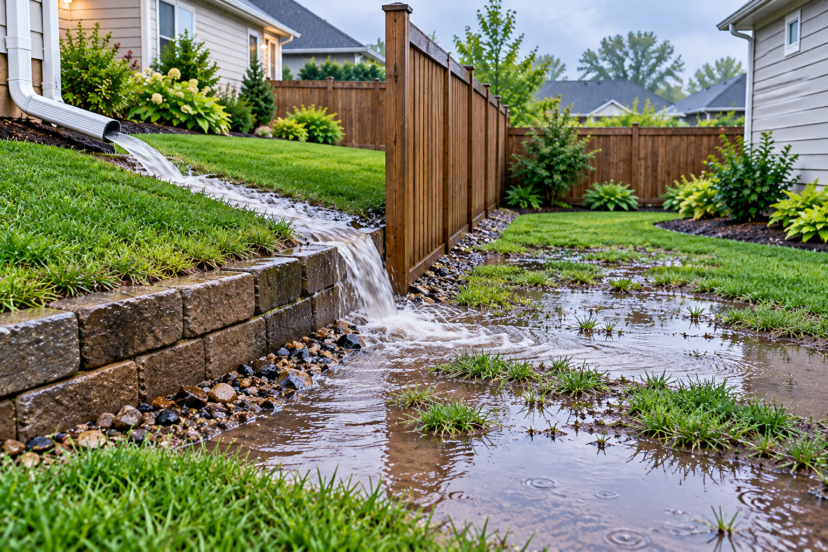
To stop a neighbor’s water from draining into your yard, you can cut off the water source, block it with a physical barrier, or safely redirect it away using drainage systems. There’s nothing more frustrating than watching your backyard turn into a muddy mess because water keeps flowing in from the property next door. You maintain your lawn, keep your gutters clean, and try to manage your own drainage, yet every heavy rain leaves you dealing with someone else’s runoff. If you’ve been searching for how to stop neighbors water from draining into my yard, the good news is that several practical solutions may help protect your property without starting a neighborhood dispute or spending a fortune.
Water naturally moves downhill, and many homes are built on lots where runoff crosses property boundaries. However, problems can become more serious when landscaping changes, new patios, or redirected downspouts concentrate additional water onto neighboring land.
The smartest approach is to identify where the water originates, understand local drainage rules, and choose a solution that manages runoff safely.
With a little planning, you can protect your lawn, reduce standing water, and create a healthier outdoor space while maintaining good relationships with your neighbors.
💧 Quick Answer: How To Stop Neighbors Water From Draining Into My Yard
To stop a neighbor’s water from draining into your yard, first identify whether the runoff is natural or caused by redirected gutters, landscaping, or construction.
Possible solutions include installing a properly designed swale, French drain, catch basin, rain garden, or approved drainage barrier.
However, you generally cannot assume you have the right to block natural runoff or redirect it onto another property. Local laws vary, so check drainage regulations before changing water flow.
The safest approach combines practical drainage improvements with communication and proper planning.
Key Takeaways
Most Likely Cause: Natural downhill runoff, altered landscaping, redirected downspouts, or paved surfaces on neighboring property.
Usually Serious? Not always. However, repeated flooding can damage landscaping, create standing water, and contribute to foundation moisture problems.
First Thing To Check: Observe where water crosses the property line and whether recent changes have increased the flow.
Best Solution: Understanding how to stop neighbors water from draining into my yard starts with identifying the source, discussing the problem, and choosing a legal drainage solution that safely manages runoff.
🔍 Why Is Your Neighbor’s Water Draining Into Your Yard?
Before installing drainage equipment, determine why water is crossing the property line.
Several common conditions may explain the problem.
1. Your Property Is Naturally Lower
Rainwater follows the natural slope of the land.
If your backyard sits below your neighbor’s property, some surface runoff may have always flowed in your direction.
This doesn’t automatically mean your neighbor has done anything wrong.
2. Your Neighbor Changed Their Landscaping
New patios, retaining walls, raised garden beds, or major grading changes can alter drainage patterns.
For example, a newly installed concrete patio may direct water toward your fence instead of allowing it to spread across the original lawn.
3. Downspouts Point Toward Your Property
Gutters collect rainwater from a large roof area.
If a downspout discharges near the property line, concentrated runoff may enter your yard during storms.
4. New Driveways Or Walkways Increase Runoff
Concrete and asphalt prevent most rainfall from soaking into the ground.
As a result, new hard surfaces can increase the amount and speed of runoff reaching nearby areas.
5. Existing Drainage Systems Are Blocked
Sometimes the issue isn’t a recent change.
A clogged ditch, blocked drainage inlet, or damaged underground pipe can cause water to overflow into neighboring yards.
Identifying the actual source is the first step toward a lasting solution.
🛠️ 7 Smart Ways To Stop Your Neighbor’s Water From Flooding Your Yard
The right solution depends on how much water enters your property, where it flows, and whether a suitable drainage outlet is available.
Here are seven practical approaches.
1. Talk To Your Neighbor Before Making Changes
This may be the simplest and least expensive solution.
Your neighbor might not realize that their downspout, patio, or landscaping is sending water into your backyard.
Explain what you’ve observed and, if possible, show photographs taken during rainfall.
Rather than beginning with blame, focus on solving the drainage problem.
For example, a downspout extension or small grading adjustment on their property might reduce the runoff significantly.
Best For: Problems caused by obvious drainage changes that may be easy to correct.
A cooperative solution can save both homeowners time, money, and unnecessary conflict.
2. Install A Swale To Redirect Surface Runoff
A swale is a shallow, gently sloped channel designed to guide surface water.
It can be landscaped with grass or suitable vegetation, making it less noticeable than an open drainage ditch.
A swale may intercept runoff entering your yard and guide it toward an approved drainage area.
How To Plan A Swale:
-
Identify Where Water Enters Your Property.
-
Determine The Existing Ground Elevations.
-
Locate A Suitable Drainage Destination.
-
Design A Gentle, Continuous Flow Path.
-
Stabilize The Channel With Grass Or Other Appropriate Materials.
A swale requires adequate fall and a safe outlet.
Best For: Surface runoff crossing a yard with enough space for a drainage channel.
Avoid creating a swale that sends additional water toward your home or another neighboring property.
3. Install A French Drain Along The Problem Area
A French drain is a gravel-filled trench, often containing a perforated drainage pipe.
It collects water moving through the surrounding soil and carries it toward a suitable outlet.
For yards receiving persistent subsurface seepage, a French drain may help reduce saturated conditions.
However, it isn’t always the best solution for large amounts of fast-moving surface runoff.
A catch basin or swale may be more effective in those situations.
Best For: Persistent wet soil along a property boundary where an appropriate drainage outlet exists.
Before digging near a fence, check property boundaries, utility locations, and local setback requirements.
4. Install A Catch Basin To Collect Concentrated Runoff
If water repeatedly enters your yard at one location, a catch basin may be worth considering.
A catch basin collects surface runoff through a grated opening and sends it into a connected drainage pipe.
The system must have an approved outlet and sufficient capacity for the expected water volume.
For example, a catch basin might help manage water collecting near a patio or side yard.
Best For: Concentrated surface water entering a defined low area.
Keep the grate clear of leaves and debris to maintain proper operation.
5. Create A Rain Garden To Absorb Some Runoff
A rain garden can turn part of your drainage problem into an attractive landscape feature.
It is a shallow planted area designed to temporarily collect runoff and allow it to infiltrate suitable soil.
Native plants and moisture-tolerant vegetation can improve the appearance of the yard while supporting pollinators.
However, rain gardens require adequate soil infiltration, suitable setbacks, and an overflow plan.
They are not designed to handle unlimited runoff or permanently saturated ground.
Best For: Moderate stormwater runoff where soil and site conditions support infiltration.
6. Consider A Berm Or Drainage Barrier Carefully
A berm is a raised mound of compacted soil that can influence surface water movement.
In some landscapes, berms help guide runoff toward an existing drainage channel.
However, placing a berm directly along a property line can create serious problems.
Blocking natural drainage may cause flooding upstream, damage neighboring property, or violate local laws.
A retaining wall can create similar issues if it interrupts established drainage patterns.
Best For: Carefully designed drainage projects where local rules permit changes to runoff patterns.
Before building a barrier, consult your local drainage authority or a qualified professional.
7. Improve Drainage And Grading Within Your Own Yard
Sometimes the most practical solution is improving how your property handles incoming water.
Small grading corrections can prevent runoff from collecting in depressions.
You may also benefit from core aeration if compacted soil contributes to standing water.
For larger drainage problems, professional regrading may create a safe path around patios, lawns, and other outdoor features.
Best For: Yards where incoming runoff becomes trapped because of poor grading or compacted soil.
The goal is to manage water safely, not simply move the problem somewhere else.
⚖️ Can Your Neighbor Legally Drain Water Into Your Yard?
One of the most important questions homeowners ask is whether a neighbor is allowed to send water onto their property.
The answer depends on state law, local ordinances, drainage easements, and the circumstances involved.
In the United States, several legal approaches may apply to surface-water disputes.
Some jurisdictions generally recognize natural drainage patterns. Others use reasonable-use standards or different rules governing changes to surface runoff.
A neighbor may have different responsibilities when they deliberately concentrate water through pipes, grading, or construction.
However, natural runoff crossing a property line does not automatically establish wrongdoing.
What You Can Do:
-
Document The Water Flow With Photographs And Dates.
-
Check Whether Recent Construction Changed Drainage.
-
Review Local Stormwater And Grading Regulations.
-
Look For Recorded Drainage Easements.
-
Contact Your Municipal Engineering Or Stormwater Department.
-
Seek Legal Advice If Significant Damage Continues.
Avoid blocking established drainage routes or entering your neighbor’s property without permission.
A well-documented, cooperative approach is often more productive than immediately escalating the dispute.
💰 Which Drainage Solution Makes The Most Sense?
The best option is the one that solves the problem without unnecessary excavation or future maintenance.
| Drainage Problem | Practical Starting Solution |
|---|---|
| Downspout Directed Toward Your Yard | Discuss Redirecting The Downspout |
| Surface Runoff Crossing The Lawn | Swale |
| Persistent Subsurface Wetness | French Drain |
| Water Collecting In One Spot | Catch Basin |
| Moderate Runoff With Suitable Soil | Rain Garden |
| Runoff Requiring Controlled Redirection | Professionally Designed Berm |
| Uneven Lawn And Trapped Water | Regrading |
When deciding how to stop neighbors water from draining into my yard, start with the simplest practical solution.
An inexpensive downspout correction may solve a problem that otherwise appears to require extensive underground drainage.
🌱 How To Protect Your Yard From Future Runoff Problems
Once the immediate issue is under control, a few maintenance habits can help prevent future damage.
Keep Drainage Paths Clear
Remove leaves, sediment, and debris from drainage inlets and swales.
Blocked outlets can cause water to overflow during heavy storms.
Maintain Healthy Soil
Healthy soil structure supports infiltration and reduces erosion.
Avoid driving heavy equipment across saturated ground, and consider core aeration when compaction is a problem.
Watch For Changes Along The Property Line
New fences, patios, retaining walls, and landscaping projects can alter water movement.
Check drainage patterns after major storms or nearby construction.
Protect Your Foundation
Make sure grading near your home directs water away from the foundation.
Persistent pooling beside a basement or crawl space deserves prompt attention.
These simple habits can help you maintain a drier, healthier, and more enjoyable backyard.
👷 When To Consult A Landscaping Or Drainage Professional
Some runoff problems can be resolved through communication and minor landscaping improvements.
Others require expert help.
Consider contacting a qualified landscaper, drainage contractor, civil engineer, or local stormwater authority if:
-
Water Repeatedly Floods Your Foundation Or Basement.
-
A Neighbor’s Construction Has Significantly Changed Runoff.
-
You Need Underground Drainage Near A Property Line.
-
There Is No Suitable Gravity Drainage Outlet.
-
You Suspect A Drainage Easement Or Legal Dispute.
-
Major Grading Or Retaining Walls Are Required.
A professional can assess elevations, runoff patterns, soil conditions, and appropriate drainage outlets.
Before excavation, contact 811 in the United States to have participating underground utilities marked. Private utility lines may require separate locating.
❓ Frequently Asked Questions About Neighbor’s Water Draining Into Your Yard
1. How Do I Stop My Neighbor’s Rainwater From Coming Into My Yard?
Start by identifying where the water originates. Discuss obvious problems, such as redirected downspouts, with your neighbor. Depending on the site, a swale, catch basin, French drain, or grading correction may help manage runoff safely.
2. Can I Build A Berm To Stop My Neighbor’s Water?
Possibly, but local drainage rules may restrict barriers that block natural runoff. A berm can cause flooding on neighboring property, so confirm legal requirements and drainage impacts before construction.
3. Is My Neighbor Responsible For Water Damage To My Yard?
Responsibility depends on local law and the cause of the runoff. Natural drainage may be treated differently from water deliberately concentrated through grading, pipes, or construction. Document the problem and seek local professional advice when necessary.
4. Can I Install A French Drain Along My Property Line?
A French drain may be installed on your property if local regulations, utility locations, setbacks, and drainage easements permit it. The system also needs an appropriate outlet and should not damage neighboring land.
5. What Is The Cheapest Way To Stop Water Coming From A Neighbor’s Yard?
If a downspout or small landscaping change is causing the problem, a cooperative correction may be the cheapest solution. Minor grading improvements or a shallow swale can also be economical where site conditions allow.
6. Can I Sue My Neighbor For Water Runoff?
Legal action may be possible when runoff causes damage and applicable laws establish responsibility. However, the outcome depends on local rules, evidence, and circumstances. Consider discussing the issue, contacting local authorities, or seeking mediation before litigation.
7. Can I Block Water From Entering My Property?
Not necessarily. Blocking natural drainage may violate local laws or cause damage elsewhere. Before installing a wall, berm, or other barrier, determine whether the water follows an established drainage path and consult the appropriate local authority.
🏡 Conclusion: Protect Your Yard Without Creating Bigger Problems
Learning how to stop neighbors water from draining into my yard doesn’t have to begin with expensive construction or a disagreement across the fence.
The smartest first step is understanding why the water enters your property.
Sometimes, a simple conversation and downspout adjustment can solve the problem. Other situations may require a swale, French drain, catch basin, or professional grading plan.
Whatever solution you choose, make sure it handles runoff safely, follows local regulations, and doesn’t create new flooding problems.
With the right planning, you can protect your lawn, reduce muddy areas, and make your outdoor space easier to maintain.
Better yard living starts with practical improvements that protect your property, save money, and help you enjoy your backyard with less stress.
Disclaimer: This article provides general landscaping and homeowner information, not legal advice. Surface-water laws, drainage easements, building codes, and stormwater regulations vary by state and municipality. Consult qualified drainage and legal professionals when necessary, and contact 811 before digging.
Explore more:

Comments are closed.