Why Is My Backyard Hotter Than The Front Yard? 13 Smart Ways To Cool It Down
Why is my backyard hotter than the front yard? Have you ever stepped into your backyard and immediately noticed it feels several degrees hotter than your front yard? You’re not imagining it. Many homeowners experience this frustrating temperature difference, especially during the summer months.
The good news is that there are practical reasons behind it—and even better, there are affordable solutions. Understanding why is my backyard hotter than the front yard can help you make smart improvements that lower temperatures, improve comfort, and make your outdoor space much more enjoyable without spending a fortune.
Whether you enjoy grilling, gardening, entertaining guests, or simply relaxing outdoors, a cooler backyard means you’ll actually use it more often.
💡 Quick Answer: Why Is My Backyard Hotter Than The Front Yard
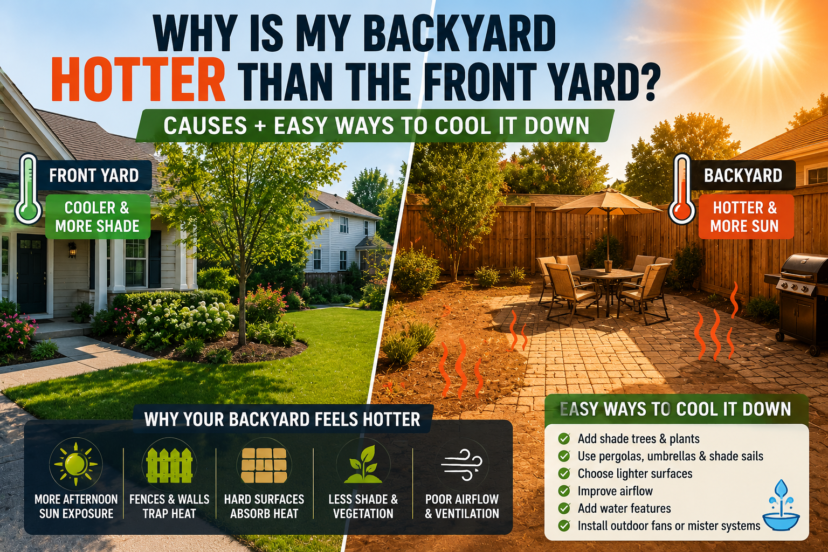
If you’re wondering why is my backyard hotter than the front yard, the most common reasons are greater afternoon sun exposure, fewer shade trees, dark surfaces that absorb heat, poor airflow, nearby fences or walls that trap warmth, and limited vegetation. Adding shade, improving airflow, and reducing heat-absorbing surfaces can make a noticeable difference.
Key Takeaways
- Most likely cause: Your backyard is often hotter because it receives more afternoon sun, has fewer shade trees, contains heat-absorbing surfaces like concrete or dark decking, and has reduced airflow.
- Usually serious? No. While it’s mainly a comfort issue, excessive heat can make your outdoor space less usable, increase watering needs, and contribute to higher cooling costs indoors.
- First thing to check: Compare how much direct sunlight your front and backyard receive throughout the day, and look for differences in shade, vegetation, hard surfaces, and airflow.
- Best solution: If you’re asking why is my backyard hotter than the front yard, the most effective fixes include planting shade trees, installing pergolas or shade sails, improving air circulation, and replacing or covering heat-absorbing surfaces with cooler landscaping materials.
☀️ Why Your Backyard Gets Hotter Than The Front Yard
Several factors work together to increase backyard temperatures.
Common causes include:
- Full afternoon sun
- Limited tree coverage
- Large patios
- Dark decking
- Asphalt driveways nearby
- Poor air circulation
- Heat reflected from fences
- Lack of landscaping
Even small differences in your home’s orientation can significantly affect outdoor temperatures.
🌳 Less Shade Means More Heat
One of the biggest reasons homeowners ask why is my backyard hotter than the front yard is that the backyard often receives less natural shade.
Without trees, sunlight directly heats:
- Patios
- Grass
- Decks
- Outdoor furniture
- Walkways
Adding shade is often the fastest way to cool an outdoor space.
🌞 Afternoon Sun Is Usually Stronger
In many parts of the United States, backyards receive intense afternoon sun while front yards benefit from morning sunlight.
Afternoon sunlight:
- Lasts longer
- Produces more heat
- Warms hard surfaces
- Raises air temperatures
This alone can create a noticeable temperature difference.
🪨 Hard Surfaces Store Heat
Concrete, stone, brick, and asphalt absorb heat throughout the day.
Common heat-retaining surfaces include:
- Patios
- Walkways
- Retaining walls
- Driveways
- Stone borders
These materials slowly release heat well into the evening.
🌬️ Poor Airflow Traps Heat
Air movement naturally cools outdoor spaces.
Tall fences, dense landscaping, and nearby structures may reduce airflow.
Limited ventilation causes heat to remain trapped around:
- Seating areas
- Patios
- Decks
- Outdoor kitchens
Creating better airflow often improves comfort immediately.
🌿 Limited Landscaping Increases Temperatures
Plants naturally cool the surrounding environment.
Lawns, shrubs, and trees release moisture through transpiration, helping reduce nearby temperatures.
Adding more vegetation creates a healthier microclimate.
🏡 Smart Shade Solutions
Fortunately, cooling a backyard doesn’t require major construction.
Popular options include:
- Shade sails
- Pergolas
- Patio umbrellas
- Retractable awnings
- Fast-growing shade trees
These upgrades often provide immediate relief from direct sunlight.
🌱 Plant More Trees
Trees are one of nature’s best cooling systems.
Popular shade trees in many U.S. regions include:
- Red maple
- Oak
- River birch
- American elm
- Tulip tree
Choose species suited to your local climate and available space.
💨 Improve Airflow Naturally
Better airflow helps remove trapped heat.
Simple improvements include:
- Pruning dense shrubs
- Raising tree canopies
- Creating open planting areas
- Installing outdoor ceiling fans
- Using portable patio fans
Even gentle airflow can make hot days much more comfortable.
💡 Use Cooler Surface Materials
Some landscaping materials absorb less heat than others.
Consider:
- Light-colored pavers
- Gravel pathways
- Mulched garden beds
- Ground cover plants
- Composite decking is designed to stay cooler
Replacing small areas over time can noticeably reduce heat buildup.
🚿 Add Water Features
Water naturally cools the surrounding air.
Budget-friendly ideas include:
- Small fountains
- Bubbling rocks
- Bird baths
- Decorative water bowls
These features also create relaxing background sounds.
🌎 Better Yard Living Means A Cooler Backyard
Understanding why is my backyard hotter than the front yard helps you make smarter landscaping decisions.
Small improvements can:
- Lower surface temperatures
- Increase comfort
- Reduce watering needs
- Improve outdoor enjoyment
- Create better entertaining spaces
- Increase usable outdoor time
The goal isn’t perfection—it’s making your yard work better for your family.
🚫 Common Backyard Cooling Mistakes
Avoid these common errors.
Planting Trees Too Close Together
Trees need room to mature and provide effective shade.
Ignoring Airflow
Shade alone won’t solve every heat problem.
Choosing Dark Landscaping Materials
Dark surfaces absorb much more heat.
Forgetting Outdoor Furniture
Metal furniture can become extremely hot in direct sunlight.
Use cushions, shade, or lighter-colored materials.
Overlooking Reflective Heat
Light-colored fences or nearby walls can reflect sunlight into seating areas.
👷 When To Consult A Professional
Many backyard cooling improvements are DIY-friendly, but consider hiring a landscaper, arborist, or outdoor living contractor if:
- Large trees need planting or removal.
- Major grading or hardscape changes are planned.
- Pergolas, shade structures, or outdoor kitchens require permits.
- Drainage improvements are needed before landscaping.
- You want a complete landscape design to reduce heat naturally.
Professional planning can maximize comfort while avoiding costly mistakes.
❓ FAQs: Why Is My Backyard Hotter Than The Front Yard?
Why is my backyard always hotter than my front yard?
The most common reasons are stronger afternoon sun, less shade, heat-absorbing surfaces, and reduced airflow.
How can I cool my backyard naturally?
Plant shade trees, improve airflow, add mulch, install shade structures, and increase landscaping with native plants.
Does concrete make a backyard hotter?
Yes. Concrete absorbs heat throughout the day and slowly releases it, increasing nearby temperatures.
Do trees really cool a backyard?
Yes. Trees provide shade and cool surrounding air through evapotranspiration, often reducing temperatures noticeably.
Are shade sails effective?
Yes. Properly installed shade sails block direct sunlight while allowing airflow underneath.
Does mulch help keep a yard cooler?
Organic mulch helps insulate soil, reduce evaporation, and lower soil temperatures around plants.
What is the fastest way to cool a backyard?
Adding temporary shade, using outdoor fans, installing umbrellas, and reducing reflected heat often provide the quickest results.
🎯 Conclusion: Why Is My Backyard Hotter Than The Front Yard
If you’ve been asking why is my backyard hotter than the front yard, the answer usually comes down to a combination of sun exposure, shade, airflow, and the materials surrounding your outdoor space. Fortunately, you don’t need a complete landscape renovation to make your backyard more comfortable.
Start with one or two simple improvements—such as adding shade, planting trees, improving airflow, or replacing heat-absorbing surfaces—and build from there. Over time, these changes can transform a hot, uncomfortable yard into a relaxing outdoor retreat you’ll enjoy throughout the summer. That’s what Better Yard Living is all about.
Disclaimer: This article is for informational purposes only. Climate, sun exposure, landscaping, and local growing conditions vary by region. Always choose plants and outdoor structures appropriate for your local environment, and consult qualified professionals for large landscaping, electrical, or structural projects.
 Explore more: