Water Pooling On Patio? 8 Common Causes And Easy Fixes That Actually Work
A patio should be a comfortable place for outdoor meals, relaxing afternoons, and family gatherings—not a place where puddles appear after every rainstorm.
Standing water can make outdoor surfaces slippery, encourage algae growth, and gradually damage joints, landscaping, or the patio’s supporting base.
The good news is that most homeowners can identify the likely cause with a few simple observations.
Whether you have concrete, brick, or pavers, understanding why water collects is the first step toward creating a drier, safer, and easier-to-maintain outdoor living space.
💧 Quick Answer: Why Is Water Pooling On Patio Surfaces?
Water pooling on patio surfaces happens when rainwater cannot drain away quickly enough. Common causes include insufficient patio slope, sunken pavers, clogged drainage channels, compacted soil, overflowing gutters, and surrounding landscaping that directs water toward the patio. The easiest fixes include cleaning existing drains, extending downspouts, correcting minor grading problems, and repairing low spots. Larger drainage problems may require a channel drain, catch basin, or professional patio leveling.
Key Takeaways
- Most Likely Cause: Poor patio slope, low spots, or runoff from nearby landscaping.
- Usually Serious? Not always, but repeated puddles can create slippery surfaces and contribute to long-term damage.
- First Thing To Check: Watch where water collects after rain and where it flows.
- Best Solution: Fixing water pooling on patio surfaces usually starts with correcting drainage paths before considering expensive patio repairs.
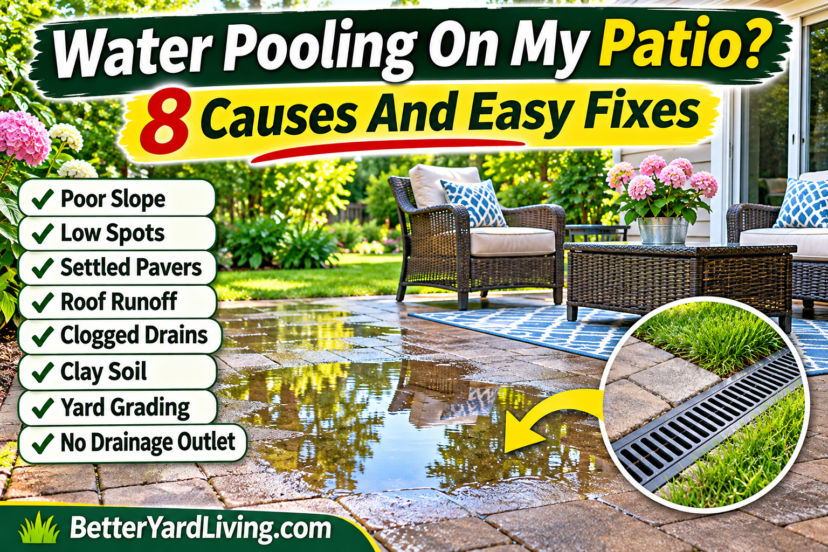
🔍 8 Common Causes Of Water Pooling On Patio Surfaces
Understanding the cause helps you avoid spending money on a drainage solution that doesn’t address the real problem.
1. Your Patio Does Not Have Enough Slope
A patio needs a slight slope so rainwater can flow toward a suitable drainage area.
If the surface is almost perfectly flat, water may remain in shallow puddles.
Many patio designs use a slope of approximately 1/8 to 1/4 inch per foot, depending on the material and site requirements.
Easy Fix:
Use a long level and straightedge to check the slope. Minor surface issues may be corrected with suitable resurfacing products, while larger slope problems often require professional evaluation.
2. Concrete Has Developed Low Spots
Concrete patios can settle unevenly as supporting soil shifts, erodes, or becomes compacted.
Even a shallow depression can hold water after rainfall.
These puddles often appear in the same location every time.
Easy Fix:
Small, shallow depressions may be suitable for exterior concrete repair or resurfacing products designed for the application.
For significant settlement, professional slab lifting or replacement of the affected section may be necessary.
3. Patio Pavers Have Sunk Over Time
Paver patios depend on a properly compacted base.
When the base settles or washes away, individual pavers can sink and create pockets where water collects.
This is particularly common near patio edges or areas exposed to concentrated runoff.
Easy Fix:
Remove the affected pavers, inspect the underlying base, correct the cause of settlement, and rebuild the base before reinstalling them.
Simply adding sand beneath sinking pavers may provide only a temporary improvement.
4. Gutters And Downspouts Are Sending Water Toward The Patio
Roof runoff can overwhelm an otherwise functional patio drainage system.
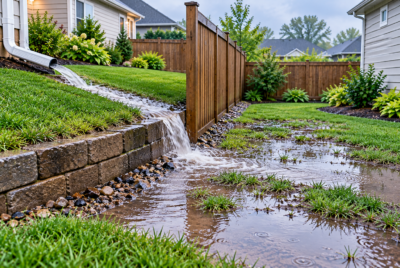
During heavy rainfall, a downspout may release concentrated water directly beside the patio.
Easy Fix:
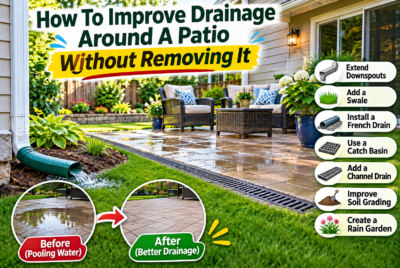
Install a downspout extension to redirect roof water toward an approved drainage area.
This is often one of the least expensive ways to reduce water pooling on patio surfaces.
5. Surrounding Landscaping Slopes Toward The Patio
Sometimes the patio isn’t the problem.
The surrounding lawn, flower beds, or walkways may direct stormwater toward the hardscape.
This can create puddles along patio edges or cause water to flow across the surface.
Easy Fix:
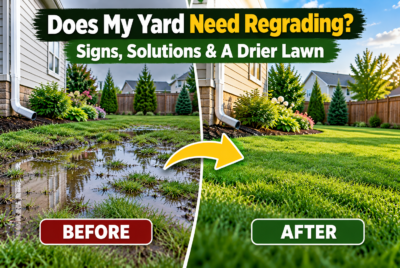
Adjust nearby soil grading or create a shallow landscape swale that redirects runoff around the patio.
Make sure the new drainage path does not send water toward your foundation or neighboring property.
6. Existing Patio Drains Are Clogged
Channel drains and catch basins can become blocked by leaves, soil, mulch, and other debris.
When the drainage opening becomes clogged, water backs up onto the patio.
Easy Fix:
Remove accessible grates, clear debris, and flush the drainage system with water.
If the pipe remains blocked, a drain-cleaning professional may be needed.
7. Compacted Or Clay-Heavy Soil Is Preventing Drainage
Clay soil absorbs water slowly, especially after extended rainfall.
In parts of Texas, Georgia, and the Midwest, homeowners may experience wet landscaping around patios because of dense soil conditions.
Compacted soil can make infiltration even slower.
Easy Fix:
Reduce unnecessary foot traffic, improve soil structure where appropriate, and redirect concentrated runoff.
For recurring problems, consider a properly designed surface drain or French drain with a functional outlet.
8. Water Has No Clear Drainage Outlet
Even a properly sloped patio can experience drainage problems if runoff has nowhere to go.
Retaining walls, raised garden beds, fences with solid foundations, and surrounding hardscape can sometimes trap water.
Easy Fix:
Identify a safe drainage destination before installing new drains.
Depending on the property, a catch basin, channel drain, swale, or approved stormwater connection may provide a solution.
🛠️ How To Fix Water Pooling On Patio Areas Without Replacing Everything
Before starting an expensive renovation, follow this simple troubleshooting process.
Step 1: Observe The Patio During Rainfall
Watch where water first appears.
Does it flow from the roof, surrounding lawn, or a nearby walkway?
Or does rain fall directly onto the patio and collect in one depression?
This distinction helps determine whether you need better runoff management or actual patio repairs.
Step 2: Check The Patio Slope
Place a long straightedge and level across several sections of the patio.
Look for areas where the surface slopes toward the house or dips in the middle.
For example, a patio designed with a 1/4-inch-per-foot slope would drop approximately 2 inches over 8 feet.
The correct slope depends on the patio material, drainage design, and local requirements.
Step 3: Start With The Cheapest Fix
Before installing underground pipes, consider these improvements:
- Clean Existing Drainage Grates.
- Extend Nearby Downspouts.
- Remove Debris Blocking Water Flow.
- Correct Small Landscaping Low Spots.
- Repair Loose Or Sunken Pavers.
These small changes may solve the problem without major excavation.
Step 4: Test Your Improvements
After making changes, use a garden hose to simulate moderate runoff.
Watch whether water travels toward the intended drainage outlet.
Avoid flooding areas near the foundation during testing.
💰 Patio Drainage Fixes: Estimated Costs
Not every drainage problem requires a contractor.
The following approximate U.S. costs can help you compare options.
| Drainage Solution | Estimated Cost | Best For |
|---|---|---|
| Drain Cleaning | $0–$50 DIY | Blocked Grates |
| Downspout Extension | $15–$60 | Roof Runoff |
| Minor Soil Regrading | $50–$250 DIY | Yard Runoff |
| Small Paver Repair | $50–$200 DIY | Sunken Pavers |
| Catch Basin Installation | $100–$400 DIY | Localized Puddles |
| French Drain Installation | $300–$1,000 DIY | Saturated Soil |
| Channel Drain Installation | $500–$2,000+ Installed | Surface Runoff |
These are general planning estimates, not contractor quotes. Actual costs vary by project size, materials, soil conditions, and local labor rates.
For a homeowner trying to save money, the smartest approach is to address the source of runoff before investing in a larger drainage system.
🌿 Better Yard Living Strategies To Prevent Patio Puddles
Preventing water pooling on patio surfaces is often easier than fixing repeated damage.
A few practical habits can help keep your outdoor space comfortable.
Keep Gutters And Drains Clear
Inspect gutters, downspouts, and patio drainage grates after major storms.
Remove leaves and debris before they block water movement.
Protect The Soil Around Your Patio
Healthy vegetation helps stabilize soil and reduce erosion.
Use appropriate ground cover or mulch to protect exposed landscaping, but avoid blocking drainage openings.
Avoid Overwatering Nearby Landscaping
Automatic sprinklers can add unnecessary moisture around patios.
Adjust irrigation schedules based on rainfall, soil conditions, and plant needs.
Inspect Pavers And Joints Annually
Look for sinking pavers, widening gaps, or washed-out joint material.
Small repairs completed early can prevent larger problems later.
Consider Rain-Friendly Landscaping
A properly designed rain garden or vegetated swale can help manage runoff while improving the appearance of your yard.
Choose solutions suited to local soil conditions and rainfall patterns.
⚠️ Common Mistakes Homeowners Should Avoid
Some drainage fixes can accidentally make the problem worse.
Adding Gravel Over Standing Water: Gravel may hide puddles without providing a working drainage outlet.
Sealing Concrete Without Fixing Drainage: A sealer can help protect suitable concrete surfaces, but it won’t correct improper slope.
Redirecting Water Toward The House: Runoff should not be concentrated near foundations, basement walls, or door thresholds.
Installing Drain Pipes Without An Outlet: A buried pipe cannot solve the problem if water has nowhere to discharge.
Ignoring Recurring Settlement: Repeated sinking may indicate an underlying base or erosion problem.
Fix the cause first, then improve the surface.
👷 When To Consult A Professional
Consider contacting a qualified patio contractor, drainage specialist, or landscaper when:
- Water regularly enters your home or garage.
- The patio slopes toward the foundation.
- Concrete has significant cracks or uneven settlement.
- Pavers continue sinking after repairs.
- Drainage requires extensive excavation.
- You cannot identify a safe, legal drainage outlet.
For suspected structural or foundation problems, consult a qualified structural engineer.
Professional advice can help prevent unnecessary repairs and protect your property.
❓ Frequently Asked Questions About Water Pooling On Patio Surfaces
1. Why Does Water Pool In The Middle Of My Patio?
Water usually collects in the middle when the surface has a low spot or insufficient slope. Settled concrete, uneven pavers, or an improperly prepared base may be responsible.
2. How Do I Stop Water Pooling On A Concrete Patio?
Start by checking the slope and identifying low spots. Small depressions may be repaired with suitable exterior concrete products. Larger settlement problems may require professional leveling, drainage improvements, or partial replacement.
3. Is Standing Water On A Patio Bad?
Occasional shallow puddles are not always serious. However, repeated standing water can create slippery surfaces, encourage algae growth, and contribute to deterioration of joints or supporting materials.
4. Can I Fix Patio Drainage Without Removing The Concrete?
Yes. Downspout extensions, landscape grading, swales, and drains installed along patio edges may improve drainage without removing the main concrete surface. Some channel-drain installations require limited cutting.
5. Will Patio Sealer Stop Water From Pooling?
No. Patio sealer may reduce moisture absorption in suitable materials, but it does not change the surface slope or provide drainage. Water will still collect in depressions.
6. How Long Should Water Stay On A Patio After Rain?
There is no universal time limit. A properly draining patio should generally shed most surface runoff soon after rainfall ends. Puddles that remain for many hours or repeatedly appear in the same location deserve investigation.
7. What Is The Cheapest Way To Fix Water Pooling On Patio Surfaces?
Cleaning blocked drains, extending downspouts, and correcting minor soil grading are often the least expensive options. The best choice depends on whether water comes from surrounding runoff or collects because of an uneven patio surface.
🏡 Conclusion: A Drier Patio Starts With Smarter Drainage
Water pooling on patio surfaces doesn’t automatically mean you need a new patio or an expensive landscaping project.
In many cases, the real problem is something manageable: a blocked drain, poorly directed downspout, uneven paver, or small grading issue.
Start by observing where the water comes from, checking the patio slope, and trying the simplest appropriate solution.
With a little planning and regular maintenance, you can protect your outdoor space, reduce unnecessary repairs, and enjoy a cleaner, more comfortable backyard.
Better yard living isn’t about spending more money. It’s about making smarter improvements that help your outdoor space work better every day.