
How To Fix A Low Spot In Yard That Collects Water: 7 Smart Solutions That Actually Work
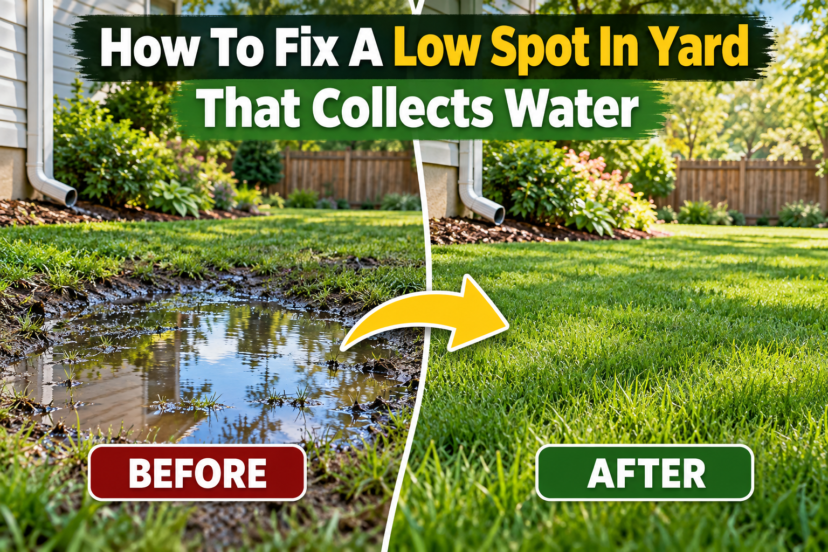
Easy Way To Fix Standing Water In Your Yard
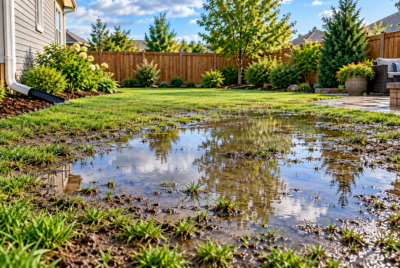
To fix a low spot in your yard that collects water, match the solution to the depression’s depth, your property’s slope, and how fast your soil drains. That stubborn puddle in your backyard may seem harmless after a rainstorm. But when the same patch of grass stays soggy for days, it can quickly become a frustrating problem. If you’re wondering how to fix a low spot in yard that collects water, the good news is that you may not need expensive landscaping equipment, a complicated drainage system, or a complete lawn renovation.
Many low spots develop gradually as soil settles, foot traffic compacts the ground, or runoff moves across your property. Sometimes, a simple layer of topsoil can solve the problem. Other situations require improving drainage or redirecting water before it reaches the depression.
The key is understanding where the water comes from before choosing a solution.
With a little observation and the right approach, you can turn a muddy, unusable patch of lawn into a healthier, more attractive outdoor space without spending more than necessary.
💧 Quick Answer: How To Fix A Low Spot In Yard That Collects Water
The best way to fix a low spot in your yard that collects water is to identify the water source, then choose a solution based on the depth of the depression and drainage conditions.
Shallow low spots can often be corrected with screened topsoil and grass seed. Deeper depressions may require regrading, while areas receiving heavy runoff may benefit from a French drain, catch basin, rain garden, or another approved drainage solution.
Always maintain proper drainage away from your home’s foundation.
Key Takeaways
Most Likely Cause: Uneven ground, compacted soil, or runoff collecting in a natural depression.
Usually Serious? Not always. However, standing water near a foundation or persistent pooling can indicate a larger drainage problem.
First Thing To Check: Watch where water flows during rainfall and how long it remains afterward.
Best Solution: Learning how to fix a low spot in your yard that collects water starts with matching the repair to the cause—usually leveling, improving drainage, or redirecting runoff.
🔍 Why Does Water Collect In Low Spots In Your Yard?
Before adding soil or digging a trench, understand why the puddle keeps returning.
Several common conditions can cause standing water.
1. Uneven Ground And Soil Settlement
Soil naturally settles over time, especially around recently built homes, filled trenches, and areas disturbed during construction.
As the ground sinks, small depressions develop where rainwater collects.
2. Compacted Soil
Heavy foot traffic, lawn equipment, and construction activity can compress soil particles.
Compacted ground has fewer spaces for water to move through, making it harder for rainwater to soak into the lawn.
3. Clay-Heavy Soil
Clay soil contains tiny particles that can slow water infiltration.
Homeowners in parts of the Midwest, Southeast, and other clay-rich regions may notice puddles lingering longer after heavy rain.
4. Poor Yard Grading
Your lawn should generally direct surface runoff away from buildings.
When the ground slopes toward a low area without a suitable outlet, water can become trapped.
5. Downspout Runoff
Roof gutters can release substantial amounts of water during storms.
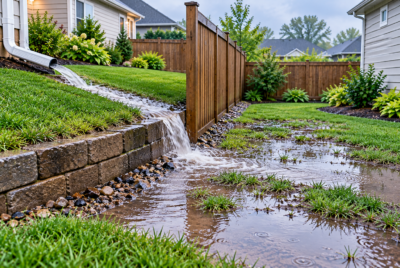
If a downspout empties into a low section of lawn, the resulting puddle may be caused more by concentrated runoff than by the depression itself.
🛠️ 7 Smart Ways To Fix A Low Spot In Your Yard That Collects Water
Not every drainage problem needs the same repair.
Here are seven practical options, starting with simpler, lower-cost improvements.
1. Fill A Shallow Low Spot With Topsoil
For small depressions that collect water after moderate rainfall, adding soil may be the easiest solution.
How To Do It:
-
Wait until the soil is reasonably dry.
-
Remove debris and damaged grass if necessary.
-
Add screened topsoil compatible with your existing soil.
-
Spread it evenly using a landscaping rake.
-
Blend the repaired area into the surrounding lawn.
-
Add grass seed or sod if needed.
-
Water lightly to establish the grass.
For established grass, apply thin layers of approximately ¼–½ inch at a time so you don’t bury the blades.
Deeper depressions may require removing and replacing the turf before filling.
Best For: Small, shallow low spots without major runoff problems.
Important: Filling a depression works only if water can still drain safely elsewhere. Avoid creating a new puddle closer to your house or your neighbor’s property.
2. Regrade The Yard To Improve Surface Drainage
When a depression is part of a larger grading problem, adding soil to one spot may not be enough.
Regrading involves reshaping the ground to create a gentle, continuous slope.
For example, the ground immediately around a home’s foundation commonly needs to fall away from the structure. A frequently cited benchmark is approximately 6 inches of fall over the first 10 feet where site conditions permit.
This is different from the gentle slopes typically used across lawn areas.
Best For: Larger low areas and yards with poor overall surface drainage.
Regrading may require professional help if it affects patios, walkways, foundations, or neighboring properties.
3. Install A French Drain For Persistent Water Problems
A French drain collects subsurface water through a gravel-filled trench, usually containing a perforated pipe, and carries it toward an appropriate outlet.
It can be useful where saturated soil keeps a low area wet.
However, a French drain is not always the best choice for a visible puddle caused by concentrated surface runoff. A surface inlet or grading correction may work better.
Before installing one, determine where the collected water will discharge legally and safely.
Best For: Persistent subsurface wetness with a suitable drainage outlet.
4. Create A Rain Garden In The Low Area
A rain garden can turn a drainage problem into an attractive landscaping feature.
These shallow planted areas are designed to temporarily hold runoff while water infiltrates into suitable soil.
Native plants and other moisture-tolerant species can add color and support pollinators.
A rain garden needs appropriate soil infiltration, sizing, and overflow planning. It should not simply be installed in a permanently waterlogged depression.
Best For: Suitable locations that receive occasional stormwater runoff and have enough infiltration capacity.
5. Improve Compacted Soil With Core Aeration
If your lawn feels hard underfoot, soil compaction may contribute to pooling.
Core aeration removes small plugs of soil, allowing better movement of air and water into the ground.
For improved results:
-
Aerate When The Soil Is Moist But Not Saturated.
-
Use A Core Aerator Rather Than Spike Shoes.
-
Reduce Repeated Foot Traffic.
-
Add Suitable Organic Matter Where Appropriate.
-
Avoid Operating Heavy Equipment On Wet Soil.
Aeration will not correct a major depression or fix an underlying drainage outlet problem.
Best For: Compacted lawns with slow infiltration.
6. Redirect Downspouts Away From The Low Spot
Sometimes the simplest solution is to stop sending additional water into the depression.
Observe where your gutter downspouts discharge during rainfall.
If a downspout empties directly into the low spot, consider a properly sloped extension, approved underground drain, or another suitable discharge arrangement.
Make sure the new outlet does not create erosion, foundation problems, or flooding on neighboring property.
Best For: Puddles caused mainly by roof runoff.
7. Install A Catch Basin Or Surface Drain
A catch basin collects surface water through a grated inlet and directs it into a connected drainage pipe.
This can work well in a clearly defined low spot where runoff gathers repeatedly.
Unlike a French drain, which primarily intercepts water moving through soil, a catch basin is designed to capture water at the surface.
It requires proper pipe slope, an approved discharge location, and periodic debris cleaning.
Best For: Concentrated surface pooling that cannot be resolved through simple leveling.
💰 Which Yard Drainage Solution Makes The Most Sense?
Choosing the least complicated effective repair can save money and reduce future maintenance.
| Yard Problem | Practical Starting Solution |
|---|---|
| Small, shallow depression | Add screened topsoil |
| Large uneven lawn | Regrade the affected area |
| Persistent subsurface wetness | Evaluate a French drain |
| Suitable area for stormwater planting | Consider a rain garden |
| Hard, compacted lawn | Core aeration |
| Water coming from roof gutters | Redirect downspouts |
| Concentrated surface puddle | Catch basin or surface drain |
The smartest approach is not necessarily the most expensive one.
A homeowner dealing with a shallow depression may only need soil, seed, and a rake. Installing underground drainage without investigating the cause could create unnecessary work.
🌱 How To Prevent Low Spots From Collecting Water Again
Once you’ve repaired the problem, a few simple habits can help protect your investment.
Maintain Healthy Grass
A healthy lawn supports soil structure and helps reduce erosion.
Choose grass varieties suited to your region and growing conditions.
Avoid Heavy Traffic On Wet Soil
Walking or driving equipment over saturated ground can increase compaction and create ruts.
Wait until the lawn has dried before mowing or performing heavy maintenance.
Keep Gutters And Drainage Outlets Clear
Leaves, sediment, and debris can block drainage pathways.
Check gutters, downspouts, and surface drains regularly, especially before heavy rainfall.
Monitor Changes After Storms
Walk around your yard after major storms.
Look for new depressions, soil erosion, unusually wet patches, and water flowing toward your foundation.
Catching small drainage problems early is usually easier than repairing widespread lawn damage later.
⚠️ When To Consult A Landscaping Or Drainage Professional
DIY repairs are reasonable for many shallow lawn depressions.
However, consider professional assistance when:
-
Water Collects Near Your Foundation Or Basement.
-
Large Sections Of Your Yard Remain Saturated.
-
The Ground Continues To Sink After Repairs.
-
You Suspect A Broken Water Line Or Underground Leak.
-
Drainage Work Could Affect Neighboring Properties.
-
The Repair Requires Major Excavation Or Underground Pipes.
A landscaper or drainage contractor can evaluate grading, soil conditions, and suitable drainage outlets before recommending a solution.
Before digging, contact 811 in the United States to have participating underground utility lines marked. Private lines may require separate locating.
❓ Frequently Asked Questions About Fixing Low Spots In A Yard
1. What Is The Cheapest Way To Fix A Low Spot In Your Yard?
For a small, shallow depression, adding screened topsoil and reseeding is often the cheapest solution. However, the repair must maintain proper surface drainage.
2. Can I Just Fill A Low Spot In My Yard With Dirt?
Yes, if the depression is shallow and the surrounding grading allows water to drain away. Use suitable soil rather than construction debris or loose fill that may settle unevenly.
3. What Is The Best Soil To Fill Low Spots In A Lawn?
Screened topsoil with a texture compatible with your existing soil is generally a good choice. Avoid creating an abrupt layer of very different soil that could interfere with water movement.
4. Will Sand Help Drain A Wet Spot In My Yard?
Adding sand alone usually will not solve a drainage problem. Mixing small amounts into clay-heavy soil can sometimes create an unfavorable soil structure. Correcting grading or improving soil conditions is often more effective.
5. How Do I Fix A Low Spot In My Yard Without Digging?
For minor depressions, you can gradually topdress the area with soil. You may also improve compacted soil through core aeration or redirect downspouts if runoff is the main cause.
6. Why Does My Yard Hold Water For Days After Rain?
Common causes include compacted soil, clay-heavy ground, poor grading, high groundwater, or concentrated runoff. If water persists, investigate the source before choosing a repair.
7. Should I Install A French Drain Or Fill The Low Spot?
Fill the low spot when the main problem is a shallow depression, and water has a safe drainage path. Consider a French drain when subsurface water is contributing to saturation and a suitable outlet is available. For concentrated surface runoff, a catch basin may be more appropriate.
🏡 Conclusion: A Drier Yard Starts With A Smarter Fix
Learning how to fix a low spot in yard that collects water doesn’t have to mean tearing up your lawn or investing in an expensive drainage system.
Start by observing where water comes from and how long it remains. Then choose the simplest repair that addresses the actual problem.
For some homeowners, a few bags of soil and fresh grass seed may be enough. Others may benefit from better grading, improved downspout drainage, or a carefully planned drainage system.
The goal is not just to eliminate one puddle. It’s to create a healthier, easier-to-maintain yard that you can enjoy after the rain stops.
A little planning today can mean less mud, fewer repairs, and more time enjoying your outdoor space.
Disclaimer: This article provides general homeowner information. Drainage conditions, soil types, building requirements, and stormwater regulations vary by location. Check local rules, identify underground utilities before digging, and consult a qualified professional for complex drainage or foundation-related problems.
Explore more:
- Why Is My French Drain Not Working?
- Do French Drains Work In Clay Soil?
- Where Should A French Drain Be Installed?

Comments are closed.