
Septic Drain Field Wet: Why It Stays Wet And Smells Bad (And What You Can Do)
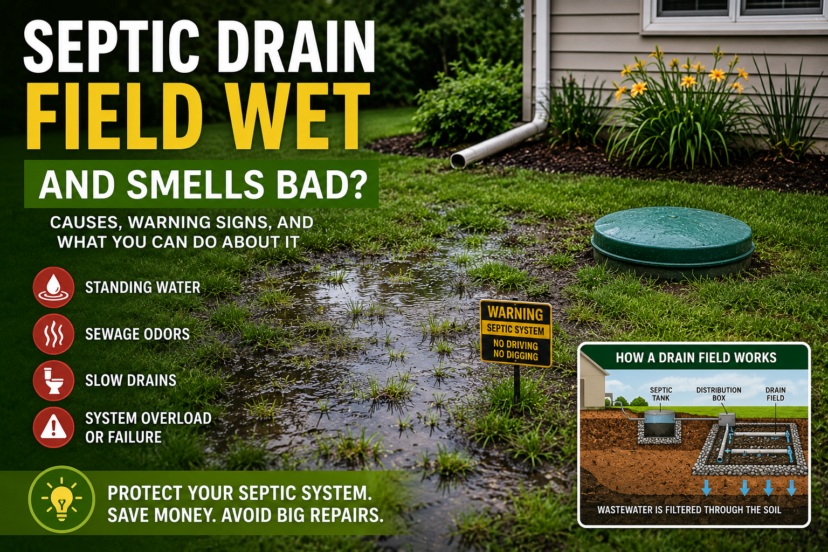
If you’ve noticed soggy ground, standing water, or unpleasant odors near your septic drain field, it’s easy to worry that something expensive is about to happen. While a septic drain field wet area doesn’t always mean total system failure, it is a warning sign you shouldn’t ignore.
A healthy septic drain field quietly filters wastewater underground without leaving puddles or strong sewage smells. When the drain field stays wet or starts smelling bad, it usually means the soil can no longer absorb wastewater properly, the system is overloaded, or another issue is preventing normal drainage.
The good news is that many problems can be caught early. Understanding what causes a wet drain field—and changing a few everyday habits—can sometimes prevent small issues from becoming major repairs.
Whether you recently bought a home with a septic system or have maintained one for years, this guide explains the most common causes, warning signs, and practical solutions to help keep your yard cleaner, healthier, and easier to maintain.
⭐ Quick Answer: Septic Drain Field Wet
A septic drain field wet condition is usually caused by excess water entering the system, clogged or damaged drain lines, compacted soil, poor drainage, or a failing septic system. If the area remains wet, smells like sewage, or wastewater backs up inside the home, the system should be inspected promptly.
Key Takeaways
Most likely cause: A wet drain field is commonly caused by too much wastewater entering the septic system, saturated soil, clogged distribution lines, poor yard drainage, or a drain field that is no longer absorbing wastewater efficiently.
Usually serious? Sometimes. A septic drain field wet area after heavy rain may be temporary, but persistent soggy ground, sewage odors, unusually lush grass, or wastewater surfacing over the field can indicate a septic problem that needs attention.
First thing to check: Look for recent heavy rainfall, leaking toilets or faucets, unusually high household water use, sewage odors, slow drains, and standing water directly over the drain field.
Best solution: Reduce unnecessary water use, repair household leaks, keep vehicles and heavy equipment off the drain field, and redirect roof or surface runoff away from the area. If wet conditions or odors continue, have the septic system inspected by a qualified septic professional.
💧 Why A Septic Drain Field Should Normally Stay Dry
Many homeowners assume a drain field is supposed to be wet because it handles wastewater.
Actually, the opposite is true.
A properly working septic system distributes partially treated wastewater underground where surrounding soil naturally filters and absorbs it. Most of this happens below the surface.
The ground above the drain field should usually appear:
- Dry
- Firm
- Free of standing water
- Mostly odor-free
- Covered with healthy grass
If water begins collecting on top of the drain field, something is interfering with that natural treatment process.
🚩 Common Signs Your Septic Drain Field Is Wet
A wet drain field often develops gradually.
Watch for these warning signs:
- Standing water after several dry days
- Spongy or muddy soil
- Sewage odors outdoors
- Extra-green patches of grass
- Slow household drains
- Gurgling toilets
- Sewage backing up into sinks or tubs
- Persistent wet spots that never dry
The earlier you notice these symptoms, the better your chances of avoiding costly repairs.
🌧️ Heavy Rain Can Cause A Septic Drain Field Wet Condition
One of the most common temporary causes is excessive rainfall.
During long periods of rain:
- Soil becomes saturated.
- Groundwater rises.
- The drain field cannot absorb wastewater efficiently.
- Water may temporarily collect near the surface.
This usually improves once the soil dries.
To reduce stress during rainy periods:
- Spread laundry loads throughout the week.
- Limit long showers.
- Delay heavy water use if possible.
- Repair leaking faucets promptly.
Reducing household water entering the system gives the drain field more time to recover.
🚽 Too Much Household Water Overloads The Drain Field
Many septic problems begin inside the home.
Large amounts of water entering the septic tank too quickly can overwhelm the drain field.
Common causes include:
- Multiple loads of laundry in one day
- Long showers
- Running toilets
- Leaking plumbing fixtures
- Large bathtubs
- Continuous dishwasher use
Simple water-saving habits reduce unnecessary stress on your septic system year-round.
🌱 Tree Roots Can Block Septic Drain Lines
Trees naturally seek moisture.
Unfortunately, septic drain lines provide an attractive water source.
Aggressive root systems may invade:
- Distribution pipes
- Drain field laterals
- Outlet pipes
Common problem trees include:
- Willow
- Poplar
- Silver maple
- Cottonwood
When planting trees, always follow recommended setback distances from septic components.
🧱 Soil Compaction Can Prevent Proper Drainage
Healthy drain fields depend on loose, oxygen-rich soil.
Driving vehicles over the drain field can compact soil and crush underground pipes.
Avoid placing these items on your drain field:
- Cars
- Trucks
- RVs
- Storage sheds
- Swimming pools
- Heavy trailers
- Construction materials
Compacted soil reduces its ability to absorb and naturally filter wastewater.
🚫 Clogged Drain Lines Can Leave The Septic Drain Field Wet
Over time, drain field pipes can become restricted by:
- Grease buildup
- Sludge carryover
- Root intrusion
- Biofilm
- Soil movement
When wastewater cannot move evenly through the drain field, it may rise toward the surface.
Routine septic tank pumping helps reduce solids reaching the drain field and extends its lifespan.
🛠️ A Full Septic Tank Can Affect The Drain Field
Many homeowners mistakenly believe the drain field is the only part of the system that matters.
In reality, the septic tank protects the drain field.
If the tank becomes overfilled with solids:
- Waste escapes into drain lines.
- Soil pores become clogged.
- Drain field performance declines.
Most residential septic tanks should be inspected regularly and pumped as recommended based on household size, tank capacity, and water usage.
🌿 Landscaping Can Help Protect Your Drain Field
The right landscaping supports long-term septic health.
Good choices include:
- Grass
- Native wildflowers
- Shallow-rooted ground covers
- Pollinator-friendly plants
Avoid planting:
- Large shrubs
- Deep-rooted trees
- Vegetable gardens
- Raised beds requiring heavy soil
- Plants needing frequent watering
Simple landscaping helps maintain healthy soil conditions around the drain field.
💦 Surface Water Can Make A Septic Drain Field Wet
Sometimes the septic system isn’t the original problem.
Poor yard drainage may send rainwater directly onto the drain field.
Sources include:
- Downspouts
- Roof runoff
- Driveway drainage
- Hillside runoff
- Broken irrigation systems
Improving drainage can reduce excess moisture entering the drain field.
Helpful solutions include:
- Redirecting downspouts
- Installing swales
- Extending gutter drains
- Improving grading
- Repairing sprinkler leaks
Keeping excess water away improves soil performance.
🧻 What Should Never Go Into A Septic System?
Preventing drain field problems often starts with what you flush.
Never flush:
- Baby wipes
- “Flushable” wipes
- Paper towels
- Feminine hygiene products
- Dental floss
- Grease
- Cooking oil
- Cat litter
- Harsh chemicals
These materials either clog pipes or disrupt the beneficial bacteria inside the septic tank.
🏡 Smart Backyard Habits That Protect Your Septic System
Small habits make a big difference.
Protect your drain field by:
- ✔ Conserving household water
- ✔ Pumping the septic tank on schedule
- ✔ Keeping vehicles off the drain field
- ✔ Planting shallow-rooted landscaping
- ✔ Directing rainwater away
- ✔ Repairing plumbing leaks quickly
- ✔ Avoiding chemical drain cleaners
- ✔ Monitoring unusual wet areas after storms
These simple practices help extend septic system life while reducing unexpected repair costs.
👷 When To Consult A Professional
Some septic issues require professional diagnosis and repair.
Contact a licensed septic contractor if:
- Wet areas remain for several days during dry weather.
- Sewage odors become stronger.
- Wastewater backs up into the house.
- Toilets and drains become consistently slow.
- Standing water increases over time.
- You suspect damaged drain lines.
- The septic tank has not been inspected or pumped in many years.
Prompt inspections often identify problems before they become full system failures.
❓ FAQs: Septic Drain Field Wet
1. Is it normal for a septic drain field to be wet?
No. While heavy rain can temporarily saturate the area, a healthy drain field should not remain wet during normal weather conditions.
2. Why does my septic drain field smell like sewage?
Sewage odors often indicate wastewater is not filtering properly through the soil due to saturation, clogs, or septic system failure.
3. Can heavy rain cause septic problems?
Yes. Excess rainfall can temporarily overwhelm saturated soil, reducing the drain field’s ability to absorb wastewater.
4. How can I dry out a septic drain field?
Reduce household water use, redirect surface runoff, repair leaks, and allow the soil time to recover. Persistent wetness should be professionally evaluated.
5. Can I mow over a septic drain field?
Yes. Grass should be mowed normally, but avoid heavy riding equipment when the ground is very wet.
6. How often should a septic tank be pumped?
Most septic tanks should be pumped every 3 to 5 years. The ideal schedule depends on household size, tank capacity, and usage. Regular inspections help determine the proper pumping interval.
7. Can a failing drain field be repaired?
Sometimes. Minor issues may be corrected through repairs or drainage improvements, while severely damaged drain fields may require partial or complete replacement.
🎯 Conclusion: Septic Drain Field Wet
A septic drain field wet area is more than just an inconvenience—it’s your yard’s way of signaling that something isn’t working as it should. Fortunately, many issues begin with manageable causes such as excess water use, poor drainage, or overdue maintenance.
By recognizing early warning signs, practicing smart water habits, protecting the drain field from damage, and scheduling regular inspections, you can often avoid major repairs while extending the life of your septic system.
A little attention today can save thousands of dollars tomorrow—and help keep your backyard cleaner, healthier, and far easier to enjoy for years to come.
Disclaimer: This article is for general informational purposes only and should not replace professional septic system inspection or repair. Septic regulations, permitting requirements, and maintenance recommendations vary by state and local jurisdiction. Always consult a licensed septic professional if you suspect system failure or sewage contamination.
 Explore more:




Comments are closed.