
Best Solar Backyard Lights That Last All Night: 9 Smart Picks And Buying Tips
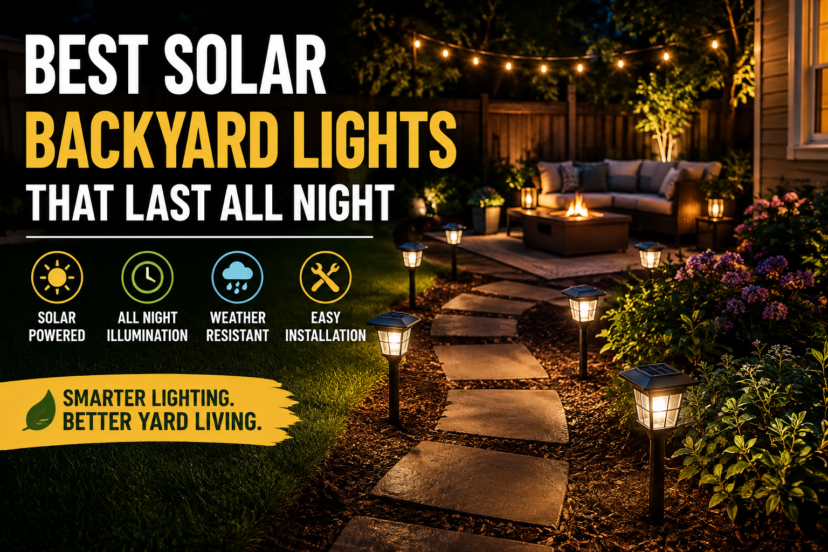
A dark backyard can make an otherwise inviting outdoor space feel unfinished, inconvenient, and harder to use after sunset. The good news is that adding dependable lighting does not have to mean trenching electrical cable across your yard or increasing your monthly power bill. The best solar backyard lights can illuminate pathways, patios, fences, gardens, and gathering areas using nothing more than sunlight collected during the day.
The challenge is finding solar lights that actually perform well after dark. Some inexpensive models look bright for an hour or two and then fade long before morning. Others struggle after cloudy weather or fail after one wet season.
The smarter approach is to choose lights based on battery capacity, solar panel exposure, weather resistance, and the amount of illumination you actually need. With the right setup, homeowners can create a safer, more attractive backyard without complicated wiring or expensive upgrades.
☀️ Quick Answer: Best Solar Backyard Lights
The best solar backyard lights combine an efficient solar panel, rechargeable battery, weather-resistant construction, and enough daylight exposure to provide useful illumination through much of the night. For pathways and gardens, moderate-output LED lights usually work best. For fences, patios, and security areas, choose brighter fixtures with larger solar panels, higher-capacity batteries, or motion sensors. Placement matters almost as much as the light itself—most solar fixtures perform best with several hours of direct sunlight each day.
Key Takeaways
- Most likely cause: Solar lights that fail to last all night usually have insufficient daytime charging, small batteries, dirty panels, or excessive brightness settings.
- Usually serious? No. Poor nighttime performance is normally an efficiency or placement problem rather than a major electrical issue.
- First thing to check: Make sure the solar panel receives several hours of unobstructed direct sunlight and is clean.
- Best solution: Choose the best solar backyard lights for each location rather than using one type everywhere, and prioritize good panels, adequate battery capacity, durable construction, and smart placement.
💡 What Makes Solar Backyard Lights Last All Night?
Solar lighting sounds simple: sunlight charges a battery during the day, and the stored energy powers LEDs at night. But the quality and size of each component can dramatically affect performance.
A small decorative light may have only enough stored energy for several hours of low-level illumination. A better-designed fixture can collect and store more energy, allowing it to operate much longer.
Four factors matter most:
- Solar Panel Efficiency: A larger or more efficient panel can collect more energy during limited daylight.
- Battery Capacity: Larger rechargeable batteries generally store more power for nighttime operation.
- LED Efficiency: Efficient LEDs produce more usable light from the available battery power.
- Lighting Mode: Motion-activated or dim-to-bright settings can extend runtime compared with maximum brightness all night.
Local conditions also matter. A solar light in sunny Arizona may charge very differently from the same fixture during a cloudy winter week in Washington state.
That is why advertised runtime should be treated as an ideal-condition estimate rather than a guarantee.
🌙 9 Best Types Of Solar Backyard Lights
There is no single solar fixture that works perfectly everywhere. A smarter backyard uses different lighting styles for different jobs.
1. Solar Pathway Lights
Solar pathway lights are one of the easiest ways to improve both appearance and nighttime visibility.
They work well beside:
- Walkways
- Garden paths
- Driveway edges
- Patio approaches
- Landscape beds
Look for fixtures that direct light toward the ground instead of wasting illumination outward. Warm-white LEDs often create a softer residential appearance than very cool blue-white light.
For longer runtime, avoid placing pathway lights underneath dense shrubs or trees where their panels remain shaded.
2. Solar Motion-Sensor Lights
If your goal is brighter illumination without draining the battery continuously, motion-sensor lights are one of the smartest choices.
These fixtures can remain off or dim until movement is detected, then temporarily switch to higher brightness.
They are useful near:
- Gates
- Sheds
- Side yards
- Garage approaches
- Backyard entrances
Because the LEDs do not need to operate at maximum output continuously, motion activation can help conserve stored energy.
3. Solar Fence Lights
Fence-mounted lights can add subtle illumination without cluttering the lawn.
They are particularly useful around decks, privacy fences, gates, and perimeter areas. Mounting them higher can also help the solar panels receive better sun exposure than ground-level fixtures.
Before drilling into a fence, consider how the fixture will receive sunlight throughout the year. A sunny fence in summer could become shaded when the sun sits lower in winter.
4. Solar String Lights
For patios, pergolas, gazebos, and outdoor dining spaces, solar string lights create atmosphere without requiring a nearby outlet.
The most useful designs have a separate solar panel connected by a cable. This allows you to hang the lights in a shaded seating area while positioning the panel somewhere sunny.
Choose outdoor-rated string lights designed for permanent or seasonal exterior exposure.
5. Solar Spotlights
Solar spotlights are designed to highlight individual landscape features.
They work well for:
- Trees
- Architectural details
- Garden features
- House numbers
- Landscape focal points
Because spotlights require more brightness than small pathway lights, battery and panel quality become especially important.
Adjustable panels are helpful because you can aim the light at one object while pointing the solar collector toward the strongest sunlight.
6. Solar Deck And Step Lights
Steps, deck edges, and elevation changes can become difficult to see after dark.
Compact solar step lights can provide low-level guidance without overpowering the space.
The goal should usually be visibility rather than extreme brightness. Strategically placed low-output fixtures can define edges and transitions while using less stored energy.
7. Solar Post Cap Lights
If your deck or fence already has posts, solar post cap lights provide a clean, integrated look.
They are easy to install and can create consistent perimeter lighting without running electrical wiring from post to post.
Measure your posts carefully before purchasing. Common post sizes vary, and not every cap fits every fence or deck system.
8. Solar Hanging Lights
Solar lanterns and hanging fixtures work well in covered seating areas, pergolas, and decorative garden spaces.
Models with separate panels tend to be more practical when the actual fixture hangs underneath a roof or tree canopy.
These lights are usually best for atmosphere rather than strong task lighting.
9. Solar Floodlights
When you need significantly more illumination, solar floodlights are worth considering.
The best solar backyard lights in this category usually have a larger separate solar panel and a higher-capacity battery.
They can work around sheds, detached garages, driveways, gates, and other areas where installing conventional electrical service would be inconvenient.
Motion activation is especially valuable with high-output floodlights because continuous full brightness can consume stored energy quickly.
🔋 How To Choose Solar Lights That Actually Last
Ignore flashy packaging for a moment and focus on how the lighting system works.
Check The Battery
Battery capacity affects how much solar energy can be stored during the day.
Higher-capacity batteries can potentially support longer runtime, but only when the solar panel can recharge them adequately.
A huge battery paired with a tiny shaded panel will not solve the problem.
Consider The Solar Panel
Panel placement is critical.
Look for adjustable panels when possible, especially with spotlights and floodlights. A separate panel is useful when the fixture itself must be installed in shade.
Look At Lumens
Lumens measure light output.
You generally do not need maximum brightness everywhere. Decorative paths and gardens can use softer lighting, while entrances and work areas may need significantly more output.
Higher brightness usually requires more energy, so buying the brightest fixture is not automatically the smartest choice.
Check Weather Resistance
Backyard lights must deal with rain, irrigation, dust, heat, freezing temperatures, and seasonal weather changes.
Look for fixtures specifically rated for outdoor use. An IP rating can help indicate resistance to dust and water exposure.
For year-round installations, construction quality is often worth paying more for.
🌤️ Why Solar Lights Stop Working Before Morning
Even good solar lights can struggle under poor conditions.
The most common problem is inadequate sunlight.
A panel may look exposed while actually receiving only a short period of direct sun because of a roofline, fence, tree, or neighboring building.
Other common causes include:
- Dirty Solar Panels: Dust, pollen, leaves, and bird debris can reduce charging performance.
- Aging Batteries: Rechargeable batteries gradually lose capacity.
- Winter Conditions: Shorter days provide less charging time while nights become longer.
- Cloudy Weather: Several overcast days can reduce available stored energy.
- High Brightness Settings: Maximum output consumes battery power faster.
- Landscape Growth: Plants can eventually shade panels that were exposed when originally installed.
Before replacing a weak light, clean the panel and test the fixture in a sunnier location.
🛠️ How To Get More Runtime From Solar Backyard Lights
You can often improve performance without buying anything new.
Start by observing your backyard during the middle of the day. Identify areas receiving the longest stretches of direct sunlight.
Then make a few simple improvements:
- Clean Panels Regularly: Wipe away dirt and pollen with a soft damp cloth.
- Trim Nearby Vegetation: Keep shrubs and branches from shading panels.
- Adjust Panel Angles: Aim adjustable panels toward stronger sun exposure.
- Use Lower Brightness Modes: Dimmer settings can extend battery life.
- Choose Motion Detection: Save maximum brightness for when it is actually needed.
- Replace Rechargeable Batteries When Appropriate: Some fixtures allow worn batteries to be replaced rather than replacing the entire light.
A few minutes of seasonal maintenance can make a noticeable difference.
🌿 Smarter Backyard Lighting Strategies
The smartest outdoor lighting plan does not try to make your backyard as bright as an indoor room.
Instead, use layers of light.
Install pathway lights where people walk. Use gentle accent lighting around landscaping. Put brighter motion-activated fixtures near gates or entrances.
This approach can reduce unnecessary energy use while creating a more comfortable atmosphere.
It can also help limit excessive nighttime light. Aim fixtures downward when possible and avoid shining strong lights toward neighboring properties or directly into the sky.
Solar lighting works best when it solves a specific problem rather than simply adding more brightness.
💰 Are Solar Backyard Lights Worth The Money?
For many homeowners, yes—especially where installing electrical wiring would be expensive or inconvenient.
Solar lights generally offer:
- No electricity usage from the grid
- Minimal wiring
- Simple DIY installation
- Flexible placement
- Easy relocation
- Low routine maintenance
However, solar lighting is not always a perfect replacement for wired outdoor lighting.
If you need dependable high-output illumination every night regardless of weather, professionally installed low-voltage or line-voltage lighting may be more reliable.
For pathways, landscaping, patios, fences, and occasional security lighting, however, the best solar backyard lights can provide an excellent balance of convenience and cost.
👷 When To Consult A Professional
Most standalone solar landscape lights are straightforward DIY projects, but professional help makes sense when your project includes major deck modifications, difficult mounting locations, extensive landscape redesign, or a combination of solar and hardwired electrical lighting.
Consult a qualified electrician for work involving household electrical circuits. A landscaper or outdoor lighting professional can also help develop a larger lighting plan that improves visibility without creating glare or unnecessary light.
Always follow local building requirements, HOA rules, and manufacturer installation instructions.
❓ Frequently Asked Questions About Solar Backyard Lights
What Are The Best Solar Backyard Lights That Stay On All Night?
Look for lights with efficient solar panels, adequate rechargeable battery capacity, energy-efficient LEDs, and lower-output or motion-sensing modes. Proper exposure to direct sunlight is equally important.
How Many Hours Should Solar Lights Last At Night?
Runtime varies widely by fixture, battery size, brightness setting, season, and daytime sunlight. Some quality lights can operate through much of the night after a strong charge, while poor weather can significantly reduce runtime.
Do Solar Lights Charge On Cloudy Days?
Yes, solar panels can still collect some energy under cloudy conditions, but charging is usually reduced compared with bright direct sunlight. Several cloudy days may shorten nighttime performance.
Why Do My Solar Lights Only Last A Few Hours?
Insufficient sunlight, dirty panels, aging rechargeable batteries, heavy shade, or a high-brightness setting are common reasons. Start by cleaning the panel and testing the fixture in a sunnier location.
Should You Turn Solar Lights Off To Charge?
Normally, properly designed solar lights can charge automatically during daylight without needing to be switched off manually. Follow the manufacturer’s instructions because operation varies between models.
Can Solar Lights Stay Outside During Winter?
Many outdoor-rated solar lights can remain outside year-round, but performance may decrease during winter because daylight hours are shorter and sunlight may be weaker. Snow covering the panel will also prevent effective charging.
Are Solar Lights Better Than Wired Landscape Lights?
It depends on the job. Solar lights are easier and less expensive to install in many locations, while wired landscape lighting generally provides more consistent output and does not depend on daily sunlight. Many yards benefit from using both.
🎯 Final Thoughts On Best Solar Backyard Lights
The best solar backyard lights are not necessarily the brightest or most expensive. They are the fixtures that match your yard, receive enough sunlight, store enough energy, and provide the right amount of illumination for the job.
Start with the areas where lighting would make the biggest difference—perhaps a dark pathway, patio, fence line, or backyard gate. Choose the appropriate fixture, give its solar panel the best possible sun exposure, and use efficient lighting modes whenever possible.
You do not need to become a landscape lighting expert or completely redesign your property. A few carefully chosen solar fixtures can make your backyard easier to navigate, more inviting after sunset, and less dependent on grid electricity.
That is what better yard living is about: making practical improvements that save money, reduce maintenance, and help you enjoy your outdoor space more.
Disclaimer: This article provides general home and yard improvement information. Product performance varies by climate, installation, sunlight exposure, and manufacturer. Follow manufacturer instructions and local regulations, and use a qualified professional for electrical work or installations beyond your DIY experience.
 Explore more:

Comments are closed.