Energy Efficient Backyard: 12 Smart Ways To Save Energy Without Overspending
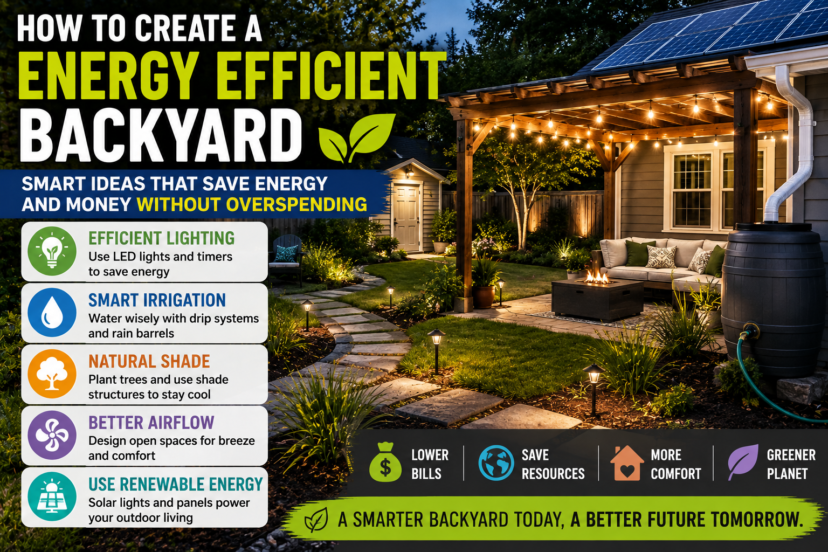
Your backyard can quietly use more energy and money than you realize. Outdoor lighting runs longer than necessary, irrigation pumps work inefficiently, electric tools require charging, and an unshaded patio may depend on fans just to stay comfortable. The good news is that creating an energy efficient backyard doesn’t require expensive solar installations or a complete landscape renovation.
Some of the best improvements are surprisingly simple. Switching older outdoor bulbs to LEDs, using timers or motion sensors, creating natural shade, maintaining pumps and equipment, and designing landscaping around your local climate can all reduce unnecessary energy use.
The goal isn’t to eliminate electricity from your backyard. It’s to use energy where it actually improves your outdoor space and stop wasting it where it doesn’t.
By making a few strategic upgrades at a time, homeowners can create a backyard that’s more comfortable, easier to maintain, and less expensive to operate year after year.
⚡ Quick Answer: Energy Efficient Backyard
An energy efficient backyard uses efficient lighting and equipment, smart controls, strategic shade, and climate-appropriate landscaping to reduce unnecessary electricity and water use. Start by replacing frequently used outdoor bulbs with LEDs, putting decorative lighting on timers, using motion sensors where appropriate, maintaining pumps and irrigation systems, and creating natural shade around patios. Prioritize inexpensive changes with measurable savings before investing in larger upgrades.
Key Takeaways
- Most likely cause: Higher backyard energy costs often come from inefficient lighting, equipment running unnecessarily, poorly maintained pumps, excessive irrigation, and outdoor spaces that depend heavily on powered cooling.
- Usually serious? Usually not, but small amounts of wasted energy can add up over years of backyard use.
- First thing to check: Identify every outdoor device that uses electricity and note how many hours it operates.
- Best solution: Build an energy efficient backyard gradually by reducing unnecessary runtime, upgrading frequently used equipment, and using landscaping to provide natural shade and comfort.
💡 Where Your Backyard Uses Energy
Before buying energy-saving products, identify where electricity is actually being consumed.
Common backyard energy users include:
- Landscape lighting
- Patio and string lights
- Pool pumps
- Hot tubs
- Pond pumps
- Outdoor refrigerators
- Ceiling and portable fans
- Irrigation equipment
- Electric grills and cooking appliances
- Power tools
- Bug-control devices
- Water features
Not every device represents a major expense. A few small LED landscape lights, for example, may use relatively little electricity.
A pool pump operating for hours every day can be a much larger energy user.
This is why the smartest strategy is to focus first on equipment with either high wattage or long operating hours.
🌿 12 Ways To Create A More Energy Efficient Backyard
1. Replace Older Outdoor Bulbs With LEDs
Lighting is one of the easiest places to begin.
LED bulbs generally use substantially less electricity than traditional incandescent bulbs while also lasting longer.
Prioritize fixtures that operate for several hours every night, such as:
- Porch lights
- Patio lights
- Landscape fixtures
- Security lighting
- Outdoor dining lights
You don’t necessarily need to replace every working bulb immediately. Start with the lights used most often, then replace others as they fail.
Make sure replacement bulbs and fixtures are appropriately rated for their outdoor location.
2. Put Outdoor Lights On Timers
One of the simplest ways to reduce wasted electricity is to stop lighting an empty backyard all night.
Timers can automatically turn decorative lights off after your normal outdoor-use hours.
Smart outdoor plugs offer even more control, but basic mechanical or digital timers can work perfectly well.
For example, instead of running patio string lights from sunset until sunrise, schedule them to turn off around bedtime.
This creates an energy efficient backyard without changing how the space feels when you’re actually using it.
3. Use Motion Sensors For Security Lighting
Security lights don’t always need to remain at full brightness continuously.
Motion-activated fixtures can provide strong illumination when someone enters an area while reducing unnecessary runtime.
They work particularly well around:
- Side yards
- Gates
- Sheds
- Detached garages
- Driveways
- Backyard entrances
Position sensors carefully so moving tree branches, passing vehicles, or animals don’t constantly trigger them.
4. Use Solar Lighting Where It Makes Sense
Solar lighting can work well in areas where running electrical wiring would be inconvenient.
Good locations include:
- Garden paths
- Fence lines
- Landscape beds
- Steps
- Remote corners
- Decorative areas
Solar lights aren’t automatically better for every situation. Their performance depends on sunlight, panel size, battery quality, and weather.
For areas requiring dependable high-output lighting every night, efficient wired LEDs may still be the better solution.
Use solar where its strengths match the job.
5. Create Natural Shade Around Your Patio
A patio exposed to intense afternoon sun can become uncomfortable enough that homeowners rely heavily on fans or other cooling equipment.
Shade can reduce direct solar heat before electricity is needed.
Options include:
- Shade trees
- Pergolas
- Patio umbrellas
- Awnings
- Properly installed shade sails
In hot regions of the United States, positioning shade to reduce western afternoon sun can make a noticeable difference.
Deciduous trees can be particularly useful in some climates because they provide shade during summer while allowing more sunlight through after their leaves fall.
6. Improve Natural Airflow
Fans are useful, but your backyard layout can sometimes provide free cooling.
Avoid unnecessarily enclosing seating areas with dense shrubs, solid screens, and oversized furniture on every side.
Instead, keep useful breeze paths open.
Use overhead shade while maintaining airflow around the sides of your patio.
When fans are necessary, use them while people are actually present. Fans cool people through air movement; they don’t meaningfully lower the temperature of an empty outdoor space.
7. Choose Efficient Pool Equipment
For homes with swimming pools, pumps can be among the largest outdoor electricity users.
If you have an older pool pump, ask a qualified pool professional whether a more efficient pump or operating schedule would make sense.
Variable-speed pool pumps can operate at lower speeds when full power isn’t necessary, potentially reducing energy use compared with older single-speed equipment.
However, proper sizing and programming matter.
Don’t reduce circulation blindly. Pool sanitation and equipment requirements still need to be met.
8. Maintain Pumps And Water Features
Pond pumps, fountains, pool pumps, and other water-moving equipment perform best when properly maintained.
Debris, clogged filters, blocked intakes, and worn components can reduce performance.
Follow manufacturer recommendations for cleaning and maintenance.
Also ask whether every water feature needs to run continuously.
Some decorative fountains can operate on timers, although ponds containing fish or relying on circulation for water quality may have different requirements.
9. Make Irrigation Smarter
Water efficiency and energy efficiency are often connected.
Municipal water systems require energy to treat and move water, while homes using wells may use electricity directly to operate pumps.
Reducing unnecessary irrigation can therefore provide benefits beyond the water bill.
Improve efficiency by:
- Repairing leaks
- Correcting sprinkler overspray
- Using drip irrigation where appropriate
- Watering according to plant needs
- Using weather-based controls where practical
- Grouping plants with similar water requirements
Don’t irrigate sidewalks, driveways, or empty areas.
10. Use Climate-Appropriate Landscaping
A landscape designed for your region usually requires less intervention.
Choose plants suited to your local:
- Temperature range
- Rainfall
- Soil
- Sun exposure
- Winter conditions
This can reduce dependence on irrigation, replacement plants, and intensive maintenance.
Your local Cooperative Extension service can provide guidance on suitable plants for your region.
An energy efficient backyard doesn’t need to look dry or sparse. It simply uses plants that fit the conditions you actually have.
11. Choose Efficient Outdoor Appliances
Outdoor kitchens are becoming increasingly popular, but every appliance adds another potential energy load.
Before adding an outdoor refrigerator, ice maker, television, or other appliance, ask how often you’ll actually use it.
When replacing equipment, compare efficiency and operating costs rather than focusing only on purchase price.
Also consider placement.
A refrigerator sitting in intense afternoon sun may have to work harder than one located in an appropriately shaded, ventilated outdoor kitchen designed for the appliance.
Always use equipment rated and installed for outdoor conditions.
12. Maintain Electric Yard Tools Properly
Battery-powered lawn mowers, trimmers, blowers, and other tools can reduce the need to store gasoline, but batteries still need to be charged and maintained correctly.
Follow manufacturer recommendations regarding charging and storage.
Keep cutting blades sharp and equipment clean. A poorly maintained mower may require more time and effort to complete the same job.
More importantly, design the yard to require less repetitive maintenance.
Reducing awkward strips of lawn or replacing difficult mowing areas with low-maintenance landscaping may save more time and energy than buying another tool.
💰 Start With The Upgrades That Pay Back Fastest
You don’t need to purchase everything at once.
Begin with inexpensive improvements:
- Turn Things Off: Stop unnecessary equipment runtime.
- Add Timers: Automate lighting and appropriate devices.
- Replace High-Use Bulbs: Switch frequently used lighting to LEDs.
- Repair Irrigation Leaks: Stop wasting water.
- Clean Equipment: Keep pumps, filters, and fixtures operating properly.
- Rearrange The Patio: Take advantage of existing shade and airflow.
- Add Strategic Shade: Use an umbrella before building a permanent structure.
These improvements can deliver benefits without a major upfront investment.
Then consider larger projects only after you’ve addressed the easy waste.
☀️ Solar Power: Useful, But Start Small
When homeowners hear “energy efficient,” solar power often comes to mind.
Solar can certainly play a role, but you don’t need to cover your backyard with panels.
Small solar-powered devices can be useful for remote lighting and certain low-power applications.
Larger solar electrical systems require more careful evaluation. Roof or ground-mounted solar depends on sunlight, utility rates, incentives, installation costs, and local regulations.
Don’t buy expensive solar equipment simply because it sounds environmentally friendly.
Calculate what the device replaces, how much energy it will realistically produce, and whether the savings justify the cost.
🌳 Landscaping Can Reduce Energy Use Around The House Too
Your backyard design can potentially influence the comfort of your home.
Strategically positioned trees can shade windows, walls, and outdoor living areas during hot weather.
However, tree placement requires long-term thinking.
Consider mature height, canopy spread, root systems, overhead utilities, fire risk, storm exposure, and distance from structures.
A small tree planted today could become a major landscape feature decades from now.
For large trees near buildings, consult an arborist or landscape professional.
📊 How To Find Your Biggest Backyard Energy Wasters
You can perform a simple backyard energy audit.
Walk around your property and write down every device that uses electricity.
For each device, note:
- Rated wattage when available
- Approximate daily runtime
- How often it’s used
- Whether it runs when nobody is outside
- Whether a timer could reduce runtime
- Whether a more efficient replacement exists
A device that uses 10 watts for a few hours may not deserve much attention.
A much higher-wattage device operating many hours every day deserves closer investigation.
Focus on the biggest opportunities first.
♻️ Energy Efficiency Doesn’t Mean Buying More Products
This is an important point.
Creating an energy efficient backyard isn’t about filling your property with smart gadgets.
Sometimes the most efficient upgrade is removing something unnecessary.
You may not need six hours of decorative lighting every night. You may not need to irrigate an unused strip of lawn. And you may not need a powered cooling device if an umbrella solves the heat problem.
Efficiency is about getting the benefit you want while using fewer resources.
That mindset usually saves more money than constantly purchasing new “green” products.
👷 When To Consult A Professional
Many improvements—such as replacing compatible bulbs, using plug-in timers, adjusting irrigation schedules, or adding an umbrella—are straightforward for homeowners.
Hire a qualified electrician, contractor, landscaper, arborist, irrigation specialist, or pool professional when work involves new electrical circuits, permanent wiring, structural shade systems, major tree work, complex irrigation modifications, or pool equipment changes.
Outdoor electricity and water require particular care. Use weather-rated products, GFCI protection where required, and follow local electrical and building codes.
❓ FAQs About An Energy Efficient Backyard
How Can I Make My Backyard More Energy Efficient?
Start by reducing unnecessary outdoor lighting and equipment runtime. Use LEDs, timers, motion sensors, strategic shade, efficient irrigation, and climate-appropriate landscaping. Maintain pumps and other equipment so they operate as intended.
Do Solar Outdoor Lights Save Electricity?
Solar lights generate their operating energy from sunlight, so they don’t normally draw household electricity during use. However, performance and longevity vary, so they’re most useful where their light output and charging conditions match your needs.
Do LED Outdoor Lights Use Less Electricity?
Yes. LED lighting generally uses substantially less electricity than traditional incandescent lighting for a similar amount of light and usually lasts longer.
Do Outdoor Fans Use A Lot Of Electricity?
Energy use varies by fan size, motor, speed, and runtime. Rather than leaving fans operating continuously, use them when people are occupying the space.
How Can Landscaping Improve Energy Efficiency?
Strategically placed shade trees and plants can reduce direct solar exposure around patios and parts of the home. Climate-appropriate landscaping may also reduce irrigation and maintenance requirements.
Is A Smart Irrigation Controller Worth It?
It can be, particularly for landscapes where irrigation schedules frequently need adjustment for weather and seasonal conditions. Potential savings depend on the existing system, climate, landscaping, and how efficiently you already water.
What Is The Cheapest Energy-Saving Backyard Upgrade?
Turning unnecessary lights and equipment off costs nothing. After that, timers, efficient LED bulbs, irrigation repairs, and using existing shade are among the easiest low-cost improvements.
📌 Final Thoughts On Energy Efficient Backyard
Creating an energy-efficient backyard doesn’t require a huge budget or a complicated renovation.
Start by eliminating waste.
Turn off lights nobody needs. Put frequently used lighting on timers. Repair irrigation leaks. Keep pumps and equipment maintained. Use natural shade and airflow before adding powered cooling.
Then invest strategically.
A better LED fixture, efficient pool pump, shade tree, or smart irrigation controller can make sense when it solves a real problem and reduces an ongoing expense.
The goal isn’t to build the most technologically advanced backyard on the block.
It’s to create an outdoor space that gives you more comfort and enjoyment while demanding less energy, water, maintenance, and money in return.
Make one improvement at a time, and those small savings can continue adding up year after year.
That’s better yard living: a backyard that works smarter so you don’t have to work harder.
Disclaimer: This article provides general home, landscaping, and energy-efficiency information. Energy costs, climate conditions, utility programs, codes, rebates, and equipment requirements vary by location. Follow manufacturer instructions and consult qualified professionals for electrical, structural, pool, irrigation, or major landscaping work.
 Explore more:
- How To Stop Backyard Mud: 11 Smart Ways
- Backyard Layout Ideas: 11 Smart Ways
- Standing Water Near House Foundation?