Backyard Layout Ideas: 11 Smart Ways To Improve Airflow And Outdoor Comfort
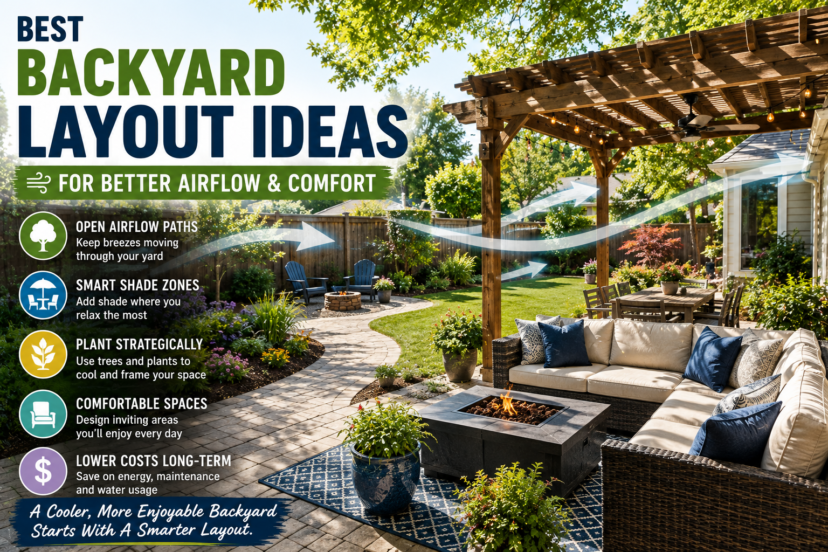
A backyard can have beautiful furniture, healthy landscaping, and an attractive patio yet still feel uncomfortable when summer heat settles in. Sometimes the problem isn’t what you’ve added to the yard—it’s where everything is positioned. The right backyard layout ideas can encourage natural airflow, create useful shade, reduce trapped heat, and make outdoor areas more enjoyable without relying on expensive cooling equipment.
A solid privacy fence, dense hedge, poorly positioned shed, or enclosed patio can unintentionally block summer breezes. Large areas of unshaded concrete can absorb heat, while seating placed against a hot west-facing wall may feel uncomfortable long after the sun starts going down.
Fortunately, you don’t need to redesign your entire property. Moving furniture, opening sightlines, adjusting plants, adding strategic shade, and creating separate activity zones can make a noticeable difference.
The goal is simple: create a backyard that works with your property and climate instead of constantly fighting them.
🌬️ Quick Answer: Backyard Layout Ideas For Better Airflow
The best backyard layout ideas for airflow keep major breeze pathways open while adding shade where people spend the most time. Avoid surrounding patios with solid barriers, dense shrubs, or oversized furniture. Position seating where natural breezes can reach it, use trees or overhead shade to reduce direct sun, and leave open space between landscape zones. Combining shade with airflow usually creates better summer comfort than either strategy alone.
Key Takeaways
- Most likely cause: Uncomfortable backyards often combine direct sunlight, heat-absorbing hardscape, poor shade, and barriers that restrict natural airflow.
- Usually serious? No, but a poorly planned layout can make patios harder to use and increase reliance on fans or other cooling solutions.
- First thing to check: Observe where sunlight and breezes move through your property during the afternoon and early evening.
- Best solution: Use backyard layout ideas that preserve open airflow routes while creating strategic shade around seating and gathering areas.
☀️ Why Backyard Layout Matters For Comfort
Air doesn’t move through every backyard the same way.
Your house, garage, fences, trees, shrubs, sheds, and neighboring buildings can all influence wind patterns. Some structures redirect breezes, while others create sheltered areas with very little air movement.
Sun exposure creates another layer of complexity.
Concrete, brick, stone, dark decking, and exterior walls can absorb solar energy during the day. These surfaces may continue releasing heat after sunset, making nearby seating areas feel warmer.
Humidity matters too. In humid regions such as Florida and the Gulf Coast, airflow can be especially valuable because moving air helps people feel more comfortable even when the actual temperature hasn’t changed.
In hot, dry regions such as Arizona or Nevada, shade can become the higher priority.
Good backyard design responds to both your property and local climate.
🏡 11 Backyard Layout Ideas For Better Airflow And Comfort
You don’t need professional landscape plans to start making improvements. Walk through your yard and look for places where heat becomes trapped, or airflow is unnecessarily blocked.
1. Keep Natural Breeze Paths Open
Before adding another hedge, shed, privacy screen, or outdoor kitchen, determine where your yard receives its most useful breezes.
Observe lightweight vegetation, flags, or other safe visual clues at different times of day.
Then avoid filling those pathways with large solid obstacles.
You don’t need a completely open yard. The goal is to avoid accidentally building a wall across one of the few areas where summer air naturally moves through your property.
Smart Tip: Observe airflow during the times you actually use your backyard, such as late afternoon and evening.
2. Move Seating Away From Hot Exterior Walls
A patio sofa positioned directly beside a west-facing brick or masonry wall can receive heat from two directions: sunlight from above and radiant heat from the wall.
Moving seating several feet away may improve comfort.
This is one of the easiest backyard layout ideas because it costs nothing to test.
Try temporary furniture arrangements for several days before making permanent changes. Pay attention to shade, wind, glare, and how comfortable the area feels around sunset.
3. Create An Open-Air Conversation Zone
Outdoor furniture should create a welcoming gathering space without forming an enclosed box.
Oversized sectionals, privacy screens, tall planters, and dense landscaping around every side can restrict airflow.
Instead, leave openings between furniture groups.
For example, arrange chairs around a coffee table or fire feature while leaving one or two sides relatively open.
You’ll maintain the cozy feeling of an outdoor room without completely blocking air movement.
4. Put Shade Above You, Not Around You
This is one of the most useful principles for a hot backyard.
Overhead shade can reduce direct solar exposure while keeping the sides of a patio open to breezes.
Options include:
- Patio umbrellas
- Pergolas
- Retractable awnings
- Shade sails
- Covered patios
- Appropriately positioned trees
By comparison, tall solid walls around a seating area may provide shade or privacy but can reduce airflow.
Whenever practical, shade from above while preserving open sides.
5. Use Permeable Privacy Screens
Privacy and airflow don’t have to be opposites.
Instead of creating a completely solid barrier around a patio, consider designs that allow some air to pass through.
Depending on your needs, options can include spaced wood slats, lattice, open fencing, or carefully positioned plants.
Remember that fencing rules vary by city and HOA.
Plants also change significantly as they mature, so avoid placing shrubs so closely that they eventually become an impenetrable wall unless that’s specifically what you want.
6. Break A Large Backyard Into Zones
A comfortable backyard doesn’t need to function as one giant room.
Create separate zones for:
- Dining
- Relaxing
- Cooking
- Gardening
- Children’s activities
- Fire features
- Open lawn
This can improve circulation and keep heat-producing activities away from relaxation areas.
For example, positioning a grill directly beside your primary seating area may add unnecessary heat and smoke. Creating a separate cooking zone can make both spaces more pleasant.
Pathways between zones also naturally create open areas where air can move.
7. Use Trees For Strategic Afternoon Shade
Few backyard layout ideas offer the long-term potential of properly positioned shade trees.
A healthy mature tree can shade patios, lawns, and outdoor furniture while still allowing air to move underneath its canopy.
Deciduous trees can be especially useful in some climates because they provide summer shade while allowing more sunlight through after leaves drop.
But location matters.
Consider:
- Mature canopy width
- Root growth
- Overhead utility lines
- Distance from structures
- Local climate
- Soil conditions
- Water requirements
Choose species suited to your region rather than simply buying the fastest-growing tree available.
8. Reduce Large Areas Of Exposed Hardscape
Hardscape is useful, but a huge unshaded patio can become a major heat-absorbing surface.
You don’t necessarily need to remove existing concrete.
Instead, soften exposed areas with appropriately placed shade, planting beds, container plants, or other landscape features.
When planning new hardscape, consider whether every square foot needs to be paved.
A smaller functional patio surrounded by landscaping may be more comfortable and less expensive than covering most of the backyard with concrete.
9. Keep Dense Shrubs Away From Seating Areas
Shrubs provide privacy and visual interest, but dense plantings immediately surrounding a patio can reduce airflow.
Leave appropriate space between mature shrubs and the areas where people sit.
Check the mature width listed for plants before installation.
A three-gallon shrub may look tiny at the garden center but could eventually grow several feet wide.
Proper spacing also makes pruning, cleaning, irrigation inspection, and general maintenance easier.
10. Add Fans Where Natural Airflow Isn’t Enough
Sometimes the property simply doesn’t receive much natural breeze.
A covered patio surrounded by neighboring homes may remain still even with an otherwise smart layout.
In that situation, outdoor-rated fans can supplement natural airflow.
Ceiling fans work well in appropriately designed covered structures. Outdoor-rated wall-mounted or portable fans may be suitable in other locations.
Always use equipment specifically rated for its environment and follow electrical safety requirements.
A fan shouldn’t replace good backyard planning, but it can improve a space where natural airflow is limited.
11. Design For Evening Use
Many homeowners plan a backyard based on how it looks at noon but actually use it after work.
Study your yard around 5–8 p.m. during warm weather.
Where is the shade?
Which walls are radiating heat?
Where is the breeze?
Which areas still receive intense western sunlight?
Your answers may change the ideal location for your dining table or conversation area.
The smartest backyard layout ideas reflect when you actually use the property—not just how it photographs during the day.
🌿 Use Landscaping To Cool The Space Naturally
Plants can be part of a practical comfort strategy.
Trees provide shade. Shrubs can redirect wind. Groundcovers and planting beds can break up large expanses of exposed hardscape.
However, more vegetation isn’t automatically better.
A backyard packed with dense plants can become harder to maintain and may restrict airflow around seating areas.
Aim for balance.
Use taller shade-producing plants where they provide a clear benefit. Keep useful openings between landscape zones and select plants suited to your region.
Your local Cooperative Extension service can help identify appropriate plants for your climate and growing conditions.
🧭 How To Map Sun And Airflow Before Changing Your Yard
Before spending money, conduct a simple backyard comfort audit.
Choose a warm, sunny day and observe the yard several times.
Check around:
- 9 a.m.
- Noon
- 3 p.m.
- 6 p.m.
Note which areas are sunny, shaded, breezy, or unusually hot.
You can sketch your house and yard on a sheet of paper and mark the observations.
Pay particular attention to your preferred outdoor-use hours.
You may discover that your existing patio is poorly positioned for afternoon comfort while another nearby area naturally receives shade and airflow.
That information could save you from buying expensive equipment to fix a problem that moving your seating might solve for free.
💰 Low-Cost Backyard Layout Changes To Try First
Don’t start with a new pergola or major landscape renovation.
Test inexpensive changes first.
- Move Furniture: Try several seating positions.
- Reposition Planters: Open blocked airflow around the patio.
- Trim Appropriately: Manage overgrown vegetation where necessary.
- Add An Umbrella: Create targeted overhead shade.
- Create Open Pathways: Avoid filling every part of the yard.
- Relocate Heat Sources: Move grills and appropriate fire features away from primary seating.
- Add A Fan: Supplement airflow where necessary.
Live with the new arrangement for a week or two before investing in permanent construction.
Sometimes the cheapest solution turns out to be the best one.
♻️ Build A Backyard That Needs Less Cooling
Comfort doesn’t have to mean installing more equipment.
The long-term goal is a yard that naturally handles summer conditions better.
Strategic shade can reduce heat exposure. Open layouts can capture available breezes. Climate-appropriate plants can provide benefits without excessive irrigation. Thoughtful hardscape placement can prevent unnecessary heat buildup.
This is where good design saves money.
Instead of continually adding fans, misting systems, or other equipment, you improve the basic environment first.
You’ll often end up with a backyard that is simpler to operate and more comfortable to use.
👷 When To Consult A Professional
Many backyard layout changes are easy DIY projects, but professional guidance is valuable for major improvements.
Consider hiring a landscaper, landscape designer, arborist, electrician, or contractor when your plan involves large tree planting or removal, major grading, drainage changes, retaining walls, permanent pergolas, shade structures, outdoor electrical circuits, or significant hardscape modifications.
Also check local permits, setbacks, HOA requirements, and utility locations before beginning permanent construction or digging.
Professional help is especially worthwhile when a layout change could affect drainage, structural safety, underground utilities, or neighboring properties.
❓ Frequently Asked Questions About Backyard Layout Ideas
How Do You Design A Backyard For Better Airflow?
Keep major airflow routes open, avoid surrounding seating with solid barriers, and use overhead shade rather than enclosing every side of the patio. Leave space between furniture, shrubs, and outdoor structures.
What Is The Best Layout For A Small Backyard?
Divide the yard into a few clearly defined zones without overcrowding it. Use appropriately sized furniture, keep pathways open, and choose vertical or overhead features when possible to preserve usable floor space.
How Can I Make My Backyard Feel Cooler?
Add shade over seating areas, preserve natural airflow, reduce large areas of exposed dark hardscape, and use suitable plants around the space. Outdoor fans can supplement airflow where needed.
Where Should A Patio Be Located In A Backyard?
The best location depends on sun exposure, drainage, access from the house, privacy, views, and how you use the yard. For hot climates, afternoon shade can be especially valuable.
Do Privacy Fences Block Airflow?
Solid fences can alter or reduce airflow, although the effect depends on fence height, orientation, surrounding structures, and wind direction. More open fence or screen designs can provide some privacy while allowing additional air movement.
How Do You Create Shade Without Blocking A Breeze?
Use overhead shade whenever possible. Umbrellas, pergolas, appropriately installed shade sails, awnings, and tree canopies can block direct sunlight while leaving the sides of the seating area open.
Should Backyard Seating Be In The Sun Or Shade?
In hot summer climates, afternoon shade usually makes seating more comfortable. In cooler regions or during other seasons, some sun may be desirable. Flexible shade from umbrellas or retractable systems gives you more control.
📌 Final Thoughts On Backyard Layout Ideas
The best backyard layout ideas don’t require filling your property with expensive features.
They start with understanding what your yard is already doing.
Watch where the sun travels. Notice where afternoon breezes enter the property. Identify walls and hardscape that hold heat. Look for shrubs, fences, furniture, or structures that may be blocking useful airflow.
Then make small changes.
Move the sofa. Open a pathway. Add overhead shade. Give plants more breathing room. Separate your cooking and relaxation zones. Plant a shade tree in the right location for long-term comfort.
You don’t have to become a landscape designer or completely rebuild your yard. When the layout works with sunlight, shade, airflow, and the way your family actually uses the space, everything becomes easier.
That’s better yard living: spending less time and money fighting your backyard and more time enjoying a comfortable outdoor space that works naturally with your home.
Disclaimer: This article provides general landscaping and outdoor-living information. Climate, wind, property conditions, building codes, HOA rules, and permit requirements vary by location. Follow manufacturer instructions and consult qualified professionals for structural, electrical, drainage, tree, or construction work beyond your experience.
 Explore more:
- How To Keep Outdoor Furniture Cool
- Garden Soil Dries Out Too Fast?
- DIY Backyard Projects: 12 Easy Upgrades