Where Should A French Drain Be Installed? 7 Smart Yard Locations To Prevent Water Problems
Choose The Best Location For A French Drain
A French drain should be installed in areas where water pools, stays soggy, or flows toward building foundations. A soggy lawn, standing water near your patio, or puddles that refuse to disappear after a storm can quickly turn a beautiful backyard into a frustrating mess. But before spending money on drainage pipes, gravel, and excavation, there’s one important question to answer: where should a French drain be installed to actually solve the problem?
The answer depends on where water collects, how your yard slopes, and where that water can safely go.
A French drain can be an effective way to manage excess groundwater, protect landscaping, and make outdoor spaces more usable. However, installing one in the wrong location may waste money or simply move the problem somewhere else.
The good news? You don’t need to become a drainage expert to understand the basics.
With a little observation and careful planning, you can identify problem areas, choose a practical drainage route, and make smarter improvements that help keep your yard drier, healthier, and easier to maintain.
💧 Quick Answer: Where Should A French Drain Be Installed?
A French drain should generally be installed in a low-lying area where excess groundwater collects, along the uphill side of a waterlogged section of your yard, or where subsurface water needs to be intercepted before reaching a vulnerable area.
The best location allows water to enter a gravel-filled trench and flow through a perforated pipe toward a safe, approved outlet.
The key is to intercept unwanted water before it causes damage, rather than simply placing a drain wherever puddles appear.
Key Takeaways
-
Most Likely Cause: Poor grading, compacted soil, or slow-draining clay can cause water to collect in low areas.
-
Usually Serious? Minor puddles are often manageable, but persistent water near foundations can lead to costly problems.
-
First Thing To Check: If you’re wondering where to install a French drain, identify the direction water travels and where it accumulates after rainfall.
-
Best Solution: Position the drain to intercept subsurface water and direct it toward a suitable, legally permitted discharge location.
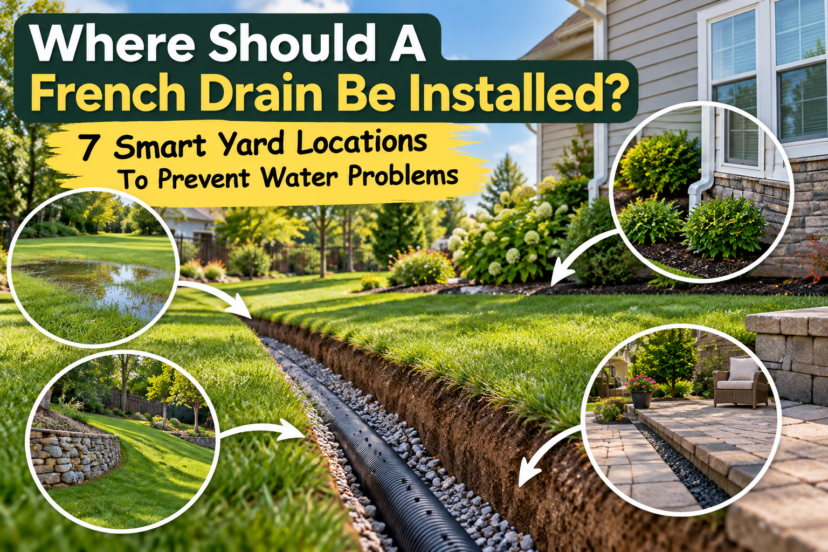
🌿 1. Install A French Drain In Low-Lying Areas Of Your Yard
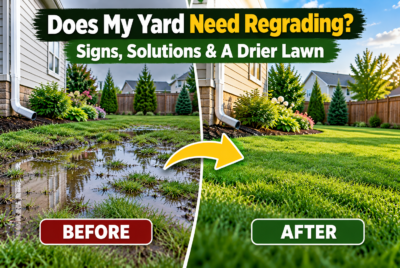
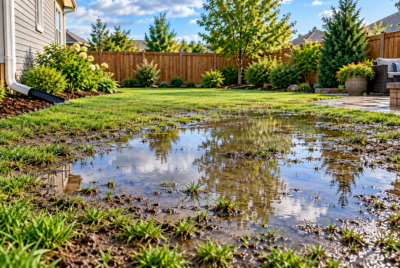
One of the most common places for a French drain is a low spot where water repeatedly collects.
These areas often stay wet longer than the surrounding lawn because water naturally moves downhill.
Common signs include:
-
Grass that remains soggy several days after rainfall.
-
Muddy patches that make mowing difficult.
-
Water collecting between landscaping beds.
-
Moss or moisture-loving weeds growing in one area.
A French drain may help if the soil becomes saturated and water has a suitable downhill outlet.
However, if the problem is mainly surface water trapped in a shallow depression, correcting the grading or installing a catch basin may be more effective.
Smart Yard Tip: Observe your yard during a moderate rainstorm. Mark where water collects and where it flows before choosing a drain location.
🏡 2. Install A French Drain Uphill From Your Home’s Foundation
Water moving toward your foundation deserves special attention.
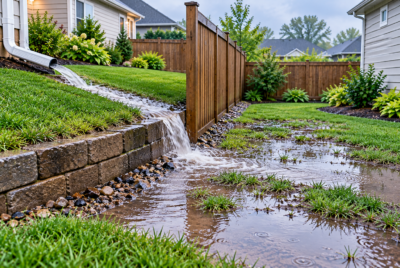
When the surrounding ground slopes toward your house, rainwater can collect near basement walls or crawl spaces.
An uphill interceptor French drain may help redirect subsurface water before it reaches the foundation.
How Far From The Foundation Should A French Drain Be?
There is no universal distance that works for every property.
An interceptor drain may be located several feet uphill from a house, depending on the slope, soil conditions, and underground utilities.
A foundation drainage system, on the other hand, may need to be installed near footing level as part of a properly engineered waterproofing design.
Avoid digging close to or below foundation footings without professional guidance.
Also, remember that French drains are not substitutes for proper grading, functioning gutters, or downspout extensions.
For most homeowners, correcting surface drainage first is the smarter and less expensive approach.
🌧️ 3. Place A French Drain Along The Bottom Of A Slope
If your backyard sits below a hill, water may travel through the soil and collect at the bottom.
This is another situation where a French drain can be useful.
A drain installed across the lower portion of a slope can intercept subsurface water moving downhill.
The collected water can then be directed toward an approved outlet.
Where Should A French Drain Be Installed On A Sloped Yard?
The ideal position is often across the path of unwanted groundwater, rather than directly down the steepest part of the hill.
For example, a homeowner with a sloping backyard might install an interceptor drain just uphill from a frequently saturated lawn.
This can reduce the amount of water reaching the problem area.
Money-Saving Tip: Don’t automatically install a drain across the entire backyard. A shorter, carefully positioned system may solve the problem with less digging and material.
🌱 4. Install A French Drain Around Waterlogged Garden Areas
Garden beds need moisture, but constantly saturated soil can damage many plants.
If your landscaping stays wet after rainfall, excess water may be limiting oxygen around plant roots.
A French drain placed along the uphill edge of a garden bed may intercept groundwater before it enters the planting area.
This approach can be especially useful for:
-
Raised planting areas beside slopes.
-
Perennial beds affected by seasonal saturation.
-
Landscaping near retaining walls.
-
Garden sections surrounded by compacted lawn soil.
Avoid placing drainage trenches too close to established trees or shrubs, where excavation could damage important roots.
Before installing a drain, consider improving soil structure, reducing compaction, or choosing plants better suited to naturally moist conditions.
Sometimes, a smarter landscape design is more affordable than an underground drainage system.
🪨 5. Install A French Drain Near Retaining Walls
Retaining walls can experience significant pressure when water accumulates behind them.
This is why many properly designed retaining walls include drainage gravel, perforated pipes, and designated outlets.
However, adding a French drain near an existing wall is not always a simple DIY project.
Drain placement depends on the wall’s height, construction, foundation, and drainage design.
A poorly placed trench could weaken the surrounding soil or compromise the wall.
For new retaining walls, drainage should be part of the original construction plan.
For existing walls showing movement, cracking, or bulging, consult a qualified contractor or engineer before excavation.
🚶 6. Install A French Drain Beside Patios And Walkways
Standing water around patios, sidewalks, and outdoor seating areas can make your backyard less enjoyable.
It may also contribute to erosion, slippery surfaces, and shifting pavers.
A French drain may help when groundwater saturates the soil beside these features.
For example, a drain along the uphill edge of a patio can intercept water moving underground toward the paved area.
But there’s an important distinction.
If rainwater runs directly across the patio surface, a channel drain or properly graded surface may work better.
Better Yard Living Strategy: Choose the drainage solution based on how water reaches the problem area. Surface runoff and groundwater often require different solutions.
🏠 7. Install A French Drain Between Neighboring Properties When Appropriate
Some homes have narrow side yards where water collects between two buildings.
These spaces may receive runoff from roofs, compacted soil, or neighboring slopes.
A French drain can sometimes help manage subsurface water in these areas.
However, property boundaries make drainage planning more complicated.
You generally cannot redirect water in a way that unlawfully damages a neighboring property.
Before installation:
-
Confirm property boundaries.
-
Check local drainage requirements.
-
Identify a permitted outlet.
-
Avoid directing discharge toward neighboring foundations.
In many cases, improving downspout routing and surface grading should come before installing underground drains.
🔍 How To Choose The Best French Drain Location
Knowing where should a French drain be installed starts with understanding how water behaves on your property.
Use this simple planning process.
Step 1: Watch Your Yard After Rain
Look for wet areas, water movement, and places that remain saturated after nearby soil dries.
Step 2: Identify The Water Source
Determine whether the problem comes from surface runoff, groundwater, downspouts, irrigation leaks, or a combination.
Step 3: Check The Slope
A gravity-fed drain needs a workable downhill route toward its outlet.
A commonly used starting guideline is about a 1% pipe slope, or approximately 1/8 inch per foot, but actual requirements depend on the design and site.
Step 4: Choose A Safe Outlet
Possible outlets include approved stormwater connections, suitable daylight discharge locations, or other systems permitted locally.
Never assume you can connect to a municipal storm drain or discharge onto a sidewalk or neighboring property.
Step 5: Check Underground Utilities
Before digging in the United States, contact 811 or visit Call811.com to arrange utility marking.
Private irrigation lines and some other underground systems may require separate locating.
⚠️ Common French Drain Placement Mistakes
Even a well-built French drain may fail if installed in the wrong location.
| Common Mistake | Smarter Alternative |
|---|---|
| Installing In A Random Wet Spot | Identify Where The Water Comes From |
| No Suitable Outlet | Plan Discharge Before Digging |
| Using A French Drain For All Surface Runoff | Consider Grading Or Catch Basins |
| Placing Pipes Without Proper Slope | Check Elevations Before Installation |
| Digging Near Foundations Without Planning | Seek Professional Guidance |
| Ignoring Clay Soil Conditions | Evaluate Soil And Outlet Capacity |
Clay-heavy soils, common in parts of Texas, Georgia, and the Midwest, can make drainage particularly challenging.
Because water moves slowly through dense clay, a French drain may collect water more slowly than expected. Proper placement and a functioning outlet become especially important.
💰 Is Installing A French Drain Worth The Cost?
A French drain can be a worthwhile investment when it solves a recurring groundwater problem.
Benefits may include:
-
Less Soggy Lawn: Makes outdoor spaces easier to use and maintain.
-
Healthier Landscaping: Helps reduce prolonged soil saturation.
-
Reduced Erosion: Can control some unwanted subsurface water movement.
-
Better Outdoor Comfort: Keeps certain walking and seating areas drier.
-
Long-Term Savings: May reduce repeated repairs caused by chronic wet conditions.
However, French drains are not automatically the cheapest solution.
Simple grading improvements, gutter repairs, downspout extensions, or landscaping changes may cost less and solve the actual problem.
The smartest investment is the smallest effective solution that addresses the water source.
🛠️ When To Consult A Professional
Consider hiring a drainage contractor, experienced landscaper, or qualified engineer when water threatens your foundation, excavation is close to retaining walls, or your yard has complex slopes.
Professional help is also valuable when there is no obvious gravity outlet, when drainage crosses property boundaries, or when previous DIY solutions have failed.
A professional assessment may prevent expensive mistakes and help ensure the drainage system complies with local requirements.
❓ Frequently Asked Questions About French Drain Placement
1. Should A French Drain Be Installed At The Lowest Point Of The Yard?
Not always. A low point may be suitable for collecting subsurface water, but the drain still needs an appropriate outlet. Sometimes, intercepting water farther uphill is more effective.
2. How Deep Should A French Drain Be In A Yard?
Many shallow yard drainage systems use trenches approximately 12–24 inches deep, but depth varies with soil conditions, water movement, frost considerations, and the system’s purpose. Foundation drains require different designs.
3. Can A French Drain Be Installed Next To A House?
Yes, but placement near foundations requires careful planning. Excavation should not undermine footings, and the drain must direct water safely away. Consult a professional for foundation-related drainage.
4. Should A French Drain Run Uphill Or Downhill?
The drain pipe should generally slope downhill toward its outlet. The trench itself may run across a slope to intercept groundwater, while the pipe maintains the necessary fall.
5. Does A French Drain Need An Outlet?
Yes, a conventional French drain needs a reliable place for collected water to go. Without adequate discharge or storage capacity, the system can fill with water and stop working effectively.
6. Can You Install A French Drain In Clay Soil?
Yes, but clay drains slowly. A French drain may help intercept water moving through more permeable layers or saturated areas, provided the system has suitable capacity and an outlet.
7. Is A French Drain Better Than A Catch Basin?
It depends on the water problem. French drains are designed primarily to collect subsurface water, while catch basins collect surface runoff. Some yards benefit from a combination of drainage methods.
Learn more: French Drain vs Catch Basin explained
🌻 Conclusion: Choose The Right Location For A Drier, Easier-To-Maintain Yard
Understanding where should a French drain be installed can help you avoid unnecessary digging, wasted materials, and frustrating drainage problems.
The best location is not always the wettest spot. Often, it’s the place where you can intercept unwanted groundwater before it reaches your lawn, garden, patio, or home.
Start by observing your yard after rainfall, identifying the water source, and checking whether a safe drainage outlet is available.
With thoughtful planning, you can create a drier, more comfortable outdoor space without spending more than necessary.
That’s what better yard living is all about: practical improvements that make your property easier to enjoy and maintain.
Disclaimer: This article provides general educational information about residential drainage. Before excavation, locate underground utilities, check local drainage regulations and permits, and consult a qualified professional when working near foundations, retaining walls, or neighboring properties.
Explore more: