
Do French Drains Work In Clay Soil? 7 Things Homeowners Should Know Before Installing One
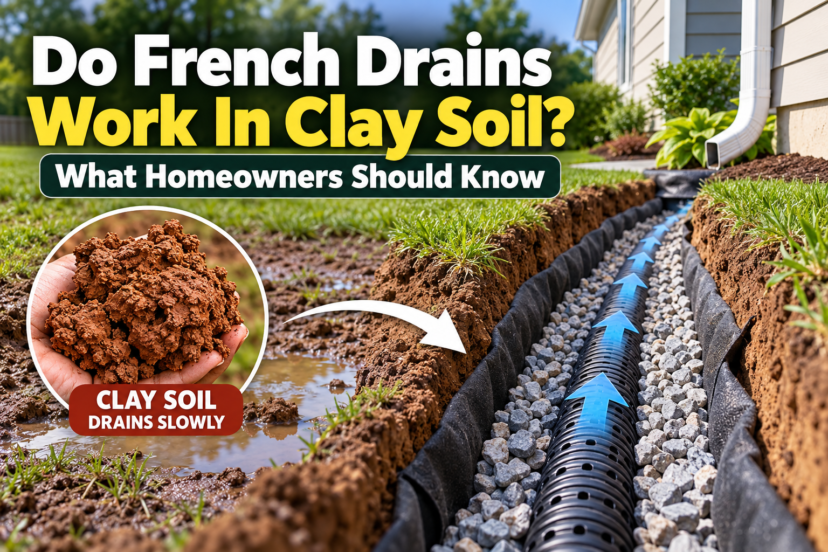
Critical Things Before Installing French Drains In Clay
A soggy backyard can turn even a beautiful outdoor space into a frustrating mess. After every heavy rain, puddles linger, grass becomes muddy, and parts of your lawn may stay wet for days. If your property has heavy clay soil, you’ve probably wondered: Do French drains work in clay soil, or are they just another expensive project that won’t solve the problem?
The good news is that French drains can be effective in clay-heavy yards. However, their success depends on how they’re designed, where they’re installed, and whether the collected water has somewhere safe to go.
Clay soil behaves differently from sandy or loamy soil. Water moves through it slowly, so a drainage solution that works perfectly in one yard might struggle in another.
Before spending money on gravel, pipes, or professional installation, it helps to understand what actually makes a French drain work.
With the right approach, you can reduce standing water, protect your landscaping, and create a more comfortable, low-maintenance backyard.
💧 Quick Answer: Do French Drains Work In Clay Soil?
Yes, French drains work in clay soil when they’re properly designed and installed. They collect excess water through a gravel-filled trench and perforated drainage pipe, then carry it toward a suitable outlet.
However, because clay soil absorbs and releases water slowly, French drains are generally more effective at intercepting and redirecting water than helping it soak into the ground.
A properly sloped pipe, suitable drainage gravel, filter fabric, and a reliable discharge location are essential for long-term performance.
🌱 Why Clay Soil Creates So Many Drainage Problems
Clay soil contains extremely small mineral particles packed closely together.
These particles create tiny spaces that slow water movement compared with sandy soil.
After heavy rainfall, water may remain near the surface because it cannot move downward quickly enough.
Several factors can make the problem worse:
-
Compacted Soil: Foot traffic, construction equipment, and repeated mowing can reduce soil permeability.
-
Low-Lying Areas: Depressions collect runoff from surrounding ground.
-
Poor Yard Grading: Water may flow toward patios, foundations, or garden beds.
-
Roof Runoff: Downspouts can release large amounts of water into one small area.
-
Limited Drainage Outlets: Water has nowhere to escape once the soil becomes saturated.
Clay isn’t necessarily bad soil. It can hold nutrients and moisture that benefit plants.
The challenge is managing excess water without removing or replacing your entire yard.
🔧 How French Drains Work In Heavy Clay Soil
A French drain is a simple underground drainage system designed to collect and redirect water.
Most residential systems include a trench, washed drainage stone, a perforated pipe, and a suitable filter material.
Here’s what happens when it rains:
-
Water moves toward the drainage trench.
-
Water enters the gravel-filled area.
-
Water passes through openings in the perforated pipe.
-
The pipe carries water toward a lower discharge point.
-
Collected water exits through an approved outlet.
The important distinction is that a French drain doesn’t make clay soil drain faster.
Instead, it provides an easier route for water that reaches the trench.
This is why outlet design matters so much.
A gravel trench without a suitable outlet may simply become an underground reservoir.
✅ 5 Benefits Of Installing A French Drain In Clay Soil
When homeowners ask whether French drains work in clay soil, they’re usually looking for practical improvements rather than a complicated landscaping project.
A well-designed system may offer several benefits.
1. Reduces Standing Water
French drains can intercept water that would otherwise collect in low areas, especially when paired with surface inlets where needed.
2. Helps Protect Foundations
Redirecting excess water away from a home’s foundation can reduce prolonged soil saturation near basement walls and footings.
Foundation drainage problems may require a specialized system rather than a basic yard drain.
3. Creates A More Usable Lawn
Less standing water means fewer muddy patches and more opportunities to enjoy your backyard after rainfall.
4. Protects Landscaping
Excess moisture can damage plants that prefer well-drained soil. Improving drainage may help create healthier growing conditions.
5. Reduces Repeated Maintenance
A properly installed drainage system can reduce the need for temporary fixes, such as repeatedly filling muddy spots with soil.
However, occasional inspection and maintenance are still necessary.
⚠️ Why French Drains Sometimes Fail In Clay Soil
Not every French drain delivers the results homeowners expect.
In many cases, the problem isn’t the clay itself. It’s the system design.
Poor Drainage Slope
Water needs a dependable path toward the outlet.
A pipe installed without adequate slope may hold water and collect sediment.
No Suitable Discharge Point
A French drain that empties into another saturated area may simply move the problem.
Incorrect Gravel
Fine gravel containing sand or soil can reduce drainage performance.
Clean, washed drainage stone is generally a better choice.
Clogged Filter Fabric
Filter fabric helps separate soil from drainage materials, but unsuitable fabric or poor installation can contribute to clogging.
Wrong Drain Location
An underground drain may not solve surface puddles if water cannot reach the trench.
In these situations, a catch basin or shallow surface drainage channel may be more effective.
The smartest approach is to identify how water moves across your property before digging.
🛠️ How To Install A French Drain In Clay Soil
If you’re considering a DIY project, start with a simple drainage plan.
Step 1: Identify The Water Problem
Observe your yard during or shortly after rainfall.
Look for standing water, runoff patterns, and areas that remain saturated.
Determine whether the water comes from rainfall, roof downspouts, neighboring properties, or underground seepage.
Step 2: Choose A Safe Drainage Route
Plan a route that intercepts the problem water and carries it toward an approved outlet.
Avoid directing runoff onto neighboring properties, sidewalks, or areas where it could create erosion.
Step 3: Plan Trench Depth And Slope
Many shallow residential yard drains use trenches roughly 12–24 inches deep, but the correct dimensions depend on the site.
A commonly used pipe slope is approximately 1% where practical, although system requirements vary.
For every 10 feet of pipe, that represents about 1.2 inches of downward fall.
Step 4: Install Drainage Materials
A typical installation includes:
-
Suitable Geotextile Filter Fabric
-
Clean, Washed Drainage Stone
-
Perforated Drainage Pipe
-
Additional Drainage Stone Around The Pipe
-
A Protected Outlet And Accessible Cleanout Where Appropriate
Pipe orientation, fabric selection, and gravel depth should follow the chosen drainage design.
Step 5: Test The System
Before completing the surface restoration, check that water flows toward the outlet and doesn’t remain trapped in the pipe.
For larger drainage problems, professional installation may prevent expensive mistakes.
💰 How Much Does A French Drain Cost In Clay Soil?
Costs vary widely depending on trench depth, drainage length, access, local labor rates, and outlet requirements.
For preliminary budgeting, a simple DIY yard drain might cost several hundred dollars in materials, while professionally installed systems can cost several thousand dollars.
Clay-heavy properties may require additional excavation work or specialized equipment.
Before purchasing materials, compare the full cost of installation with simpler drainage improvements.
Sometimes correcting one downspout or filling a small low spot solves the problem for much less money.
🌿 Better Alternatives To French Drains For Clay Soil
1. Shallow Drainage Swales
A gently sloped grassy channel can move surface runoff toward a suitable outlet without underground pipes.
2. Downspout Extensions
Redirecting roof runoff away from problem areas is often one of the cheapest drainage improvements.
3. Rain Gardens
Carefully designed rain gardens can temporarily hold runoff while it infiltrates or drains away. Heavy clay sites may need amended soil, an underdrain, or a different design.
4. Lawn Regrading
Correcting shallow depressions and improving surface slope may eliminate puddles without installing a pipe.
The best drainage solution is often a combination of small improvements rather than one expensive system.
🏡 Smart Yard Drainage Tips That Save Money
Before installing a French drain, try these practical strategies:
-
Check Downspouts First: Make sure roof runoff isn’t causing the problem.
-
Avoid Working Wet Clay: Digging or compacting saturated soil can damage its structure.
-
Reduce Soil Compaction: Limit heavy equipment and repeated traffic in wet areas.
-
Protect Existing Drainage Paths: Keep surface channels clear of leaves and debris.
-
Improve Soil Gradually: Compost can support better soil structure in garden beds, although it won’t replace proper drainage.
-
Maintain Your System: Inspect outlets after storms and remove accumulated debris.
A smarter yard doesn’t always require a bigger project.
Often, understanding where the water comes from is the most valuable first step.
👷 When To Consult A Drainage Professional
Consider hiring a landscaper, drainage installer, or qualified contractor if water repeatedly collects near your foundation, enters your basement, or causes significant erosion.
Professional help is also valuable when your yard has very little slope, underground utilities, retaining walls, or no obvious legal discharge point.
For structural foundation concerns, consult an appropriate foundation or engineering specialist.
A site assessment can help you avoid installing a drainage system that doesn’t address the real problem.
❓ Frequently Asked Questions About French Drains In Clay Soil
1. Do French Drains Work In Clay Soil Without Gravel?
A perforated pipe alone generally isn’t an effective substitute for a properly designed French drain. Clean drainage stone helps water reach the pipe and creates space around it. Some engineered drainage products use different materials, but they must be suitable for the site.
2. How Deep Should A French Drain Be In Clay Soil?
Many shallow yard drainage systems are approximately 12–24 inches deep. However, deeper drains may be needed for certain subsurface water problems. The correct depth depends on water sources, soil conditions, utilities, and the outlet elevation.
3. What Type Of Gravel Is Best For French Drains In Clay Soil?
Clean, washed, angular drainage stone is commonly used. Three-quarter-inch stone is a frequent choice, but the exact size should match the pipe and drainage design. Avoid gravel containing excessive fines that could restrict water movement.
4. Can A French Drain Become Clogged With Clay?
Yes. Fine clay particles and sediment can gradually reduce drainage performance. Suitable filtration materials, clean stone, correct installation, and maintenance can help reduce this risk.
5. How Long Do French Drains Last In Clay Soil?
A well-designed and maintained system may last for decades, but there is no guaranteed lifespan. Longevity depends on sediment levels, installation quality, pipe condition, root intrusion, and outlet maintenance.
6. Is A French Drain Better Than A Dry Well In Clay Soil?
Often, yes, when a suitable discharge outlet is available. French drains move collected water away, while conventional dry wells depend on surrounding soil absorbing water. A dry well in poorly permeable clay may empty too slowly unless site testing confirms adequate infiltration.
7. Will A French Drain Fix A Muddy Backyard Permanently?
It can provide a long-term improvement if the drain addresses the actual source of excess water. However, persistent mud caused by poor grading, compacted soil, heavy foot traffic, or leaking irrigation may require additional solutions.
🌤️ Conclusion: Are French Drains Worth It For Clay Soil?
So, do French drains work in clay soil? Yes, but successful drainage depends more on proper planning than simply digging a trench and adding gravel.
A French drain can be a valuable investment when your yard has recurring water problems and a suitable place to discharge collected runoff.
However, it isn’t always the cheapest or simplest answer.
Start by observing how water moves across your property, checking downspouts, and identifying low spots. Then choose the drainage solution that fits your yard and budget.
Better yard living is about making smart improvements that solve real problems without creating unnecessary work. With a thoughtful drainage plan, even a clay-heavy backyard can become a drier, easier-to-maintain, and more enjoyable outdoor space.
Disclaimer: This article provides general home improvement information. Before digging, contact 811 to arrange underground utility marking, check local drainage regulations and permit requirements, and follow appropriate excavation safety practices. Consult a qualified professional for complex drainage or foundation problems.
Explore more:

Comments are closed.