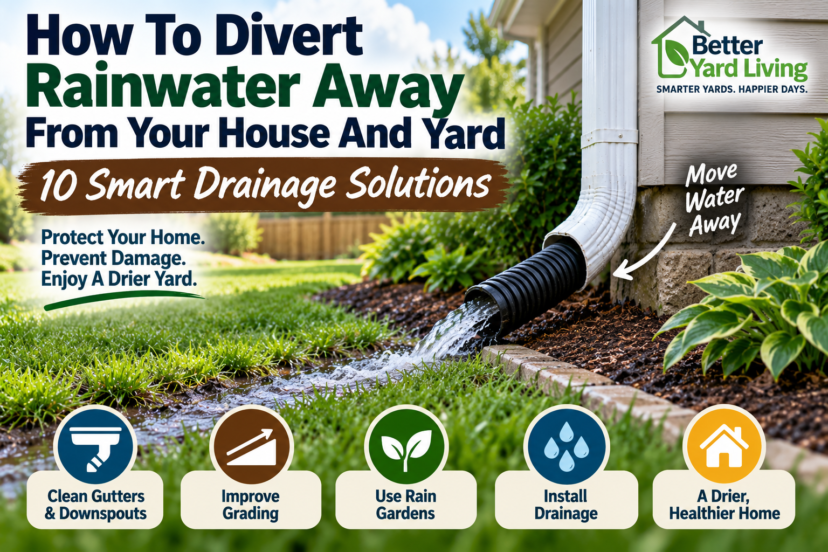
How To Divert Rainwater Away From House And Yard: 10 Smart Drainage Solutions
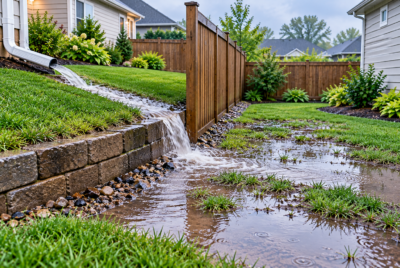
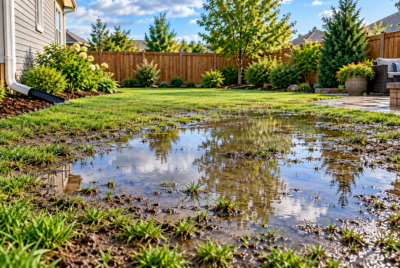
A heavy rainstorm can reveal problems in your yard that are almost invisible on a sunny day. Water suddenly pours from downspouts, crosses patios, collects beside the foundation, and turns low sections of lawn into mud. If you’re wondering how to divert rainwater away from house foundations and outdoor living areas, the smartest solution is usually to control the water as close to its source as possible.
You don’t necessarily need to dig up the entire yard or install an expensive drainage system. Many homeowners can make meaningful improvements by cleaning gutters, extending downspouts, adjusting grading, creating shallow swales, or using landscaping to manage runoff.
The important part is understanding how rain moves across your property before you start spending money.
With a few practical improvements, you can reduce puddles and erosion, protect your home, and create a cleaner, lower-maintenance yard that’s ready to enjoy sooner after the rain stops.
💧 Quick Answer: How To Divert Rainwater Away From House
The simplest way to divert rainwater away from house foundations is to keep gutters clear, extend downspouts to suitable drainage areas, and maintain a ground slope that directs surface water away from the building. For larger runoff problems, consider a landscape swale, rain garden, catch basin, channel drain, or properly designed underground drainage system. Always give collected water a safe and legal destination.
Key Takeaways
Most likely cause: Roof runoff, poor grading, clogged gutters, low spots, and hard surfaces are concentrating rainwater near your house or in problem areas of the yard.
Usually serious? Occasional puddles may not be serious, but repeated water accumulation beside a foundation can contribute to erosion, basement or crawl space moisture, and other drainage problems.
First thing to check: Watch your property during rainfall and identify where water enters the yard, where it travels, and where it collects.
Best solution: When deciding how to divert rainwater away from house foundations, control roof runoff first, maintain positive grading, and use drainage or landscaping features only where necessary.
🌧️ Why Rainwater Collects Around Your House And Yard
Water always follows the easiest path downhill.
If your yard doesn’t provide a good route, rainfall may collect in low areas or move toward your home instead.
Common causes include:
- Clogged Gutters
- Short Downspouts
- Poor Yard Grading
- Compacted Soil
- Heavy Clay Soil
- Low Spots
- Patio And Driveway Runoff
- Blocked Yard Drains
- Neighboring Runoff
- Excessive Irrigation
One of the biggest mistakes homeowners make is treating the puddle instead of finding the source.
For example, installing a French drain in a soggy lawn may accomplish little if a nearby downspout continues dumping large amounts of roof water into the same area.
Start upstream whenever possible.
🏠 1. Keep Your Gutters Working Properly
Your roof is one of the largest rain-catching surfaces on your property.
One inch of rain falling on 1,000 square feet of roof represents about 623 gallons of water before accounting for losses.
Gutters are designed to collect that runoff and direct it toward downspouts. When gutters become clogged, water can overflow beside the house instead.
Leaves, pine needles, seed pods, dirt, and roofing debris are common causes.
Smart Fix
Inspect gutters periodically and watch them during a moderate rainstorm when it is safe to do so.
Look for:
- Water Spilling Over The Edge
- Leaking Gutter Joints
- Sagging Sections
- Blocked Downspouts
- Water Running Behind The Gutter
Fixing a basic gutter problem may be one of the least expensive ways to reduce water around your foundation.
💦 2. Extend Downspouts Away From The House
Short downspouts are another common drainage problem.
If the downspout ends immediately beside the foundation, your gutter system is collecting roof water efficiently—and then releasing it exactly where you don’t want it.
When learning how to divert rainwater away from house foundations, this should be one of your first inspections.
Low-Cost Options
Depending on your property, you might use:
- Flexible Downspout Extensions
- Hinged Extensions
- Splash Blocks
- Solid Above-Ground Pipe
- Buried Solid Drainpipe
The correct discharge distance depends on the slope and soil around your home. The goal isn’t simply reaching a certain number of feet; it’s getting water to a location where it will continue moving safely away.
Never intentionally discharge water onto neighboring property.
📐 3. Improve The Grade Around Your Foundation
Even perfect gutters can’t solve a yard that slopes toward the house.
Surface soil around the foundation should generally encourage rainwater to move away from the building.
Over time, soil can settle and create shallow depressions next to foundation walls.
This is particularly common where soil was disturbed during construction.
Smart Fix
Minor problems may be corrected by adding suitable fill soil and restoring a gentle outward slope.
Be careful not to cover siding, masonry weep holes, vents, or other important building features.
Significant grading problems deserve professional evaluation because moving water in the wrong direction can simply transfer the problem somewhere else.
🌿 4. Create A Shallow Landscape Swale
A swale is one of the simplest ways to control surface runoff across a yard.
Think of it as a broad, shallow channel rather than a deep drainage ditch.
A swale uses gravity to guide rainwater toward a suitable drainage or infiltration area.
It may be covered with:
- Turfgrass
- Native Plants
- Decorative Stone
- Moisture-Tolerant Vegetation
Swales can work especially well along property boundaries, below slopes, or where runoff consistently follows the same path.
A well-designed swale may blend almost invisibly into the landscape.
The critical question is where the water ends up. Never create a swale without planning the outlet or final infiltration area.
🌼 5. Use A Rain Garden To Manage Runoff
Sometimes you don’t need to send rainwater far away. You simply need to give it a better place to collect temporarily and soak into the soil.
That’s the idea behind a rain garden.
A rain garden is a shallow landscaped depression containing plants suited to periods of extra moisture.
It can receive runoff from a downspout, lawn, or other appropriate surface.
Benefits Of A Rain Garden
A well-designed rain garden may:
- Reduce Lawn Puddles
- Slow Stormwater Runoff
- Reduce Erosion
- Add Flowers And Color
- Support Pollinators
- Reduce Mowing
- Create A More Interesting Yard
Plant choices should match your USDA Hardiness Zone, sunlight, soil, and local climate.
Rain gardens should also be located carefully so temporary water storage doesn’t create foundation, septic, or utility problems.
🛣️ 6. Control Patio And Driveway Runoff
Roofs aren’t the only surfaces that concentrate rain.
Driveways, sidewalks, patios, and other impermeable surfaces shed most of the water that lands on them.
If those surfaces slope toward your home or lawn, they can create surprisingly large amounts of runoff.
Watch them during the next storm.
You may discover that what looks like a lawn drainage problem actually begins on the patio.
Possible Solutions
Depending on the layout, you might use:
- Channel Drains
- Trench Drains
- Permeable Pavers
- Gravel Infiltration Areas
- Landscape Swales
- Corrected Surface Grading
Whenever you add new hardscaping, consider drainage before construction rather than after the first big storm.
🕳️ 7. Install A Catch Basin In A Low Spot
A catch basin can be useful when surface water consistently collects in one defined low area.
The basin sits below grade and receives water through a grate. Underground solid pipe then carries the collected runoff toward an appropriate outlet.
This can work well near patios, driveways, and landscape depressions.
However, a catch basin is only as effective as its outlet.
If the pipe doesn’t have adequate slope or somewhere appropriate to discharge, the system may simply fill with water.
Catch basins also require occasional cleaning because leaves, soil, grass clippings, and other debris can enter through the grate.
🌱 8. Improve Compacted Soil
Sometimes water is reaching the right part of your yard but can’t soak into the ground.
Compacted soil contains fewer spaces for water and air.
This can happen because of foot traffic, lawn equipment, construction activity, pets, or heavy clay soil.
Core aeration can help open the soil.
For lawns, following aeration with a light compost topdressing may gradually improve soil structure and water infiltration.
This isn’t an instant fix for major stormwater problems, but it can be an effective part of a long-term drainage strategy.
Improving soil also benefits grass roots, which can make your lawn more resilient.
🌊 9. Consider A French Drain For Subsurface Water
A French drain can be useful when water moves through saturated soil rather than simply across the surface.
The system usually includes perforated pipe surrounded by drainage stone. Water enters the stone and pipe and is carried toward a suitable outlet.
French drains are commonly suggested when homeowners search for how to divert rainwater away from house foundations, but they aren’t always the best first solution.
A French drain won’t correct:
- Clogged Gutters
- Improper Downspouts
- Obvious Surface Grading Problems
- Excessive Irrigation
- Poorly Sloped Patios
Correct those issues first.
If subsurface water remains a problem afterward, a French drain may become more appropriate.
🪨 10. Use Landscaping To Slow And Redirect Water
Not every drainage improvement needs plastic pipe and excavation.
Plants and landscaping can help slow runoff and protect soil.
Strategically placed planting beds, native grasses, shrubs, mulch, and other landscape features can reduce erosion and help rainfall infiltrate where conditions allow.
Deep-rooted plants can also improve soil structure over time.
However, landscaping should not trap water against your house.
Keep mulch and soil at appropriate levels around the foundation, and avoid creating raised beds that act like dams beside the building.
A smart landscape should guide water away while also improving the appearance and usability of your yard.
🔍 How To Map Rainwater Flow Around Your Property
Before buying drainage materials, spend one rainstorm studying your yard.
You don’t need specialized equipment.
Take photos and identify:
- Roof Downspout Locations
- Gutter Overflows
- Foundation Puddles
- Yard Low Spots
- Driveway Runoff
- Patio Runoff
- Drainage Grates
- Property Slopes
- Water Entering From Neighboring Land
Notice where water starts, not just where it ends.
If a puddle forms 30 feet from your house, the source might be a downspout on the opposite side of the lawn.
You can even sketch a simple property map and draw arrows showing water movement.
That gives you a basic drainage plan before you spend a dollar.
🛠️ Best Order For Diverting Rainwater Without Overspending
The smartest strategy is usually to start with the cheapest upstream fixes and work toward more complex drainage systems.
Try this order:
- Clean The Gutters: Restore proper roof drainage.
- Clear Existing Drains: Make sure your current system works.
- Extend Downspouts: Move concentrated roof runoff.
- Correct Small Grading Problems: Encourage water to move away from the foundation.
- Reduce Unnecessary Irrigation: Don’t add water to saturated soil.
- Aerate Compacted Lawn: Improve infiltration where appropriate.
- Use Landscaping: Consider swales, planting areas, and rain gardens.
- Add Surface Drains: Use catch basins or channel drains where runoff concentrates.
- Consider Subsurface Drainage: Evaluate French drains only when the conditions justify them.
This step-by-step approach helps prevent one of the most expensive homeowner mistakes: installing a complicated solution before fixing a simple problem.
🌎 Benefits Of Better Rainwater Management
Learning how to divert rainwater away from house foundations can improve your entire outdoor space.
Better water management may mean:
- Fewer Muddy Areas
- Less Standing Water
- Reduced Erosion
- Healthier Grass
- Cleaner Patios And Walkways
- Less Water Near The Foundation
- More Usable Outdoor Space
- Lower Landscape Maintenance
Good drainage can also make future improvements easier.
A patio, fire pit, garden, or outdoor seating area is far more enjoyable when you aren’t waiting several days for the ground to dry after every storm.
👷 When To Consult A Professional
Consider calling a qualified drainage contractor, landscaper, foundation specialist, civil engineer, or other appropriate professional if water repeatedly pools against your foundation, enters a basement or crawl space, causes significant erosion, or remains across large areas for several days.
Professional help is also wise for major grading, retaining walls, complex underground drainage, or suspected groundwater problems.
Before digging, have underground utilities located. In much of the United States, homeowners can contact 811 before excavation.
Also check local stormwater requirements. Many municipalities regulate where runoff can be discharged, and you generally should not redirect water onto neighboring property.
❓ Frequently Asked Questions About Diverting Rainwater
What Is The Easiest Way To Divert Rainwater Away From A House?
Start with your gutters and downspouts. Keep gutters clear and extend downspouts so roof runoff reaches an area that continues draining away from the foundation. Also correct obvious low spots beside the house.
How Far Should Rainwater Drain Away From The House?
There is no universal distance that works for every property. The important goal is to carry water far enough that the grade continues moving it away rather than allowing it to soak back toward the foundation. Soil, slope, rainfall, and foundation conditions all matter.
How Can I Divert Rainwater Without Gutters?
Where conventional gutters are impractical, options may include professionally designed roof drainage systems, grading, gravel drip areas, swales, or other site-specific solutions. However, uncontrolled roof runoff near foundations should still be addressed.
Can I Use Gravel To Divert Rainwater?
Gravel can reduce erosion and be part of a drainage system, but gravel by itself doesn’t determine where water goes. Proper slope, soil conditions, pipe, or an appropriate outlet may still be necessary.
Will A French Drain Keep Water Away From My House?
A correctly designed French drain can help manage certain subsurface water problems. It isn’t a replacement for functioning gutters, adequate downspouts, or proper surface grading.
How Do I Redirect Water In A Flat Yard?
Flat yards may require carefully designed shallow swales, catch basins, underground drainage, rain gardens, or other methods that collect and move or infiltrate water. A professional may be needed when there isn’t a practical gravity outlet.
Can I Divert Rainwater Into My Backyard?
Possibly, if the chosen area can safely handle and absorb the additional runoff without flooding structures, septic systems, utilities, neighboring property, or other sensitive areas. Local stormwater rules should also be checked.
🌿 Conclusion: Give Rainwater A Smarter Place To Go
Learning how to divert rainwater away from house foundations isn’t about fighting every drop of rain. It’s about giving water a predictable and safe path through your property.
Start at the roof.
Make sure the gutters work, move downspout water away, check the slope around your foundation, and then follow the runoff through the rest of the yard.
You may find that a simple downspout extension solves most of the problem. Another property may need a shallow swale, rain garden, catch basin, or professionally designed drainage system.
The important thing is to solve problems in the right order.
When rainwater is managed intelligently, you get more than fewer puddles. You get a cleaner, healthier, lower-maintenance outdoor space that’s easier to enjoy after every storm.
That’s a practical investment in better yard living.
Disclaimer: This article provides general home and yard improvement information. Drainage requirements, stormwater regulations, utility locations, permits, soil conditions, and building codes vary by region. Follow appropriate DIY safety practices and consult qualified local professionals when necessary.
Explore more:
- How To Fix A Soggy Lawn That Never Seems To Dry Out
- Why Does My Backyard Stay Muddy After Rain?
- Why Is Water Pooling Next To House After Rain?