
How To Drain A Backyard With No Slope: 7 Smart Drainage Solutions That Actually Work
Effective Solutions For Flat Backyards
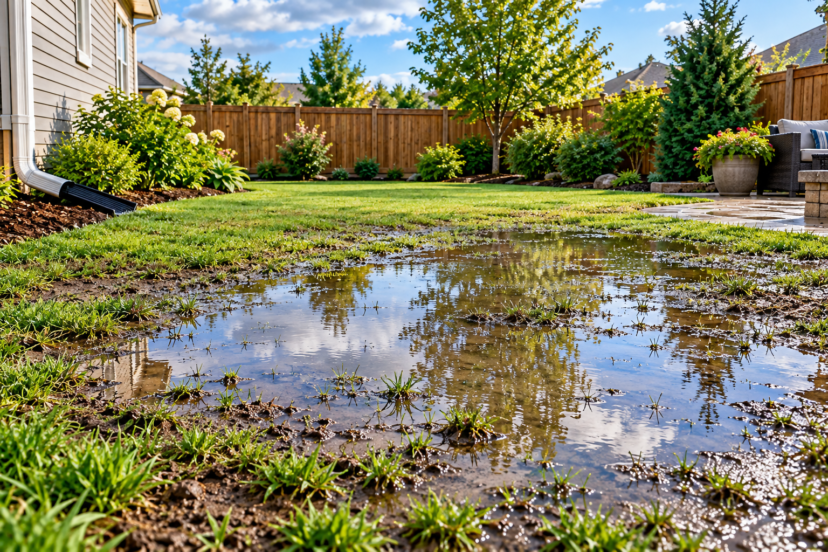
Draining a backyard with no natural slope requires creating artificial fall, capturing surface water locally, or mechanically pumping water away from low spots. Does your backyard turn into a muddy mess every time it rains? Maybe puddles sit on the grass for days, your lawn feels constantly soggy, or certain areas become almost impossible to use after a storm.
If you’re wondering how to drain a backyard with no slope, you’re dealing with a common landscaping challenge. Water naturally moves downhill, so when your yard is almost perfectly flat, rainwater has nowhere obvious to go.
The good news? You don’t necessarily need to rebuild your entire landscape or spend thousands of dollars on an elaborate drainage system.
From improving soil conditions to installing underground drains, several practical solutions can help manage excess water in a flat backyard.
The smartest approach is to understand where the water comes from, how your soil absorbs moisture, and whether you have a suitable drainage outlet.
With the right strategy, you can create a drier, healthier, and easier-to-maintain outdoor space without unnecessary work or expense.
💧 Quick Answer: How To Drain A Backyard With No Slope
To drain a backyard with no slope, you can improve soil infiltration, create a shallow swale, install a French drain with a suitable outlet, build a rain garden, or use a catch basin connected to an approved drainage system.
If gravity drainage isn’t possible, a sump pump or another engineered solution may be necessary.
The best method depends on your soil type, water volume, available space, and local drainage regulations. Start with simple improvements before considering major excavation.
Key Takeaways
Most Likely Cause: Flat ground, compacted soil, clay-heavy soil, or runoff collecting without a suitable drainage outlet.
Usually Serious? Not always, but persistent standing water can damage grass, create muddy conditions, and contribute to foundation moisture problems.
First Thing To Check: Identify where water collects, how long it remains, and whether it comes from rainfall, gutters, or neighboring runoff.
Best Solution: Learning how to drain a backyard with no slope starts with improving infiltration or creating a safe drainage path. Underground drainage or pumping may be needed when simpler methods aren’t enough.
🔍 Why Does Water Collect In A Backyard With No Slope?
Before choosing a drainage system, it’s important to understand why your flat yard stays wet.
Several factors often work together.
1. Water Has Nowhere To Flow
Gravity is what moves most surface runoff.
When a yard has little or no slope, rainwater can collect in shallow depressions rather than flowing toward a suitable outlet.
Even small differences in elevation can determine where puddles form.
2. Clay Soil Slows Water Absorption
Clay-heavy soils are common in many parts of the United States.
Because clay contains very small particles, water may move through it slowly, especially when the soil is compacted or already saturated.
3. Compacted Ground Prevents Infiltration
Foot traffic, construction equipment, and repeated mowing on wet ground can compress soil.
This reduces pore space and makes it harder for rainwater to soak in.
4. Gutters Concentrate Runoff
A roof collects rain across a large surface area.
When downspouts discharge into a flat backyard, they can send a surprising amount of water into one small area.
5. Underground Water Conditions
Sometimes, persistent wetness comes from a high water table, seepage, or an underground leak.
These problems require a different approach than ordinary surface puddles.
🛠️ 7 Smart Ways To Drain A Backyard With No Slope
The best drainage method depends on whether you need to help water soak into the soil, store it temporarily, or move it somewhere else.
Here are seven practical options.
1. Improve Soil Drainage With Core Aeration
If your backyard is flat but the soil is heavily compacted, core aeration may be a useful first step.
A core aerator removes small plugs of soil, creating openings that can improve air and water movement.
How To Do It:
-
Wait Until The Soil Is Moist But Not Waterlogged.
-
Use A Core Aerator Across Compacted Areas.
-
Leave The Removed Soil Plugs To Break Down Naturally.
-
Overseed Thin Lawn Areas If Appropriate.
-
Reduce Foot Traffic While The Lawn Recovers.
Aeration is most useful when compaction is the main issue. It won’t solve drainage problems caused by a high water table or a lack of a suitable outlet.
Best For: Flat lawns with compacted soil and minor pooling.
2. Create A Gentle Swale To Direct Surface Water
A swale is a shallow, gently sloped channel that guides rainwater toward a safe destination.
You don’t need a steep hill to create one. In some yards, small grading changes can establish enough fall for surface runoff to move.
A grass-covered swale can blend naturally into your landscape.
However, a swale must have a suitable outlet or an area designed to safely receive and infiltrate the water.
Best For: Yards with enough room to create a gentle drainage path.
If the entire property is truly level and no lower outlet exists, a swale alone cannot move water away by gravity.
3. Install A French Drain With A Proper Outlet
A French drain uses a gravel-filled trench, often containing a perforated pipe, to collect subsurface water.
The collected water then moves through the pipe toward an approved discharge point.
French drains can help with persistent saturated soil, but they have an important limitation.
A French drain cannot magically move water uphill.
If your backyard has no available fall, the system may need a properly designed sump and pump.
Installing a French drain without a workable outlet can simply move the standing-water problem underground.
Best For: Saturated soil where an adequate drainage outlet is available.
4. Build A Rain Garden To Manage Runoff Naturally
A rain garden is a landscaped depression designed to temporarily collect stormwater.
Instead of immediately moving water off the property, it allows suitable soil to absorb runoff gradually.
Plants adapted to periodic wet conditions can make the area attractive while supporting local wildlife and pollinators.
Rain gardens are especially useful when you want a drainage feature that also improves the appearance of your backyard.
However, they need appropriate soil infiltration, sizing, setbacks, and an overflow route. A rain garden is not suitable for every persistently soggy location.
Best For: Flat yards with suitable soil and space for temporary stormwater storage.
5. Install A Catch Basin And Underground Drainage Pipe
A catch basin is a surface inlet that collects water through a grate.
The water then enters a connected drainage pipe.
This system can be particularly effective when puddles repeatedly form in the same low area.
However, the pipe must carry water toward a lower approved outlet, or connect to a properly designed pumped system.
For homeowners researching how to drain a backyard with no slope, this distinction is important: a catch basin collects water, but it doesn’t independently create the force needed to move it uphill.
Best For: Concentrated surface runoff with a workable discharge system.
6. Use A Dry Well Where Soil Conditions Allow
A dry well is an underground structure designed to temporarily store runoff and allow it to soak into surrounding soil.
It can be useful when a flat yard lacks an easy surface drainage outlet.
For example, an appropriately sized dry well may receive water from a downspout or drainage pipe.
But dry wells require careful planning.
They work best where soil infiltration is adequate, and groundwater is sufficiently deep. They can fail in poorly draining clay or locations with a high water table.
Local codes may also restrict their location and installation.
Best For: Properties with suitable soil and enough space for underground infiltration.
7. Install A Sump Pump When Gravity Drainage Is Impossible
Sometimes, a backyard is too flat to drain naturally.
If there is no lower outlet, a professionally designed outdoor sump system may provide a solution.
Water collects in a basin, and a pump moves it through a discharge pipe to a permitted location.
Outdoor pumping systems need weather-appropriate electrical protection, suitable pump sizing, maintenance access, and a plan for power failures.
They also cost more to operate and maintain than passive drainage methods.
Best For: Severe drainage problems where gravity-based solutions are impractical.
💰 Which Flat Backyard Drainage Solution Is Best?
Choosing the right system can help avoid expensive mistakes.
| Drainage Problem | Recommended Starting Solution |
|---|---|
| Compacted Lawn | Core Aeration |
| Minor Surface Runoff | Gentle Swale |
| Saturated Soil With An Outlet | French Drain |
| Occasional Stormwater Pooling | Rain Garden |
| Water Collecting In One Spot | Catch Basin |
| Suitable Soil With No Surface Outlet | Dry Well |
| No Gravity Outlet Available | Pumped Drainage System |
Before spending money, remember that a flat backyard doesn’t always require underground pipes.
Improving soil conditions, managing downspout runoff, or making small grading adjustments may be enough for relatively minor problems.
🌱 How To Improve Drainage Without Major Excavation
If you’re looking for a lower-cost way to improve a flat backyard, start with changes that reduce runoff and improve soil health.
Redirect Downspout Water
Check where your gutters discharge.
A properly installed downspout extension or approved drainage connection may prevent roof runoff from flooding your lawn.
Never redirect water toward a neighbor’s property or your foundation.
Repair Small Depressions
Low spots can trap water even when the rest of the yard drains reasonably well.
Use screened topsoil to correct minor uneven areas while preserving safe drainage patterns.
Improve Lawn Health
Healthy grass and well-structured soil can help reduce erosion and support infiltration.
Avoid mowing saturated ground, and choose turf varieties suited to your region.
Reduce Unnecessary Hard Surfaces
Concrete, compacted gravel, and other surfaces can increase runoff.
Where appropriate, consider permeable landscaping materials that allow water to enter the soil below.
These improvements won’t solve every problem, but they may reduce the amount of water your drainage system needs to handle.
⚠️ Common Mistakes When Draining A Flat Backyard
Knowing what not to do can save considerable time and money.
Installing A Drain Without An Outlet: Water must have somewhere suitable to go.
Assuming Gravel Alone Solves Drainage: A gravel-filled hole may simply store water temporarily, especially in poorly draining soil.
Adding Sand To Clay Soil Without Testing: Small amounts of sand mixed into clay may not improve drainage and can create an unfavorable soil mixture.
Directing Water Toward A Neighbor: Drainage changes can cause property damage and violate local regulations.
Ignoring The Foundation: Grading changes should not direct runoff toward your home’s foundation.
Digging Without Checking Utilities: Underground utility lines may be present even in areas that appear empty.
The best drainage solution solves the cause rather than hiding the symptoms.
👷 When To Consult A Landscaping Or Drainage Professional
Some flat backyard drainage problems are manageable DIY projects.
Others require professional evaluation.
Consider hiring a landscaper, drainage installer, or qualified contractor if:
-
Water Remains For Several Days After Rain.
-
Your Foundation Or Basement Shows Moisture Problems.
-
The Entire Backyard Becomes Saturated.
-
You Need A Pumped Drainage System.
-
Underground Drainage Has No Obvious Outlet.
-
You Suspect A High Water Table Or Underground Leak.
-
The Work Could Affect Neighboring Properties.
A professional can measure elevations, evaluate soil conditions, and identify appropriate drainage options.
Before excavation, contact 811 to request marking of participating underground utility lines.
❓ Frequently Asked Questions About Draining A Backyard With No Slope
1. How Do You Drain A Yard That Is Completely Flat?
A completely flat yard can be drained by improving soil infiltration, creating a suitable grading change, installing an infiltration system, or using a pumped drainage system. The best solution depends on soil conditions and whether a legal discharge outlet exists.
2. Can You Install A French Drain Without A Slope?
A French drain can collect subsurface water in a nearly level yard, but the collected water still needs a suitable outlet. Without adequate gravity fall, a pump or another engineered drainage arrangement may be necessary.
3. What Is The Cheapest Way To Drain A Flat Backyard?
Core aeration, correcting small depressions, and redirecting downspouts are often inexpensive starting points. However, they only work when they address the actual cause of the standing water.
4. Will A Dry Well Work In A Flat Yard?
Yes, a properly designed dry well may work in a flat yard if the soil absorbs water adequately and groundwater conditions are suitable. In heavy clay or areas with high groundwater, it may not drain effectively.
5. How Do I Drain My Backyard Without Digging?
You may be able to improve drainage through core aeration, small grading adjustments, soil improvements, or properly installed surface downspout extensions. Severe drainage problems may still require excavation.
6. Can I Put Gravel In My Yard To Help Drain Water?
Gravel can provide temporary water storage and support drainage systems, but spreading gravel over a wet area does not necessarily improve infiltration. Without a suitable drainage path, water may continue collecting beneath it.
7. How Long Should Water Sit In A Backyard After Rain?
The answer depends on rainfall intensity, soil type, and site conditions. Small puddles may disappear within hours, while saturated clay soil can remain wet longer. Water that repeatedly stands for more than 24–48 hours after ordinary rainfall deserves closer investigation, especially near structures.
🏡 Conclusion: A Flat Backyard Can Still Be A Better Yard
Learning how to drain a backyard with no slope starts with understanding one simple principle: water needs somewhere to go.
That might mean helping it soak into the soil, creating a gentle drainage path, temporarily storing runoff, or pumping water toward a permitted outlet.
You don’t need to become a drainage expert to make meaningful improvements.
Start by observing your yard during rainfall, identifying the wettest areas, and checking whether downspouts or compacted soil are contributing to the problem.
Then choose the simplest effective solution before investing in major landscaping work.
With thoughtful planning, even a nearly level backyard can become a healthier, more comfortable, and easier-to-maintain outdoor space.
Better yard living isn’t about spending more money. It’s about making smarter improvements that work for your property.
Disclaimer: This article provides general DIY landscaping information. Soil conditions, drainage regulations, building codes, and stormwater discharge requirements vary across the United States. Always contact 811 before digging, follow local rules, and consult a qualified professional for complex drainage, electrical, or foundation-related work.
Explore more:

Comments are closed.