DIY Backyard Projects: 12 Easy Upgrades That Save Money Long-Term
Improving your backyard doesn’t have to mean spending thousands of dollars on a major landscape renovation. In fact, some of the smartest DIY backyard projects are relatively inexpensive improvements that can reduce water use, lower maintenance, prevent costly problems, or help you enjoy your outdoor space more often.
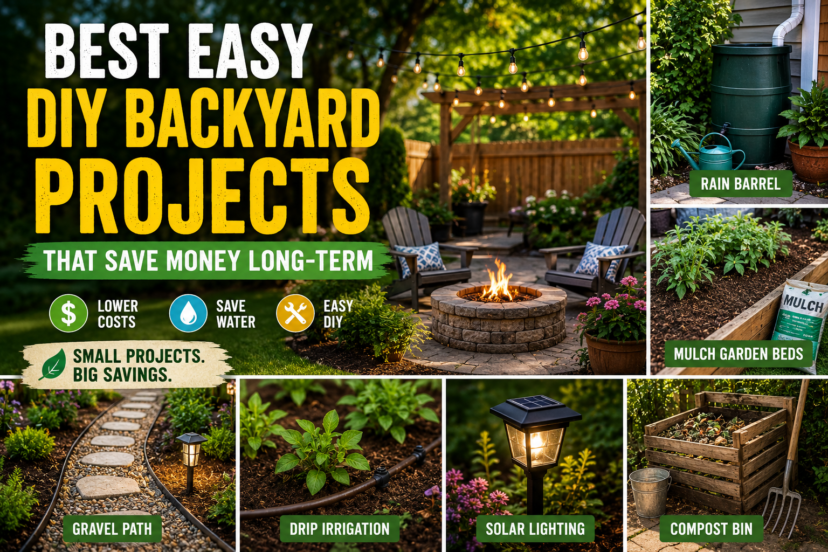
The key is choosing projects that do more than simply look good on installation day. A layer of mulch can reduce weeds and help soil retain moisture. A simple drip irrigation setup can put water where plants actually need it. Solar lighting can illuminate paths without adding outdoor wiring or regular electricity use.
These aren’t complicated contractor-level projects. Many can be completed over a weekend with basic tools and materials from a home improvement or garden center.
By focusing on practical improvements with long-term benefits, you can build a backyard that costs less to maintain and requires less work—without becoming a landscaping expert.
🛠️ Quick Answer: Best DIY Backyard Projects
The best DIY backyard projects for long-term savings improve water efficiency, reduce routine maintenance, prevent property damage, or eliminate recurring energy costs. Good examples include installing drip irrigation, adding mulch, creating simple gravel paths, improving drainage, collecting rainwater where permitted, adding solar lighting, and replacing difficult lawn areas with lower-maintenance landscaping. Start with the problem that currently costs you the most time or money, then make one practical improvement at a time.
Key Takeaways
- Most likely cause: High backyard costs often come from excessive watering, lawn maintenance, inefficient irrigation, poor drainage, and outdoor features that require constant upkeep.
- Usually serious? Not usually, but neglected drainage, irrigation leaks, erosion, and deteriorating structures can eventually become expensive problems.
- First thing to check: Look at where you currently spend the most money or time—watering, mowing, repairs, weeding, lighting, or maintenance.
- Best solution: Choose DIY backyard projects that solve recurring problems instead of adding features that create more maintenance.
💰 Why Money-Saving Backyard Projects Make Sense
Backyard improvements are often treated as cosmetic upgrades. But the right project can change the ongoing cost of maintaining your property.
Consider a thirsty section of lawn that constantly needs irrigation. Replacing part of it with native or climate-appropriate plants may require an upfront investment, but it can reduce future watering and mowing.
The same principle applies to irrigation leaks, bare soil, muddy walkways, poor drainage, and inefficient outdoor lighting.
Think in terms of lifetime cost, not just purchase price.
Before starting a project, ask three questions:
- Will It Reduce A Recurring Expense?
- Will It Reduce Future Maintenance?
- Will It Prevent A More Expensive Problem?
If the answer is yes, the project may deliver value long after the weekend you install it.
🌿 12 Easy DIY Backyard Projects That Can Save Money
1. Install A Simple Drip Irrigation System
Traditional sprinklers can water sidewalks, fences, and bare areas along with your plants.
Drip irrigation delivers water more directly to the root zone.
Basic DIY kits are available at U.S. home improvement and garden stores and typically include tubing, fittings, and emitters.
Drip irrigation works especially well for:
- Vegetable gardens
- Raised beds
- Shrubs
- Foundation plantings
- Flower beds
Check the system periodically for clogged or damaged emitters and adjust it as plants mature.
Long-Term Benefit: More targeted irrigation can reduce unnecessary water use and make watering easier.
2. Add Mulch To Garden Beds
Few DIY backyard projects are as simple or versatile as applying mulch.
Organic mulch can help suppress weeds, moderate soil temperatures, reduce surface evaporation, and gradually contribute organic material as it breaks down.
Common options include shredded bark, wood chips, pine straw, and shredded leaves.
A layer around 2–3 inches deep works well in many landscape beds, depending on the mulch and plants. Keep mulch away from tree trunks and plant stems instead of creating thick “mulch volcanoes.”
Long-Term Benefit: Less weeding, potentially less frequent watering, and improved garden appearance.
3. Build A Gravel Garden Path
Constantly walking across grass can create compacted soil, mud, and worn patches.
A simple gravel pathway creates a defined walking surface without the cost or complexity of a poured concrete walkway.
For better results, prepare the base carefully and use appropriate edging. Depending on your soil and intended use, a compacted base material may improve stability.
Choose gravel that suits pedestrian traffic rather than selecting material based only on appearance.
Long-Term Benefit: Less muddy foot traffic and fewer damaged lawn areas.
4. Create A Rain Barrel System
A rain barrel can collect runoff from a downspout for later landscape watering where local rules allow it.
Collected rainwater can be useful for ornamental gardens and other appropriate outdoor uses.
Before installing one, check local regulations and make sure the barrel has a secure lid or screen, a stable base, controlled overflow, and a mosquito-resistant design.
Overflow should always be directed safely away from the home’s foundation.
Long-Term Benefit: Captures a free water source while reducing some dependence on municipal water for appropriate garden uses.
5. Replace Difficult Lawn Areas
You don’t have to remove your entire lawn.
Instead, look for the areas that cause the most trouble.
A narrow strip beside a driveway, steep slope, deeply shaded corner, or awkward patch behind a shed may require more mowing and watering than it is worth.
Consider replacing these problem areas with:
- Native plants
- Climate-appropriate groundcovers
- Mulched planting beds
- Gravel
- Stepping stones
- Other permeable landscape surfaces
Long-Term Benefit: Less mowing, trimming, watering, and frustration.
6. Add Solar Backyard Lighting
Running electrical cable to every pathway or garden feature can become expensive.
Solar lights offer a simple alternative for many decorative and low-level lighting needs.
They work well along paths, fences, gardens, and patio edges. Motion-activated solar fixtures can also provide brighter light near gates or sheds without operating at full brightness all night.
Place panels where they receive adequate direct sunlight.
Long-Term Benefit: Simple installation and no grid electricity use during normal solar operation.
7. Build A Basic Compost Area
Yard waste and suitable kitchen scraps can become useful material for the garden instead of being thrown away.
A simple compost bin or contained pile gives leaves, grass clippings, and appropriate food scraps time to decompose.
Finished compost can be used to improve garden soil and add organic matter.
Avoid adding meat, grease, pet waste, diseased plant material, or other inappropriate materials to a typical backyard compost system.
Long-Term Benefit: Less waste and a home-produced soil amendment.
8. Install A Soaker Hose
If a full drip irrigation system feels too complicated, a soaker hose can be a simpler option.
These hoses slowly release water along their length and work particularly well in some garden beds and rows.
Place the hose close to the plants you want to water and follow manufacturer recommendations for pressure and operating time.
Covering it appropriately with mulch can help reduce evaporation, but make sure you can still inspect the system for leaks or blockages.
Long-Term Benefit: Easier, more targeted watering with very little installation work.
9. Fix Minor Drainage Problems Early
Water flowing through the wrong part of your yard can wash away soil, create muddy patches, damage landscaping, and potentially contribute to larger drainage problems.
Small problems may sometimes be improved by:
- Redirecting appropriate downspout discharge
- Filling minor low spots correctly
- Improving soil coverage
- Using erosion-control planting
- Creating appropriate shallow drainage features
However, avoid simply moving water onto a neighbor’s property or toward a building.
Long-Term Benefit: Addressing manageable drainage problems early may prevent more expensive erosion and landscape damage.
10. Add A Garden Hose Timer
One forgotten sprinkler can waste a surprising amount of water.
An inexpensive hose timer automatically shuts off irrigation after a selected period.
More advanced timers can automate watering schedules, while basic mechanical models simply count down and turn the water off.
Either option can help homeowners who regularly forget that the sprinkler is running.
Long-Term Benefit: Less accidental overwatering and less time standing outside monitoring hoses.
11. Build A Simple Shade Feature
A more comfortable backyard is a backyard you’re more likely to use.
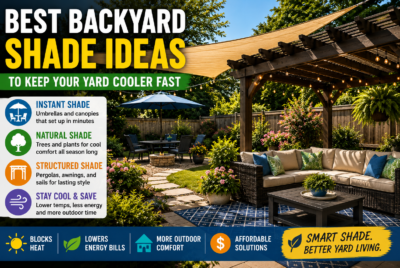
Instead of immediately investing in a major covered patio, consider simpler shade solutions such as an appropriately installed shade sail, umbrella, or pergola-style structure.
Keep safety in mind. Large shade sails can experience significant wind loads and need suitable structural attachment points.
Never attach major structures to fences, walls, or posts that were not designed to support the load.
Long-Term Benefit: More usable outdoor space during hot weather without necessarily building a full roofed structure.
12. Create A Low-Maintenance Planting Zone
One of the smartest DIY backyard projects is designing part of your landscape around plants suited to your local conditions.
Plants adapted to your region’s sunlight, temperature, soil, and typical rainfall are often easier to maintain once established.
Your local Cooperative Extension office can be an excellent resource for identifying suitable plants.
Group plants with similar water needs together. This practice, sometimes called hydrozoning, makes irrigation easier because you aren’t trying to keep drought-tolerant and moisture-loving plants happy with the same schedule.
Long-Term Benefit: Potentially less watering, plant replacement, and routine maintenance.
💧 Start With Projects That Reduce Water Costs
Outdoor irrigation can represent a significant portion of household water use in many parts of the United States, particularly during summer.
That makes water efficiency a practical place to begin.
Instead of automatically watering everything more, look for ways to make each gallon more useful.
Start with:
- Fixing irrigation leaks
- Adjusting sprinkler coverage
- Adding mulch
- Using drip irrigation
- Grouping plants by water needs
- Choosing climate-appropriate plants
- Watering according to weather and soil conditions
Also check for local watering restrictions, especially during drought conditions.
Some cities and water utilities may offer rebates for water-efficient irrigation equipment or landscape conversions. Programs vary widely, so check with your local utility before purchasing materials.
🔨 How To Choose The Right DIY Project
Don’t choose your next project based only on what looks impressive online.
Walk around your property and identify the recurring problem.
Maybe you spend every Saturday pulling weeds. Perhaps one garden bed constantly dries out. Maybe a downspout creates a muddy patch every time it rains.
Write down your three biggest backyard frustrations.
Then estimate:
- What the problem currently costs in money.
- How much time you spend dealing with it.
- What happens if you ignore it for several years.
- How much a DIY solution would cost.
- Whether the project is safely within your skill level.
This makes it easier to prioritize improvements that actually make your life easier.
♻️ Reuse Materials Without Creating Future Problems
Saving money doesn’t mean using unsuitable materials.
Reclaimed bricks can make attractive edging. Untreated logs may work in some landscape applications. Fallen leaves can become mulch or compost.
But be cautious with unknown lumber, old painted materials, broken construction debris, or anything that could introduce contaminants into vegetable gardens.
Reusing materials makes the most sense when the material is safe, durable, and appropriate for the job.
The cheapest project isn’t a bargain if you have to rebuild it next year.
🏡 Think About Maintenance Before You Build
A backyard feature can look fantastic when it’s new but become a burden if it needs constant cleaning, painting, watering, or repairs.
Before beginning any DIY backyard projects, ask yourself how the improvement will look five years from now.
Will it need annual staining?
Will weeds constantly grow through it?
Can replacement parts be purchased?
Will the plants outgrow the location?
Does it require more watering?
Projects that reduce future chores often provide more long-term value than elaborate features that create another maintenance task.
👷 When To Consult A Professional
DIY is excellent for manageable projects, but some backyard work deserves professional help.
Contact a qualified landscaper, irrigation specialist, electrician, plumber, arborist, or contractor when a project involves major drainage changes, large tree removal, retaining walls, significant excavation, household electrical wiring, plumbing modifications, structural construction, or anything that could affect the home’s foundation.
Permits and building requirements vary across the United States. Call 811 before digging where underground utilities may be present, and check local codes before constructing larger permanent features.
❓ FAQs About DIY Backyard Projects
What Are The Cheapest DIY Backyard Projects?
Mulching garden beds, composting, improving hose organization, adding simple solar lights, creating basic garden edging, and using inexpensive gravel or stepping stones can all be relatively affordable. Costs vary based on yard size and materials.
What Backyard Improvements Save The Most Money?
Projects that reduce recurring water, energy, lawn-care, and repair costs often provide the greatest savings. Efficient irrigation, mulch, climate-appropriate landscaping, and early drainage repairs are good places to start.
How Can I Improve My Backyard On A Small Budget?
Focus on one problem area at a time. Clean and repair existing features first, reuse safe materials where appropriate, add mulch, improve planting beds, and complete smaller projects gradually instead of attempting a complete renovation.
What Is The Easiest DIY Backyard Project For Beginners?
Mulching an existing garden bed is one of the easiest projects for beginners. It requires few tools and can quickly improve appearance while helping manage weeds and soil moisture.
How Can I Make My Backyard Low Maintenance?
Reduce difficult lawn areas, choose plants appropriate for your climate, use mulch, automate efficient irrigation, control weeds early, and avoid installing features that require frequent painting, cleaning, or repair.
Does DIY Landscaping Increase Home Value?
Attractive, functional landscaping may improve curb appeal and buyer perception, but the financial return varies by property, market, project quality, and location. Focus first on improvements that make the property functional and well-maintained.
Is It Cheaper To Landscape Your Backyard Yourself?
DIY landscaping can reduce labor costs for projects you can safely complete yourself. However, mistakes involving drainage, structures, utilities, or electrical systems can become expensive. Professional help may be the more economical choice for complicated work.
🎯 Conclusion: DIY Backyard Projects
The most valuable DIY backyard projects aren’t necessarily the biggest transformations.
They’re the improvements that quietly save you time, reduce unnecessary expenses, and make your outdoor space easier to enjoy year after year.
Start small. Fix an irrigation leak. Mulch one garden bed. Add a timer to a frequently used hose. Replace a frustrating patch of lawn. Create a compost area. Improve one muddy pathway.
Then move to the next problem.
A smarter backyard doesn’t have to be expensive, complicated, or magazine-perfect. It should work for the way you live.
When each project solves a real problem instead of adding another chore, your backyard gradually becomes easier and less expensive to maintain—and a much more enjoyable place to spend your time.
That’s better yard living: practical improvements today that continue paying you back tomorrow.
Disclaimer: This article provides general DIY and landscaping information. Project requirements, permits, utility locations, HOA rules, water restrictions, and building codes vary by location. Follow manufacturer safety instructions, call 811 before applicable digging projects, and hire qualified professionals for electrical, structural, major drainage, plumbing, or other work beyond your experience.
 Explore more:
- Best Solar Backyard Lights That Last All Night
- Garden Soil Dries Out Too Fast?
- Low Maintenance Backyard Ideas