
How To Fix A Soggy Lawn That Never Seems To Dry Out: 10 Smart Solutions

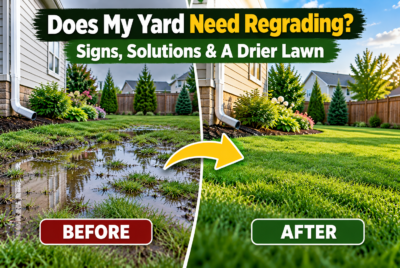
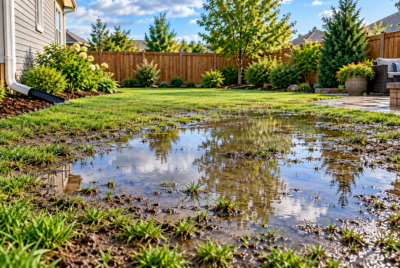
A lawn that stays wet for days can quickly turn your backyard from a relaxing outdoor space into a muddy area you avoid. If you are trying to figure out how to fix a soggy lawn, the smartest approach is to find out why the water is staying there before spending money on drains, soil, or landscaping.
Sometimes the solution is surprisingly simple. A clogged gutter, short downspout, compacted soil, excessive irrigation, or shallow low spot may be responsible. Other yards have heavier clay soil or grading problems that require a more targeted drainage solution.
Either way, you do not need to become a landscaping expert to make progress.
By watching how water moves across your property and starting with the lowest-cost fixes, you can gradually create a lawn that drains better, grows healthier grass, requires less maintenance, and gives you more usable outdoor space.
💧 Quick Answer: How To Fix A Soggy Lawn
To fix a soggy lawn, first identify where the excess water is coming from. Clean gutters, redirect downspouts, reduce unnecessary irrigation, aerate compacted soil, and correct small low spots. Compost topdressing may gradually improve heavy soil. For more serious drainage problems, a swale, rain garden, catch basin, or French drain may be appropriate if the water has a safe place to go.
Key Takeaways
Most likely cause: Poor grading, compacted or clay-heavy soil, low spots, roof runoff, or excessive irrigation prevents water from draining properly.
Usually serious? Not always. A temporarily wet lawn after heavy rain is normal, but standing water that repeatedly lasts for days can damage grass and signal a larger drainage problem.
First thing to check: Watch your lawn during rainfall and identify where the water originates, where it travels, and where it collects.
Best solution: When deciding how to fix a soggy lawn, correct the source first with downspout extensions, aeration, soil improvement, grading, or an appropriate drainage system.
🌧️ Why Does My Lawn Stay Soggy?
Healthy soil contains spaces that allow both water and air to move around plant roots.
Problems begin when rainfall or irrigation enters the lawn faster than the soil can absorb or release it.
Common reasons include:
- Heavy Clay Soil
- Compacted Ground
- Poor Yard Grading
- Low Spots
- Roof Runoff
- Blocked Drains
- Excessive Irrigation
- High Groundwater
- Runoff From Hard Surfaces
- Water From Neighboring Property
Before installing anything, spend time observing the problem.
Where the water comes from often tells you which solution will provide the best value.
🔍 1. Find The Source Before Trying To Dry The Lawn
The best time to diagnose a wet lawn is during or immediately after rainfall.
Walk around the property safely and observe the direction water travels.
Does it pour from a downspout? Run downhill from a driveway? Collect in one depression? Enter from a neighboring property?
Mark persistent puddles with landscape flags and take photos.
Then check the area again after 24 and 48 hours.
This simple investigation can save you from installing an expensive drainage system that addresses the wrong problem.
If the lawn stays wet even during an extended period without rain or irrigation, consider another source such as a leaking pipe, high groundwater, a septic issue, or an irrigation leak.
🌱 2. Core Aerate Compacted Soil
Compaction is one of the easiest problems to overlook when learning how to fix a soggy lawn.
Heavy mowers, foot traffic, pets, construction equipment, and repeated use can compress soil particles until water has difficulty soaking into the ground.
Core aeration removes small plugs of soil, creating channels where water, oxygen, and nutrients can move into the root zone.
It is particularly useful for lawns with clay-heavy soil.
When Should You Aerate?
Aerate while your grass is actively growing.
Cool-season grasses such as tall fescue and Kentucky bluegrass are commonly aerated during early fall or spring. Warm-season grasses such as Bermuda and Zoysia are generally aerated during their active late-spring or summer growth period.
Avoid running heavy equipment over extremely wet soil because that can cause additional compaction.
🍂 3. Topdress With Compost
After aerating, consider applying a thin layer of finished compost.
Organic matter can gradually improve soil structure and help create more pore spaces for water and air.
Some compost will fall into the aeration holes, where it can become incorporated into the root zone.
This is especially helpful for heavy clay soil.
Do not expect one compost application to transform the lawn immediately. Soil improvement is a gradual process.
Repeated light applications combined with aeration and healthy grass growth can produce better long-term results than trying to completely replace your soil.
And avoid assuming that adding a little sand will fix clay. Small amounts of sand mixed with clay may create an even denser soil structure.
🏠 4. Extend Your Downspouts
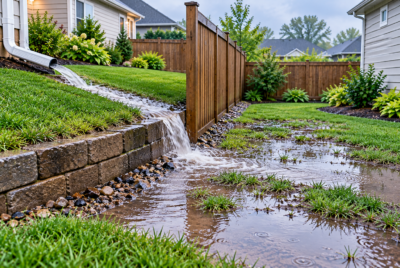
Your roof may be contributing far more water to the lawn than you realize.
One inch of rain falling on 1,000 square feet of roof represents roughly 623 gallons of water before accounting for losses.
Gutters concentrate that runoff into just a few downspouts.
If one empties into an already soggy section of lawn, the soil may never get enough time to dry.
A Simple Low-Cost Fix
Install an above-ground downspout extension and direct water toward a suitable drainage area.
More permanent systems may use solid underground pipe to carry roof runoff to an approved outlet.
Do not send the water toward your foundation, neighboring property, septic system, or another problem area.
💦 5. Correct Low Spots In The Lawn
If the same small area fills with water every time it rains, you may have a grading problem rather than a soil problem.
Water naturally travels downhill until it finds the lowest point.
Minor depressions can sometimes be improved through gradual topdressing with suitable soil.
Avoid burying healthy grass beneath several inches of new material at once. Light applications allow existing turf to grow through while slowly raising the surface.
Large depressions require more planning.
Changing your yard’s grade can redirect significant amounts of runoff, so major grading work is usually better evaluated by an experienced landscaper or drainage professional.
🚿 6. Check Your Irrigation System
Your sprinklers may be keeping an already wet lawn saturated.
Clay soil and shaded areas can retain moisture much longer than sunny, sandy sections of the yard.
Using the same watering schedule everywhere may result in overwatering.
Before irrigation runs, check the soil several inches below the surface.
If it is already moist, additional watering may not be necessary.
Also inspect the system for:
- Broken Sprinkler Heads
- Leaking Valves
- Underground Pipe Leaks
- Incorrect Spray Patterns
- Excessive Run Times
A rain sensor or smart irrigation controller can prevent watering immediately after significant rainfall.
🌿 7. Turn A Wet Area Into A Rain Garden
Not every wet part of the yard needs to become lawn.
Sometimes the smarter solution is to work with the water rather than constantly fighting it.
A rain garden is a shallow landscaped area designed to temporarily collect runoff and allow it to soak into the ground.
It can be planted with suitable grasses, shrubs, and flowering plants that tolerate changing moisture conditions.
A well-designed rain garden may:
- Reduce Standing Water
- Reduce Mowing
- Add Landscape Interest
- Support Pollinators
- Manage Roof Runoff
- Create Wildlife Habitat
Location matters. A rain garden should not create moisture problems near foundations, septic systems, utilities, or other sensitive areas.
🌊 8. Create A Swale For Surface Runoff
If water travels across your lawn in a predictable direction, a shallow swale may help.
A swale is a gently sloped landscape channel that directs or manages surface water.
It does not have to look like a drainage ditch.
Many residential swales are covered with turf, decorative stone, or vegetation so they blend naturally into the yard.
Swales can be especially useful for water moving from:
- Higher Parts Of The Property
- Driveways
- Patios
- Neighboring Slopes
- Large Lawn Areas
The important part is the destination.
Never redirect stormwater somewhere that creates erosion, flooding, or problems for another property.
🛠️ 9. Consider A French Drain For Persistent Wet Areas
When homeowners research how to fix a soggy lawn, French drains often appear as the default recommendation.
They can be effective—but only for the right problem.
A typical French drain uses perforated pipe surrounded by drainage stone to collect water and carry it toward an appropriate outlet.
They can be useful where subsurface water repeatedly saturates a particular area.
However, installing a French drain for a problem caused by a short downspout or simple low spot may waste money.
A French drain also needs sufficient design, slope, drainage material, and a legal discharge location.
Treat it as one tool, not the automatic answer to every wet lawn.
🌾 10. Choose Plants And Grass That Match Your Conditions
Sometimes homeowners spend years trying to grow grass in an area that simply isn’t well suited to turf.
Heavy shade, clay soil, low elevations, and seasonal moisture can make certain lawn areas difficult to maintain.
Instead of constantly reseeding, consider changing how you use the space.
Depending on your region, suitable options may include moisture-tolerant native plants, shrubs, ornamental grasses, groundcovers, or a landscaped rain garden.
Choosing plants adapted to local conditions can reduce watering, fertilizer use, mowing, and frustration.
For lawn areas you want to keep, choose turfgrass varieties appropriate for your climate, sun exposure, and soil conditions.
🏡 Best Order For Fixing A Soggy Lawn Without Wasting Money
You do not need to install every drainage solution.
A smarter approach is to work from simple and inexpensive fixes toward larger projects.
Try this order:
- Observe Water Flow: Determine exactly where the water originates.
- Clean Gutters And Drains: Remove obvious blockages.
- Redirect Downspouts: Stop concentrating roof runoff in wet areas.
- Adjust Irrigation: Eliminate unnecessary water.
- Aerate Compacted Soil: Improve infiltration.
- Topdress With Compost: Gradually improve soil structure.
- Correct Minor Low Spots: Prevent localized pooling.
- Consider Landscaping: Use rain gardens or suitable plants.
- Add Drainage If Necessary: Evaluate swales, catch basins, or French drains.
This order helps avoid paying for major construction when a much simpler fix may work.
🌎 Benefits Of Fixing A Constantly Wet Lawn
Learning how to fix a soggy lawn can improve more than the appearance of your grass.
Better drainage may give you:
- Less Mud Tracked Indoors
- Healthier Turf
- Fewer Bare Areas
- Easier Mowing
- More Usable Yard Space
- Less Soil Erosion
- Better Plant Growth
- Lower Maintenance
Removing unnecessary standing water can also reduce potential mosquito breeding areas.
Most importantly, you get an outdoor space you can actually use instead of waiting days for the ground to dry after every storm.
👷 When To Consult A Professional
Consider contacting a landscaper, drainage contractor, irrigation specialist, civil engineer, or other qualified professional when large sections of lawn remain saturated for days, water repeatedly approaches the house, erosion is occurring, or you suspect groundwater, plumbing, septic, or major grading problems.
Professional guidance is also valuable when a project requires extensive excavation or changes to stormwater flow.
Before digging, have underground utilities located. In much of the United States, calling 811 is the standard first step.
Local regulations may also limit where stormwater can be discharged.
❓ Frequently Asked Questions About Soggy Lawns
How Do You Fix A Soggy Lawn Quickly?
Start by stopping unnecessary water. Turn off irrigation, clear blocked drains, clean gutters, and extend downspouts away from wet areas. If compaction contributes to the problem, core aeration can improve infiltration, but long-term results depend on correcting the actual water source.
Why Is My Lawn Soggy When It Hasn’t Rained?
A lawn that remains wet without recent rain may have excessive irrigation, a broken sprinkler line, a plumbing leak, high groundwater, a septic problem, or another hidden source. Turn off irrigation temporarily and monitor the area. Persistent unexplained moisture should be investigated.
Does Aerating A Lawn Help With Standing Water?
Core aeration can help when compacted soil prevents water from infiltrating. It is particularly useful for heavy clay lawns. However, aeration cannot correct major grading problems, high groundwater, or large amounts of concentrated runoff.
What Can I Put On My Lawn To Absorb Water?
There is no practical material you can simply spread over a lawn to permanently absorb excess water. Compost can gradually improve soil structure, while plants may use some moisture. The real solution is improving infiltration, controlling runoff, or redirecting excess water appropriately.
Will Sand Help Dry Out A Soggy Lawn?
Adding a thin layer of sand is generally not a reliable solution for clay-heavy soil and may create a denser mixture. For most residential lawns, aeration combined with quality compost is a more practical strategy for gradual soil improvement.
What Is The Best Drainage For A Soggy Yard?
It depends on the cause. Downspout extensions work for roof runoff, swales handle surface flow, catch basins collect localized runoff, and French drains may help manage certain subsurface water problems. The best system is the one designed for the actual source of excess water.
Can A Soggy Lawn Damage My House?
A wet lawn far from the home may mainly cause turf and usability problems. Persistent water near the foundation is more concerning because it may contribute to basement or crawl space moisture, erosion, or other drainage-related problems.
🌿 Conclusion: Build A Lawn That Works With Water
Figuring out how to fix a soggy lawn becomes much easier when you stop treating the puddle as the problem and start looking for its source.
Watch where the rain travels. Check your gutters and downspouts. Look for low spots. Test whether your soil is compacted. Make sure your irrigation system isn’t adding water the lawn doesn’t need.
Then start with the simplest fix.
You may discover that a $20 downspout extension solves a problem you thought required thousands of dollars in drainage work. Or you may decide that turning a chronically wet corner into an attractive rain garden makes more sense than trying to force grass to grow there.
A smarter yard isn’t about spending more money. It’s about understanding how your property works and making practical improvements that reduce maintenance and frustration.
Solve the source, give water somewhere safe to go, and you’ll be one step closer to a healthier, easier, more enjoyable outdoor space.
Disclaimer: This article provides general home and yard improvement information. Soil conditions, drainage regulations, utility locations, septic requirements, and stormwater rules vary by region. Follow appropriate DIY safety practices and consult qualified local professionals when necessary.
Explore more:
- Why Is My Yard Still Wet Days After Rain?
- How To Improve Drainage In Clay Soil
- Why Is Water Pooling Next To House After Rain?

Comments are closed.