Why Is Water Pooling Next To House After Rain? 10 Common Causes And Smart Fixes
Easy Fix For the Pooling of Water Along Your House
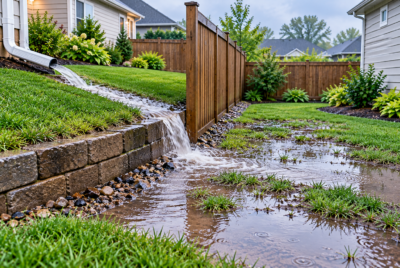
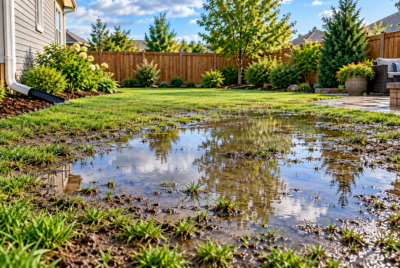
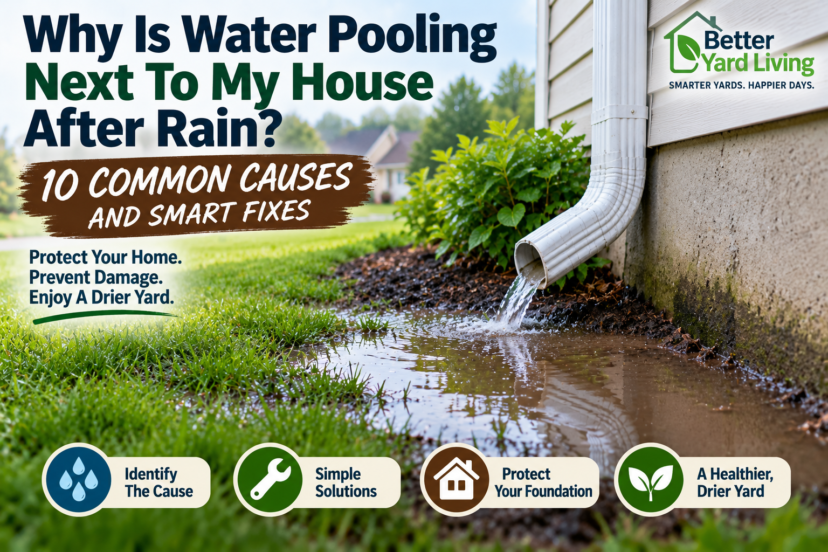
Seeing a puddle form beside your foundation after every storm can make any homeowner uneasy. If you’re asking why is water pooling next to house after rain, the problem usually comes down to grading, downspouts, compacted soil, blocked drainage, or too much runoff collecting in one place.
The good news is that not every puddle means you need an expensive drainage contractor or major excavation. In many cases, a few smart adjustments can move water away from your home, reduce muddy areas, and make your yard easier to maintain.
The key is to figure out where the water is coming from before spending money on a solution.
A yard that manages rain well is safer, cleaner, and easier to enjoy. By fixing the actual source instead of guessing, you can protect your home while creating a lower-stress outdoor space that works better in every season.
💧 Quick Answer: Why Is Water Pooling Next To House After Rain?
If you’re wondering why is water pooling next to house after rain, the most common causes are poor grading, short downspouts, clogged gutters, compacted soil, low spots, or drainage systems that are blocked or undersized. Start by watching where water flows during a storm. Extending downspouts, improving the slope away from the house, and correcting small depressions often solve the problem before more expensive drainage work is needed.
Key Takeaways
Most likely cause: Water is being directed toward the house by poor grading, roof runoff, or a low spot near the foundation.
Usually serious? Not always, but repeated pooling near a foundation deserves attention because persistent moisture can contribute to basement, crawl space, erosion, and foundation problems.
First thing to check: Inspect gutters, downspouts, soil slope, and low areas while it is raining or immediately afterward.
Best solution: When solving why is water pooling next to house after rain, start with simple fixes such as downspout extensions, gutter cleaning, soil regrading, and correcting low spots before installing major drainage systems.
🌧️ 1. Your Yard Slopes Toward The House
The ground around your home should generally encourage surface water to move away from the foundation.
If the soil settles over time, the slope may flatten or even reverse.
That creates a shallow basin where rainwater collects next to the house instead of flowing toward the lawn.
This often happens around newer homes after backfilled soil settles around the foundation.
Smart Fix
Minor grading problems may be improved by adding suitable soil and creating a gentle slope away from the home.
Make sure you maintain proper clearance below siding, stucco, weep holes, and other building materials.
Large grading changes are better handled by a professional because redirecting water incorrectly can create new drainage problems.
🏠 2. Your Downspouts End Too Close To The Foundation
Roof runoff is one of the biggest contributors to water pooling near homes.
A roof can collect hundreds or even thousands of gallons during a significant storm, and gutters concentrate that water into a few downspouts.
If a downspout releases water just a few inches from the foundation, the nearby soil may quickly become saturated.
This is one of the simplest things to check when asking why is water pooling next to house after rain.
Smart Fix
Install a downspout extension that carries water farther away from the house to a safe drainage area.
Options may include:
- Flexible Downspout Extensions
- Solid Drainpipe
- Splash Blocks
- Pop-Up Emitters
- Rain Gardens
- Surface Drainage Channels
The discharge point should not send water onto neighboring property or toward another structure.
🍂 3. Your Gutters Are Clogged
Clogged gutters can overflow during rain and dump large amounts of water directly beside the foundation.
Leaves, pine needles, roofing debris, seed pods, and dirt can block the system.
Watch your gutters during a moderate rainstorm.
If water is spilling over the front or back edge instead of flowing through the downspout, the gutters likely need attention.
Smart Fix
Clean gutters regularly and check that downspout openings are clear.
Homes surrounded by mature trees may require more frequent maintenance.
Gutter guards can reduce debris buildup, but they still need periodic inspection.
🌱 4. The Soil Around Your House Has Settled
Soil naturally settles over time, particularly around foundations where soil was disturbed during construction.
This settling may create a depression around the home.
Rainwater then moves into that lower area and stays there.
If you notice a shallow trench-like dip around part of the foundation, settling may be contributing to the problem.
Smart Fix
Small depressions can often be corrected with proper fill soil.
Add soil gradually and compact it lightly so it does not immediately wash or settle away.
Be careful not to cover siding, vents, drainage openings, or termite inspection zones where applicable.
🧱 5. Clay Soil Is Holding Water
Heavy clay soil drains much more slowly than sandy or loamy soil.
If your property has clay-heavy soil, water may sit near the house long after a storm ends.
Compaction makes the problem worse.
Areas around foundations are especially prone to compaction because of construction equipment, foot traffic, and disturbed soil.
Smart Fix
Improve surface drainage first.
Then consider core aeration, compost topdressing, and planting strategies in nearby lawn areas.
However, soil improvement alone will not fix water that is being actively directed toward the house by poor grading or downspouts.
💦 6. A Drainage Pipe Or Catch Basin Is Blocked
Many homes have existing drainage features such as:
- Catch Basins
- Channel Drains
- French Drains
- Underground Downspout Pipes
- Pop-Up Emitters
- Yard Drains
These systems can stop working when they fill with leaves, roots, soil, mulch, or other debris.
A blocked drain may cause water to back up right beside the house.
Smart Fix
Remove visible debris from grates and outlets.
Check whether water is moving through the system during rain.
If an underground pipe appears clogged, a drainage professional may be able to inspect or flush the line without replacing the entire system.
🛣️ 7. Your Driveway Or Patio Sends Water Toward The House
Concrete, asphalt, pavers, and other hard surfaces do not absorb rainwater.
Instead, they create runoff.
If a driveway, walkway, or patio slopes toward the house, large amounts of water may collect near the foundation.
This can become more noticeable after a patio extension or landscaping project.
Smart Fix
Depending on the situation, solutions may include:
- Channel Drains
- Surface Swales
- Permeable Pavers
- Regrading
- Drainage Channels
- Redirected Downspouts
Before adding another hardscape feature, always think about where rainwater will go afterward.
🌿 8. Landscaping Is Trapping Water
Landscape beds can accidentally create small dams.
Edging, raised beds, dense mulch, decorative stone, or landscape borders may block surface water that would otherwise drain away.
Mulch piled too high near the foundation can also hold moisture.
Smart Fix
Inspect landscape beds after rain.
Look for borders that stop water from flowing away from the house.
Adjust edging or soil elevations if necessary and keep mulch from being piled against siding or the foundation.
Sometimes removing a few inches of excess material is enough to restore normal drainage.
🌊 9. Water Is Running In From A Neighboring Property
If your property sits lower than nearby lots, water may naturally move toward your home.
This is especially common on sloped streets or in subdivisions where neighboring yards have different elevations.
Changes to a neighbor’s landscaping, driveway, patio, or retaining wall may also affect runoff patterns.
Smart Fix
Observe the property during rainfall before making assumptions.
If water is clearly entering from another property, a shallow swale, landscape berm, or other drainage solution may help redirect it.
Local stormwater rules vary, so significant changes should be planned carefully.
🚿 10. The Problem May Not Be Rainwater
If the area beside your house stays wet even during dry weather, another source may be involved.
Possible causes include:
- Irrigation Leaks
- Outdoor Faucet Leaks
- Plumbing Leaks
- Air Conditioner Condensate
- Sump Pump Discharge
- Septic Problems
- High Groundwater
This is important because fixing gutters will not solve a broken irrigation pipe.
Smart Fix
Turn off irrigation temporarily and watch whether the area begins to dry.
Check nearby plumbing fixtures and drainage outlets.
Persistent unexplained moisture may require a plumber, irrigation specialist, or other qualified professional.
🔍 How To Find The Source Of Water Pooling
The easiest way to diagnose drainage problems is to watch your yard while it is raining.
You do not need special equipment.
Look for:
- Where Water First Appears
- Which Direction It Flows
- Whether Gutters Overflow
- Where Downspouts Empty
- Whether Hard Surfaces Create Runoff
- Where Puddles Form
- How Long They Stay
Take photos during several storms.
Patterns become much easier to recognize when you compare them.
A garden hose can also help test specific areas when rainfall is not available, but avoid flooding the foundation intentionally.
🛠️ Best Low-Cost Fixes To Try First
Before spending thousands on drainage construction, start with the simplest reasonable solution.
Try this order:
- Clean Gutters: Make sure roof water can move freely.
- Extend Downspouts: Carry runoff farther from the foundation.
- Correct Small Low Spots: Restore a gentle slope away from the house.
- Clear Drainage Grates: Remove leaves and debris.
- Adjust Landscaping: Remove barriers that trap water.
- Check Irrigation: Make sure sprinklers and pipes are not adding excess water.
- Observe Again: See how the area performs during the next storm.
These steps solve a surprising number of drainage problems.
🌿 When A French Drain Might Help
A French drain can be useful when subsurface water repeatedly moves through a specific area.
It typically consists of perforated pipe surrounded by drainage stone.
Water enters the stone and pipe and is carried toward an appropriate outlet.
However, French drains are often installed unnecessarily.
If your problem is caused by a short downspout or poor grading, fixing that source is usually easier and cheaper.
Every drain also needs somewhere for the water to go.
Without a proper discharge point, even a well-built French drain may not solve the problem.
🏡 Why Fixing Foundation Drainage Is Worth It
Improving drainage beside your house does more than eliminate puddles.
It can also help:
- Reduce Mud
- Protect Landscaping
- Reduce Soil Erosion
- Keep Walkways Cleaner
- Reduce Basement Moisture Risk
- Make Outdoor Areas Easier To Use
- Reduce Long-Term Maintenance
That makes foundation drainage one of those yard improvements that may save both frustration and money.
The best drainage system is often the one you barely notice because it simply moves water where it needs to go.
👷 When To Consult A Professional
Call a landscaper, drainage contractor, foundation specialist, civil engineer, or other qualified professional if water repeatedly sits against the foundation, enters the basement or crawl space, causes erosion, or covers a large area for several days.
Professional help is also wise if major grading, excavation, retaining walls, or underground drainage systems are required.
If you plan to dig, contact the appropriate utility-location service first. In most of the United States, homeowners can call 811.
Local regulations may also control how stormwater can be redirected or discharged.
❓ Frequently Asked Questions
Is It Normal For Water To Pool Next To A House After Heavy Rain?
A small temporary puddle after an unusually heavy storm may not be serious. However, repeated pooling beside the foundation after normal rain usually indicates a drainage problem that should be investigated.
How Far Should Downspouts Drain Away From The House?
There is no single distance that works for every property. The goal is to discharge water far enough away that it continues moving away from the foundation rather than soaking back toward it. The correct distance depends on slope, soil, landscaping, and drainage conditions.
Can Water Pooling Damage My Foundation?
Persistent water near a foundation can contribute to soil movement, erosion, hydrostatic pressure, basement moisture, and crawl space dampness. The risk depends on foundation type, soil, drainage, climate, and how often pooling occurs.
Will Adding Dirt Around My House Stop Water Pooling?
Adding properly placed soil may help if settlement or poor grading is the cause. The soil should create a gentle slope away from the house without covering siding, vents, weep holes, or other important building features.
Is A French Drain The Best Solution For Water Near A Foundation?
Not always. French drains can help with certain subsurface drainage problems, but downspout extensions, gutter repairs, or regrading may be simpler and less expensive when surface runoff is the real cause.
Why Does Water Pool On Only One Side Of My House?
One side may be lower, receive more roof runoff, have heavier clay soil, or be affected by a driveway, patio, neighboring property, or blocked drain. Observing the area during rain usually reveals the difference.
How Can I Keep Rainwater Away From My Foundation?
Keep gutters clean, extend downspouts, maintain positive grading away from the home, correct low spots, keep drains clear, and make sure patios and walkways do not direct runoff toward the foundation.
🎯 Conclusion: Fix The Water Source Before Spending Big
If you have been asking why is water pooling next to house after rain, start with the basics before assuming you need a major drainage system.
- Watch the water.
- Check the gutters.
- Look at the downspouts.
- Study the slope around the house.
Many drainage problems come from one simple issue that can be corrected without tearing up the entire yard.
When you manage water intelligently, your outdoor space becomes cleaner, easier to maintain, and less stressful. You also protect one of the most important parts of your property: the home itself.
A smarter yard does not fight every rainstorm. It gives the water a safe place to go.
That is one of the simplest ways to create better yard living.
Disclaimer: This article provides general home and yard improvement information. Drainage rules, building requirements, soil conditions, utility locations, and stormwater regulations vary by region. Use appropriate DIY safety practices and consult qualified local professionals when necessary.
Explore more:
- Outdoor Extension Cord Not Working After Rain?
- Why Is My Yard Still Wet Days After Rain?
- How To Improve Drainage In Clay Soil