How To Improve Drainage In Clay Soil Without Digging Up Your Yard
Effective Methods To Improve Clay Drainage
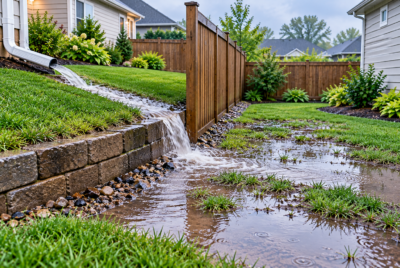
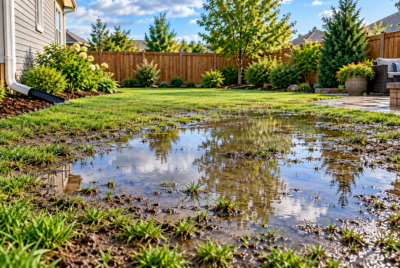
If every rainstorm leaves your lawn soggy, muddy, and difficult to enjoy, heavy clay soil may be the reason. The good news is that learning how to improve drainage in clay soil does not always mean digging trenches across your property or paying for an expensive drainage system.
Clay soil contains very fine particles that pack tightly together. That makes it excellent at holding nutrients and moisture, but it can also prevent water from soaking through quickly. The result may be puddles, soft ground, thinning grass, compacted areas, and landscaping that seems wet long after nearby yards have dried.
Fortunately, homeowners can often improve clay soil gradually with aeration, organic matter, smarter planting, better runoff control, and a few simple landscaping changes.
The goal is not to completely replace your soil. It is to help the soil work better so your yard becomes easier to maintain, less muddy, and more enjoyable without turning the entire property into a construction project.
💧 Quick Answer: How To Improve Drainage In Clay Soil
The best way to improve drainage in clay soil without digging up your yard is to reduce compaction, increase organic matter, and control where excess water enters the lawn. Core aeration, compost topdressing, mulch, deeper-rooted plants, downspout extensions, and correcting small low spots can gradually improve water movement. Avoid adding small amounts of sand to clay soil because the mixture may become even denser.
Key Takeaways
Most likely cause: Heavy clay particles combined with soil compaction prevent rainwater from moving through the ground quickly.
Usually serious? Not necessarily. Clay soil is common across the United States, and many drainage problems can be improved without replacing the soil or installing major drainage systems.
First thing to check: Determine whether your yard is wet because of clay soil alone or because downspouts, low spots, poor grading, or irrigation are adding more water than the soil can absorb.
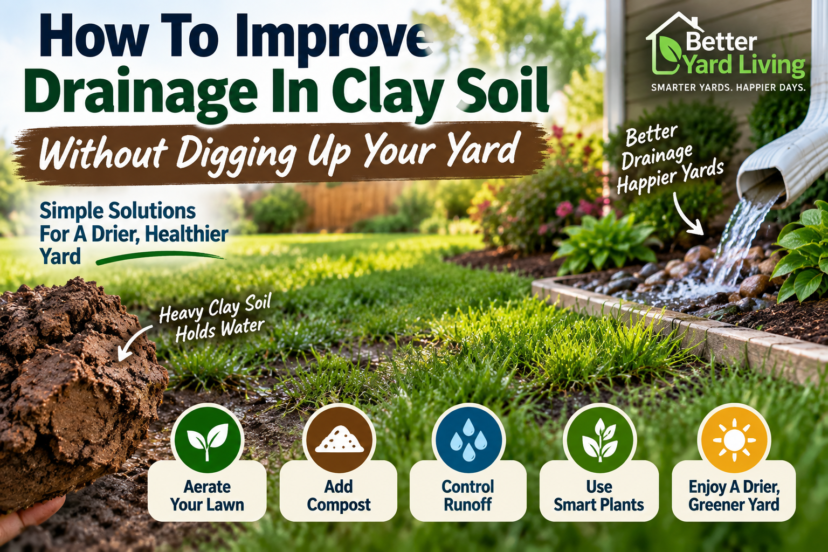
Best solution: When learning how to improve drainage in clay soil, start with core aeration, compost topdressing, runoff control, and gradual soil improvement before considering excavation.
🌧️ Why Clay Soil Drains So Slowly
Clay soil is made up of extremely small mineral particles.
Because those particles fit closely together, there is less open space for water and air to move through compared with sandy or loamy soil.
After heavy rain, the upper soil layers may become saturated. Water then drains slowly, which can leave lawns feeling soft or muddy for days.
Clay soil can become even more difficult to drain when it is compacted by:
- Heavy Mowers
- Repeated Foot Traffic
- Vehicles
- Construction Equipment
- Patio Installation
- Soil Settling
- Years Of Lawn Use
The problem is not that clay soil is automatically poor soil. In fact, clay often holds nutrients very well.
The smarter approach is to improve its structure rather than trying to remove it.
🌱 1. Core Aerate Your Lawn
Core aeration is one of the easiest ways to start improving drainage without tearing up the yard.
A core aerator removes small plugs of soil from the lawn. These openings allow water, air, and organic matter to move deeper into the root zone.
Aeration is especially useful when compacted clay soil feels hard even when slightly moist.
When To Aerate Clay Soil
The best timing depends on your grass type.
Cool-season lawns such as Kentucky bluegrass, tall fescue, and perennial ryegrass are commonly aerated during active growth in early fall or spring.
Warm-season lawns such as Bermuda, Zoysia, and St. Augustine are generally aerated during their active growing season in late spring or summer.
Avoid aerating extremely wet clay because heavy equipment can create additional compaction.
How Often Should Clay Soil Be Aerated?
A heavily compacted lawn may benefit from annual aeration. Less compacted lawns may need it less often.
Pay attention to how quickly rainfall disappears rather than following a rigid schedule.
🍂 2. Add Compost As A Topdressing
Organic matter is one of the best long-term tools for homeowners wondering how to improve drainage in clay soil.
Compost helps create better soil structure by encouraging clay particles to form larger aggregates. Over time, this creates more spaces where water and air can move.
You do not need to dig several inches of compost into the entire yard.
After aeration, spread a thin layer of quality finished compost across the lawn so some of it falls into the aeration holes.
For garden beds, compost can be added around existing plants and incorporated gently near the surface when practical.
Repeated small applications are often more realistic than attempting one massive soil renovation.
🚫 3. Avoid Adding Small Amounts Of Sand
A common recommendation is to add sand to clay soil.
That advice can create problems.
When small quantities of sand are mixed with large amounts of clay, the resulting soil may become extremely dense rather than loose and well-drained.
Improving clay soil generally requires large proportions of properly sized mineral material to significantly change its texture, making this approach impractical for most existing residential lawns.
For most homeowners, organic matter is the simpler choice.
Focus on:
- Finished Compost
- Leaf Mold
- Decomposed Organic Material
- Mulch In Planting Beds
These materials improve soil gradually while supporting soil organisms and plant roots.
🏠 4. Redirect Downspout Water
Sometimes clay soil gets blamed for a drainage problem that begins on the roof.
Your gutters can collect hundreds of gallons of water during a single storm and concentrate it into several downspouts.
If that water empties onto slow-draining clay soil, the ground may become saturated quickly.
Watch your downspouts during rainfall.
If water is flowing directly into the wettest part of your yard, consider extending the discharge farther away to a safe location.
Possible options include:
- Above-Ground Downspout Extensions
- Solid Underground Drainpipe
- Splash Blocks
- Rain Gardens
- Properly Designed Drainage Areas
Make sure runoff does not discharge onto a neighboring property or somewhere that creates erosion.
🌿 5. Use Mulch In Garden Beds
Bare clay soil can become hard and crusted after repeated rain and sun exposure.
Mulch protects the soil surface and helps support gradual soil improvement.
A layer of organic mulch can reduce surface sealing, moderate soil temperature, reduce evaporation, and feed soil organisms as it decomposes.
Good mulch choices may include shredded bark, wood chips, or other locally appropriate organic materials.
Avoid piling mulch against tree trunks, foundations, siding, or plant stems.
As mulch breaks down, it slowly adds organic material to the upper soil layer.
That can make beds easier to manage while also reducing weeds and maintenance.
🌼 6. Grow Deep-Rooted Plants
Plant roots are natural soil builders.
Deep and branching root systems create channels through compacted soil while adding organic matter as roots grow and die.
Instead of fighting every wet section of your property, consider using plants suited to your conditions.
Native grasses, shrubs, flowering perennials, and other regionally appropriate plants may tolerate heavier soils better than species that require excellent drainage.
A planting bed can sometimes turn a frustrating muddy area into an attractive landscape feature.
Before choosing plants, consider:
- Sun Exposure
- USDA Hardiness Zone
- Moisture Levels
- Mature Plant Size
- Local Soil Conditions
- Deer Or Wildlife Pressure
The goal is to choose plants that work with your yard rather than constantly trying to force the yard to support unsuitable plants.
🛠️ 7. Fix Small Low Spots Gradually
Clay soil often becomes especially wet in shallow depressions.
Even a small low spot can collect runoff from a large surrounding area.
If the depression is minor, it may be possible to gradually build the area up using suitable topsoil while maintaining healthy grass growth.
Avoid dumping several inches of soil over established turf at once.
Instead, light topdressing can slowly raise the grade.
For larger depressions, professional grading may be safer because changing elevations can redirect water toward buildings or neighboring properties.
🌦️ 8. Adjust Your Irrigation Schedule
Clay soil holds water longer than sandy soil.
That means an irrigation schedule designed for fast-draining ground may significantly overwater a clay lawn.
Frequent shallow watering keeps the upper soil constantly wet and can contribute to shallow roots.
Depending on your grass type, climate, and local watering restrictions, deeper and less frequent watering may be more appropriate.
A simple soil moisture check can help.
Push a screwdriver into the ground before running sprinklers. If the soil several inches below the surface is already moist, your lawn may not need additional water.
Smart irrigation controllers and rain sensors can also prevent sprinklers from running shortly after storms.
🌾 9. Overseed Thin Lawn Areas
Thin lawns are more vulnerable to compaction, erosion, and muddy conditions.
Healthy turf helps protect the soil surface while plant roots contribute organic matter and structure below ground.
If your climate and grass type allow overseeding, filling bare areas can support better long-term soil conditions.
However, do not simply seed a chronically waterlogged area and expect the problem to disappear.
Correct major drainage or compaction problems first.
Choose grass varieties that perform well in your region and growing conditions.
For example, a shady clay lawn may require a different grass strategy than a sunny lawn in the Southeast.
💦 10. Build A Rain Garden In A Naturally Wet Area
Sometimes the smartest answer to how to improve drainage in clay soil is not trying to make every square foot of the yard drain quickly.
Instead, create a designated area where water can temporarily collect.
A rain garden is a shallow landscaped depression planted with species that can tolerate occasional saturation.
It can capture runoff from roofs, patios, or lawns and allow that water to soak into the soil gradually.
Rain gardens can also:
- Reduce Lawn Area
- Add Color And Texture
- Support Pollinators
- Help Manage Runoff
- Reduce Mowing
- Improve Outdoor Appearance
Clay soil may require special design considerations because infiltration can be slow, so location and sizing matter.
Never place a rain garden where temporary standing water could threaten a foundation, septic system, utility, or other sensitive area.
🔍 How To Tell If Clay Soil Is Really The Problem
Before spending money, make sure the soil is actually causing the drainage issue.
Take a handful of slightly moist soil and squeeze it.
Clay-heavy soil often feels sticky and can be rolled into a ribbon or shape without immediately falling apart.
You can also observe drainage after rainfall.
If large parts of the yard drain slowly rather than one isolated location, clay soil or compaction may be contributing.
However, a single consistently wet area may point toward:
- A Low Spot
- A Broken Irrigation Line
- A Downspout
- A Drainage Blockage
- A Septic Issue
- Groundwater
- Neighboring Runoff
Correcting the wrong problem wastes money.
That is why observation should always come before excavation.
💡 Best Low-Cost Strategy For Improving Clay Soil
You do not need to solve everything in one weekend.
For many established lawns, a practical improvement plan looks like this:
- Redirect Excess Runoff: Fix downspouts and obvious water sources first.
- Core Aerate: Reduce compaction and open the soil.
- Topdress With Compost: Add a thin layer after aeration.
- Improve Bare Areas: Establish healthy grass or suitable plantings.
- Use Organic Mulch: Protect exposed soil in planting beds.
- Adjust Irrigation: Avoid adding water when clay soil is already moist.
- Repeat Gradually: Soil improvement takes time.
This approach is generally far cheaper and less disruptive than excavating the entire property.
🌎 Benefits Of Improving Clay Soil Drainage
Better drainage affects much more than puddles.
Improving soil structure may create a yard that is easier and cheaper to maintain.
Potential benefits include:
- Fewer Muddy Areas
- Healthier Plant Roots
- Better Lawn Growth
- Less Soil Compaction
- Reduced Runoff
- Easier Mowing
- Fewer Bare Spots
- More Usable Outdoor Space
Most importantly, you gain a yard that works with natural rainfall instead of constantly fighting it.
That can mean less maintenance, fewer emergency fixes, and more time actually enjoying your outdoor space.
👷 When To Consult A Professional
Call a qualified landscaper, drainage contractor, irrigation specialist, or other appropriate professional if large areas stay saturated for several days, water repeatedly reaches your foundation, significant erosion occurs, or you suspect groundwater, septic, plumbing, or major grading problems.
Professional help may also be worthwhile if the solution requires excavation, retaining walls, underground drains, or major changes to your property’s grade.
Before digging, contact the appropriate utility-location service. In most parts of the United States, homeowners can call 811 before excavation.
Local stormwater rules and drainage regulations may also affect where water can legally be discharged.
❓ Frequently Asked Questions About Improving Clay Soil Drainage
What Is The Fastest Way To Improve Clay Soil Drainage?
For an established lawn, start by correcting excessive runoff and core aerating compacted areas. Follow aeration with a light compost topdressing. This will not change clay soil overnight, but it can begin improving infiltration without major excavation.
What Can I Add To Clay Soil To Improve Drainage?
Finished compost and other stable organic matter are among the most practical amendments. They gradually improve soil structure, biological activity, and pore space. Avoid assuming that a small amount of sand will solve the problem.
Does Aerating Clay Soil Really Help Drainage?
Yes. Core aeration can improve drainage when compaction is limiting water movement. It creates temporary channels for water, oxygen, and organic matter while helping grass roots grow deeper.
How Often Should You Add Compost To Clay Soil?
Many homeowners apply a light compost topdressing once a year or as needed, particularly after aeration. The exact amount and frequency depend on lawn condition, existing soil, and turf type. Gradual improvement is usually better than burying established grass under a thick layer.
Can Clay Soil Ever Drain Well?
Yes. Clay soil can support healthy lawns and gardens when it has good structure, sufficient organic matter, active roots, and proper surface drainage. The goal is not to eliminate clay but to create more pathways for water and air.
Will Grass Grow Well In Clay Soil?
Many grass varieties can grow successfully in clay soil. Problems usually increase when clay becomes compacted, poorly graded, overwatered, or chronically saturated. Improving soil structure and choosing grass suited to your region can make a major difference.
Should I Install A French Drain In Clay Soil?
A French drain may help with certain subsurface drainage problems, but it should not automatically be the first solution. If the real issue is a downspout, shallow depression, overwatering, or surface grading, correcting that source may be cheaper and more effective.
🌿 Conclusion: Improve Your Clay Soil Without Rebuilding The Yard
Learning how to improve drainage in clay soil does not require becoming a soil scientist or tearing your backyard apart. Start with the simple things.
Redirect unnecessary runoff. Aerate compacted ground. Add compost gradually. Protect soil with mulch and plants. Adjust irrigation so you are not adding water your yard does not need.
Then give the soil time to respond.
Clay soil developed over thousands of years, so it will not transform in a weekend. But small, consistent improvements can make your yard noticeably easier to maintain and more enjoyable season after season.
The smartest yard is not necessarily the one with the most expensive drainage system. It is the one where water, soil, plants, and landscaping work together.
That means less mud, less frustration, lower maintenance costs, and more time enjoying the outdoor space you already have.
Disclaimer: This article provides general yard improvement information. Soil conditions, drainage regulations, irrigation requirements, utility locations, and landscaping rules vary by region. Follow appropriate DIY safety practices and consult qualified local professionals when needed.
 Explore more:
- Outdoor Extension Cord Not Working After Rain?
- Why Is My Yard Still Wet Days After Rain?
- Best Backyard Shade Ideas: 12 Smart Ways