
How To Stop Backyard Mud: 11 Smart Ways To Fix A Muddy Yard After Heavy Rain
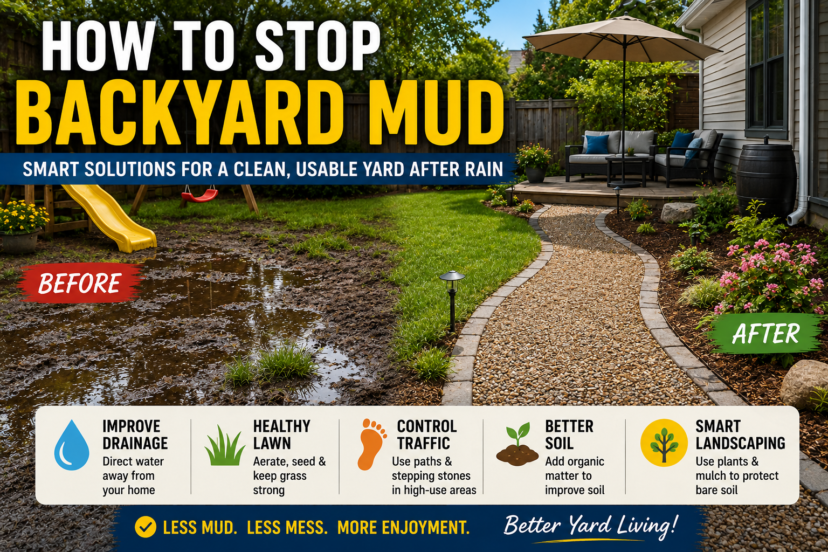
A backyard that turns into a muddy mess every time it rains can quickly become one of the most frustrating parts of owning a home. Mud gets tracked onto patios and floors, grass struggles to survive, pets tear up wet areas, and parts of the yard can become almost unusable. If you’re wondering how to stop backyard mud, the smartest approach is to figure out why the soil stays wet before covering the problem with gravel, mulch, or new sod.
Heavy rain isn’t always the real cause. Poor grading, compacted soil, roof runoff, foot traffic, shade, clay-heavy soil, and low spots can all prevent water from draining efficiently.
Fortunately, many muddy-yard problems can be improved without completely rebuilding your landscape. By controlling where water travels, protecting high-traffic areas, and improving soil conditions, you can create a cleaner, lower-maintenance backyard that recovers faster after storms.
💧 Quick Answer: How To Stop Backyard Mud
To stop backyard mud, first identify where excess water is coming from and why it isn’t draining. Check downspouts, low spots, soil compaction, grading, and worn high-traffic areas. Simple solutions may include redirecting roof runoff, aerating compacted lawn, adding appropriate groundcover, installing stepping stones or gravel paths, and improving bare soil. Persistent standing water may require regrading, a swale, catch basin, French drain, or professional drainage assessment.
Key Takeaways
- Most likely cause: Muddy yards are commonly caused by poor drainage, compacted soil, low spots, heavy foot traffic, roof runoff, or grass that cannot grow well.
- Usually serious? Usually not, but persistent standing water, erosion, or water collecting near the house can indicate a larger drainage issue.
- First thing to check: Observe your backyard during and immediately after rain to see where the water originates and where it collects.
- Best solution: If you’re deciding how to stop backyard mud, fix the water source first and then stabilize or improve the muddy surface.
🌧️ Why Your Backyard Gets So Muddy After Rain
Mud forms when soil receives more water than it can absorb or drain away.
Healthy soil contains spaces that allow both air and water to move through it. When soil becomes heavily compacted or saturated, water may remain near the surface.
Your yard’s slope also matters.
Water naturally moves downhill. If your property contains depressions or has been graded poorly, runoff can collect in certain locations.
Grass normally helps stabilize soil, but repeated foot traffic, pets, excessive shade, or prolonged saturation can thin the lawn. Once bare soil is exposed, the area becomes even muddier.
The solution depends on whether your problem is primarily caused by excess water, poor infiltration, erosion, traffic, or a combination of these factors.
🔍 11 Best Ways To Stop Backyard Mud
1. Find Where The Water Is Coming From
Before buying gravel or drainage pipe, wait for the next moderate rain and watch your yard.
Look for runoff coming from:
- Downspouts
- Patios
- Driveways
- Neighboring slopes
- Higher sections of lawn
- Sheds
- Walkways
You may discover that a muddy patch isn’t caused by rainfall landing directly on that area. Water could be traveling 30 feet across the property before collecting there.
Fixing the source is usually more effective than repeatedly repairing the muddy destination.
2. Redirect Downspout Water
Roof runoff can create a surprising amount of water.
A downspout that ends beside the lawn may repeatedly flood the same patch of grass.
An appropriate downspout extension may allow the water to discharge farther away in a safe location.
Make sure you don’t redirect water toward your foundation, neighboring property, sidewalks, or another area where it creates a new problem.
For more complicated situations, buried downspout drainage may be an option, but it must be properly designed with an appropriate outlet.
3. Fix Low Spots In The Lawn
If the surrounding lawn dries while one depression remains muddy, you may have a grading problem.
Small lawn depressions can sometimes be corrected gradually with appropriate soil and lawn repair methods.
Larger low areas require more planning.
Don’t simply dump soil into a puddle without considering where the displaced water will travel. The objective is to establish a safe drainage path, not push the problem toward your home or your neighbor’s yard.
4. Aerate Compacted Soil
Compaction is common in areas where children play, pets run, wheelbarrows travel, or people repeatedly walk.
Dense soil can limit water infiltration and make grass growth difficult.
Core aeration removes small plugs of soil and can improve some compacted lawns.
The best timing depends on your grass type and climate. Cool-season and warm-season lawns have different ideal maintenance periods.
Remember that aeration won’t fix a yard that is fundamentally graded incorrectly.
5. Create A Gravel Path Through High-Traffic Areas
Sometimes the problem isn’t drainage—it’s traffic.
If everyone walks the same route from the patio to the shed, gate, pool, or garden, grass may never survive there.
Instead of continually reseeding it, create a durable path.
Options include:
- Gravel
- Stepping stones
- Pavers
- Mulched pathways
- Permeable walkway systems
A properly constructed gravel path needs more than dumping loose stone onto mud. Base preparation and edging can significantly improve stability and longevity.
This is one of the most practical solutions when learning how to stop backyard mud in frequently used areas.
6. Use Mulch In Appropriate Landscape Areas
Mulch can protect bare soil from direct rainfall and reduce surface erosion.
It’s particularly useful in:
- Garden beds
- Around shrubs
- Under some established trees
- Low-traffic landscape zones
Wood chips and shredded bark are common choices.
However, mulch isn’t a complete drainage solution. If water regularly pools several inches deep, adding mulch may simply create wet mulch.
Correct serious drainage issues first.
7. Improve Thin Or Bare Lawn Areas
Healthy turf can help hold soil in place and reduce surface mud.
If grass repeatedly disappears, determine why before reseeding.
Possible causes include:
- Excessive shade
- Compacted soil
- Poor drainage
- Heavy pet traffic
- Incorrect grass species
- Excessive foot traffic
- Poor soil conditions
Choose grass adapted to your climate and site conditions.
Your local Cooperative Extension service can provide recommendations for turfgrass suited to your region of the United States.
If the area simply isn’t suitable for grass, consider another surface instead of repeatedly buying seed.
8. Build A Simple Drainage Swale
A swale is a shallow, broad depression designed to guide runoff through the landscape.
Unlike a narrow trench, a properly designed swale can blend naturally into a lawn or planted area.
Swales can sometimes move water away from persistently wet sections and toward an approved drainage location.
Slope and outlet location are critical.
Improperly designed swales can send water toward buildings or neighboring properties, so larger drainage changes are best planned with professional guidance.
9. Consider A French Drain
A French drain uses a perforated pipe and drainage aggregate to help collect and redirect water.
It can be effective in the right situation, but it isn’t a universal muddy-yard fix.
French drains require:
- Appropriate slope
- Correct pipe installation
- Suitable aggregate
- Proper filter material where needed
- A safe outlet
If your problem is simply a downspout dumping water into the lawn, a French drain may be unnecessarily complicated.
Identify the cause before digging.
10. Install A Catch Basin Where Runoff Concentrates
A catch basin can collect surface runoff at a low point and direct it into a drainage pipe.
These are commonly used where large amounts of water flow off patios, driveways, or landscape areas.
Like other drainage systems, the water needs somewhere legal and safe to discharge.
Never assume you can simply send stormwater into the street or onto another property. Local rules vary significantly.
11. Replace Impossible Lawn Areas With A Better Surface
Sometimes the smartest way to stop backyard mud is to stop trying to grow grass where grass doesn’t belong.
A deeply shaded side yard, heavily traveled dog run, or narrow passage may never maintain healthy turf.
Consider replacing problem lawn with an appropriate alternative:
- Gravel
- Pavers
- Mulch
- Stepping stones
- Shade-tolerant groundcover
- Permeable hardscape
You’re not giving up on the lawn. You’re designing the property around how it is actually used.
That usually means less maintenance and fewer repairs.
🐕 How To Fix A Muddy Backyard With Dogs
Dogs can turn a small drainage problem into a major mud problem simply by following the same routes every day.
Pay attention to their patterns.
You may notice worn trails along fences, around gates, or between the house and favorite play areas.
Instead of constantly reseeding those routes, consider creating intentional pathways using pet-appropriate materials.
Also, improve drainage where water collects and redirect downspouts away from heavily traveled zones.
Avoid using landscaping materials that may be harmful if chewed or swallowed. If you’re uncertain whether a mulch, plant, or treatment is safe for your pet, check with your veterinarian.
🌱 What Can You Put Over Mud In A Backyard?
If you need a quick surface improvement, several materials can help, but the right choice depends on the location.
Wood Chips: Useful in garden areas and some informal paths.
Gravel: Durable for properly prepared walkways and high-traffic zones.
Pavers: Good for permanent walking and seating surfaces.
Stepping Stones: Useful when you need access without building a complete pathway.
Groundcovers: Potential long-term solution for appropriate low-traffic areas.
Avoid covering deep, persistent standing water without addressing the drainage issue first.
A surface material can hide mud, but it cannot make excess water disappear.
🏡 Protect The Area Around Your House
Muddy areas farther out in the lawn are inconvenient. Water collecting against your home’s foundation deserves more attention.
Check that gutters and downspouts are functioning properly and that surface runoff moves away from the house.
Be cautious when changing soil elevations near siding, foundation vents, doors, and other building components.
If the backyard slopes toward your home or water regularly pools beside the foundation, consider having the grading and drainage evaluated professionally.
Preventing water problems near the house is generally much cheaper than dealing with moisture-related damage later.
💰 Cheapest Ways To Fix A Muddy Yard
If your budget is limited, start with changes that cost little or nothing.
Try this order:
- Observe Runoff During Rain: Free and extremely useful.
- Clean Gutters: Prevent unnecessary overflow.
- Adjust Downspouts: Move concentrated runoff where appropriate.
- Reduce Foot Traffic: Protect saturated lawn while it recovers.
- Aerate Compacted Areas: When appropriate for your soil and lawn.
- Repair Bare Spots: Once the underlying problem has been corrected.
- Add A Defined Path: Stabilize areas that will always receive heavy traffic.
Only move to more expensive drainage systems after confirming that simpler solutions aren’t enough.
♻️ Make Your Yard Handle Rain More Naturally
A resilient backyard doesn’t need to eliminate every puddle immediately after a storm.
Instead, it should manage runoff without creating long-lasting mud, erosion, or water problems around buildings.
Healthy soil, appropriate vegetation, permeable surfaces, and thoughtful grading can all help.
Rain gardens may also capture runoff in suitable areas, but they need proper sizing, soil conditions, plant selection, and placement away from structures where appropriate.
The smartest drainage solution often works with natural water movement rather than trying to force every drop underground.
👷 When To Consult A Professional
Contact a landscaper, drainage contractor, civil engineer, or other qualified professional when mud is caused by widespread standing water, severe erosion, major grading problems, runoff from neighboring properties, or water collecting near your home’s foundation.
Professional help is also recommended before installing large French drains, catch basins, retaining walls, or major grading changes.
Before digging, contact 811 as required to locate underground utilities. Check local stormwater regulations, permits, HOA requirements, and property drainage rules before redirecting runoff.
❓ FAQs About How To Stop Backyard Mud
What Is The Fastest Way To Fix A Muddy Backyard?
For immediate access, creating a temporary or permanent stabilized path can help keep people out of the mud. For a lasting fix, identify and correct the water source, such as a downspout, low spot, compacted soil, or drainage problem.
What Can I Put On My Yard To Stop Mud?
Depending on the location, gravel, wood chips, pavers, stepping stones, healthy turf, or suitable groundcovers can stabilize soil. Persistent standing water requires a drainage solution rather than simply another surface material.
Will Gravel Help A Muddy Yard?
Gravel can work well for properly designed paths and high-traffic areas, but dumping gravel directly onto deep mud often leads to sinking and mixing. Proper base preparation usually produces better results.
How Do I Fix A Muddy Yard Without Grass?
Consider mulch, gravel paths, permeable pavers, stepping stones, or climate-appropriate groundcovers. Choose the material based on drainage, traffic, sunlight, and how the area is used.
Why Is My Backyard Muddy Even When It Hasn’t Rained Recently?
Slow-draining soil, underground leaks, excessive irrigation, high groundwater, shade, or water coming from another part of the property may keep soil wet. Persistent unexplained moisture should be investigated.
Will Sand Fix A Muddy Lawn?
Simply spreading sand over muddy soil usually isn’t a reliable drainage solution. Adding inappropriate amounts of sand to clay-heavy soil can create poor soil conditions. Determine the soil and drainage problem before adding amendments.
How Do You Improve Drainage In A Backyard?
Start by correcting gutters and downspouts, low spots, compacted soil, and poor surface grading. More difficult problems may require swales, catch basins, French drains, or professional regrading.
🌿 Final Thoughts On How To Stop Backyard Mud
Figuring out how to stop backyard mud doesn’t mean you need to excavate the entire property or spend thousands of dollars on drainage equipment.
Start by watching the water.
Find where it comes from, where it travels, and why it stops.
You may discover that one short downspout is creating the whole problem. Perhaps everyone walks through the same patch of lawn. Maybe a low spot needs correction, or the soil has become heavily compacted.
Fix the cause first, then improve the surface.
That’s the difference between repeatedly covering mud and actually solving the problem.
A well-drained backyard is cleaner, easier to maintain, and far more enjoyable after a storm. With a few targeted improvements, you can spend less time dealing with muddy shoes and damaged grass and more time using your outdoor space.
That’s better yard living: practical solutions that reduce maintenance, prevent wasted money, and make your backyard work better in every season.
Disclaimer: This article provides general landscaping and yard-drainage information. Soil conditions, stormwater regulations, property grading, and local codes vary. Contact 811 before applicable digging and consult qualified professionals for significant drainage, excavation, grading, structural, or foundation-related concerns.
 Explore more:
- How To Keep Outdoor Furniture Cool
- Backyard Layout Ideas: 11 Smart Ways
- Standing Water Near House Foundation?



Comments are closed.