
How To Keep Outdoor Furniture Cool: 10 Easy Ways To Beat The Summer Heat
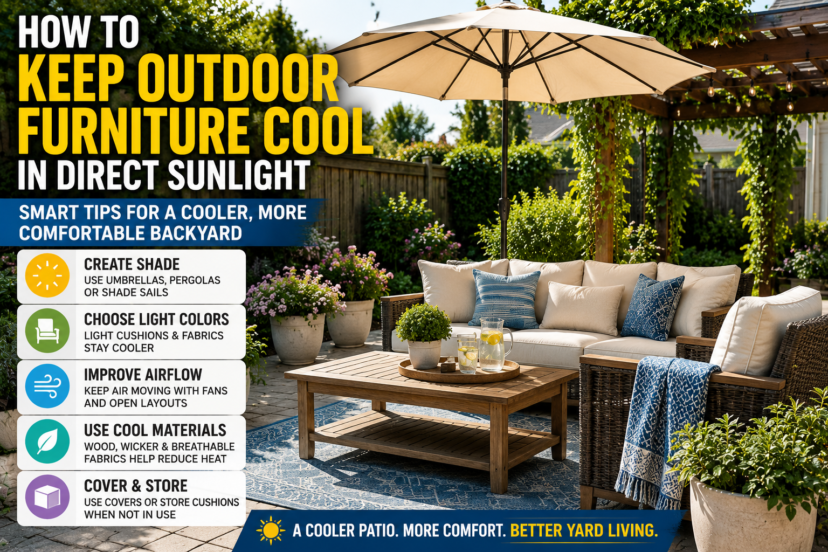
A beautiful patio isn’t very useful when the chairs are too hot to sit on. During a sunny U.S. summer, outdoor furniture can absorb a surprising amount of heat, especially when dark metal, plastic, or synthetic materials sit in direct afternoon sun. Learning how to keep outdoor furniture cool can make your patio, deck, or backyard seating area much more comfortable without requiring an expensive renovation.
The smartest solution usually isn’t one special cooling product. It’s reducing direct sunlight, choosing heat-friendly materials, improving airflow, and protecting the surfaces people actually touch.
A patio umbrella may solve most of the problem. In other yards, strategically moving furniture, adding breathable cushions, or installing a shade sail can make a dramatic difference.
With a few practical changes, you can spend less time avoiding your patio during hot afternoons and more time enjoying the outdoor space you’ve already paid for.
☀️ Quick Answer: How To Keep Outdoor Furniture Cool
The best way to keep outdoor furniture cool is to prevent direct sunlight from heating it in the first place. Position seating in afternoon shade or add an umbrella, pergola, awning, or properly installed shade sail. Light-colored cushions and breathable outdoor fabrics can also reduce heat buildup, while good airflow helps the seating area feel more comfortable. For the biggest improvement, prioritize shade over temporary cooling tricks.
Key Takeaways
- Most likely cause: Direct sunlight heats furniture surfaces, particularly darker materials and exposed metal.
- Usually serious? Usually not, but extremely hot surfaces can be uncomfortable and may become hot enough to pose a burn risk, particularly for children and pets.
- First thing to check: Observe where direct sun hits your furniture between noon and late afternoon.
- Best solution: If you’re wondering how to keep outdoor furniture cool, create reliable shade first, then improve airflow and use lighter, breathable materials where practical.
🔥 Why Outdoor Furniture Gets So Hot
Outdoor furniture heats up because it absorbs solar radiation.
When sunlight strikes a chair or table, some of that energy is reflected, and some is absorbed. The absorbed energy raises the surface temperature.
Material and color both influence how hot the surface can become.
Dark surfaces typically absorb more solar energy than lighter surfaces. Metal conducts heat efficiently, which is why an exposed metal armrest can feel particularly uncomfortable. Dark plastics and composite materials can also become very hot in strong sunlight.
Weather conditions make a difference too.
Outdoor furniture may become especially uncomfortable when there is:
- Intense direct sunlight
- High air temperature
- Little wind
- Dark upholstery
- Exposed metal surfaces
- Heat reflected from concrete or walls
A patio surrounded by masonry can feel hotter because concrete, brick, stone, and exterior walls can absorb heat and release it back into the surrounding area.
🌳 10 Ways To Keep Outdoor Furniture Cooler
You don’t have to rebuild your patio to make it more comfortable. Start with the easiest changes and add larger improvements only if needed.
1. Add A Patio Umbrella
A large umbrella is one of the simplest solutions for homeowners learning how to keep outdoor furniture cool.
Instead of trying to cool a chair after it becomes hot, the umbrella prevents much of the direct sunlight from reaching it.
Cantilever umbrellas are particularly useful over conversation areas because the support pole can remain off to the side rather than running through the center of the furniture.
Look for:
- Adequate coverage
- Outdoor-rated fabric
- A sturdy base
- Adjustable positioning
- Appropriate wind resistance
Always close umbrellas during strong winds and follow the manufacturer’s instructions for anchoring and use.
2. Move Furniture Away From Afternoon Sun
Before buying anything, observe your backyard for a day.
The hottest sunlight often hits outdoor living areas during the afternoon. A seating arrangement that feels comfortable at 9 a.m. may be fully exposed several hours later.
Look for natural shade from:
- The house
- Mature trees
- Covered porches
- Pergolas
- Fences
- Other structures
Moving the furniture even a few feet can sometimes create hours of additional shade.
That’s a free backyard improvement worth trying first.
3. Use Light-Colored Cushions
Color matters in strong sunlight.
Dark navy, charcoal, black, and deep brown fabrics can absorb more solar energy than lighter shades.
If your patio furniture is consistently uncomfortable, consider cushions in colors such as beige, cream, light gray, or other lighter tones.
You don’t necessarily need to replace the furniture itself. Changing cushions or adding lighter outdoor fabric covers may make the seating surface more comfortable while also refreshing the appearance of the patio.
Choose fabrics specifically designed for outdoor use so they can better handle sunlight and moisture.
4. Add A Shade Sail
Shade sails can cover larger seating areas without requiring a full patio roof.
They work well over:
- Dining tables
- Conversation areas
- Children’s play areas
- Small patios
- Poolside seating
However, shade sails experience significant wind loads.
Attachment points must be strong enough for the forces involved. Don’t attach a large sail to a weak fence post, decorative trim, or another structure that wasn’t designed to carry the load.
For larger installations, professional advice may be worthwhile.
5. Install A Pergola Or Covered Structure
If you use your patio frequently, permanent shade may provide better long-term value.
A pergola can reduce direct sun while creating a defined outdoor room. Depending on its design, you can add a canopy, shade fabric, or other appropriate cover for additional protection.
A covered patio provides even more consistent shade but requires a larger investment.
Before construction, check:
- Local building codes
- Permit requirements
- HOA rules
- Setback requirements
- Drainage
- Wind and structural loads
Permanent shade costs more initially, but it can make an outdoor space usable for a much larger part of the day.
6. Improve Airflow Around Your Seating Area
Shade helps control radiant heat from the sun, while airflow helps people feel more comfortable.
Avoid surrounding your seating area with dense barriers that completely block breezes.
If your patio is covered and has appropriate electrical service, an outdoor-rated ceiling or wall fan can improve comfort.
Portable outdoor-rated fans may also work in certain protected locations.
Always use electrical equipment according to its outdoor rating and keep cords and connections protected as required.
7. Use Breathable Outdoor Fabrics
Some seating surfaces trap more heat against your body than others.
Breathable fabrics and mesh-style furniture can allow more airflow than thick, non-breathable materials.
If you’re replacing cushions, look beyond appearance.
Consider:
- Breathability
- Drying speed
- UV resistance
- Ease of cleaning
- Resistance to mildew
- Cushion density
A cushion designed for outdoor conditions will generally perform better than indoor upholstery moved outside for the summer.
8. Keep Cushions Out Of The Sun When Not In Use
If cushions sit in direct sunlight for hours before you use them, they’ll already be hot when you arrive.
A deck box or other weather-appropriate storage area lets you keep removable cushions protected until they’re needed.
This can also help reduce unnecessary exposure to UV radiation, pollen, bird droppings, and moisture.
Make sure cushions are dry before placing them into enclosed storage to reduce the chance of mildew.
9. Reduce Heat Around The Patio
Sometimes the furniture isn’t the only problem.
A patio surrounded by concrete, gravel, brick, or dark hardscape can become a large heat-absorbing area.
You don’t need to remove the patio, but adding landscaping can make the space feel less exposed.
Consider:
- Container plants
- Landscape beds
- Strategically positioned shrubs
- Appropriate shade trees
- Pergola vines where suitable
Trees can provide excellent long-term shade, but species and placement matter. Avoid planting large trees where mature roots, branches, or size could interfere with foundations, utilities, patios, or roofs.
10. Cover Furniture Before The Hottest Part Of The Day
Outdoor furniture covers can block direct sunlight when furniture isn’t being used.
A cover won’t actively refrigerate the furniture, but preventing direct solar exposure can keep surfaces from heating as intensely.
Choose covers designed for outdoor furniture and ensure adequate ventilation so moisture isn’t trapped underneath.
This method can be especially helpful for dark metal or plastic furniture that becomes uncomfortable after several hours in the sun.
🌡️ Which Outdoor Furniture Materials Stay Cooler?
If you’re shopping for new furniture, material choice can make future summers easier.
Wood
Wood can be more comfortable to touch than exposed metal in direct sunlight, although surface temperatures still rise considerably.
Outdoor wood requires appropriate maintenance depending on the species and finish.
Metal
Aluminum and steel are durable and popular, but exposed surfaces can become very hot in direct sunlight.
Cushions and shade make a major difference.
Wicker And Resin Wicker
Woven outdoor furniture can allow some airflow, especially when combined with breathable cushions.
Dark resin wicker can still heat up in strong sun.
Plastic And Composite Furniture
These materials are low maintenance, but dark colors can become hot. Lighter colors may be more comfortable in sunny locations.
Whatever material you choose, shade remains one of the most effective solutions.
🏡 How To Design A Cooler Patio From The Start
Homeowners planning a new patio have an advantage: you can think about heat before buying furniture.
Observe how sunlight moves across the property during the day.
Then create zones.
Place the primary seating area where afternoon shade is available. Keep grills and heat-producing equipment away from the main relaxation area where practical. Use landscaping to create additional shade without blocking every breeze.
If your yard has no natural shade, include a shade structure in your project budget.
This approach is usually more effective than trying to correct an extremely hot patio after everything has been installed.
💰 Budget-Friendly Ways To Cool Outdoor Furniture
You don’t need to start with a $10,000 covered patio.
Try the lowest-cost solutions first:
- Move the Furniture: Use existing shade.
- Store Cushions: Keep them out of direct sun until needed.
- Add A Large Umbrella: Create targeted shade over the seating area.
- Switch Cushion Covers: Consider lighter outdoor fabrics.
- Add Container Plants: Soften exposed hardscape and improve the feel of the area.
- Improve Airflow: Use appropriate outdoor fans in suitable locations.
- Plan Permanent Shade Later: Upgrade only if simpler solutions aren’t enough.
This step-by-step approach helps you avoid spending money on a solution before understanding the actual problem.
🌿 Use Landscaping For Long-Term Shade
Landscaping can become part of your patio cooling strategy.
A properly positioned shade tree may eventually protect a large section of the yard from intense sunlight. Shrubs and other plants can soften heat-reflecting hardscape and make an outdoor space feel more comfortable.
Choose plants suited to your USDA Plant Hardiness Zone, local soil, available water, and mature planting space.
Remember that shade changes throughout the year. A deciduous tree can provide summer shade while allowing more sunlight through after its leaves fall.
Don’t plant trees solely based on how they look at the garden center. Consider mature height, canopy width, roots, overhead utilities, and distance from structures.
👷 When To Consult A Professional
Simple changes such as moving furniture, adding cushions, or using a properly secured patio umbrella are usually straightforward DIY projects.
Professional help is recommended when installing large shade sails, permanent pergolas, awnings, roof structures, ceiling fans, new outdoor electrical circuits, or large trees near buildings and utilities.
A contractor, electrician, landscaper, or arborist can help ensure the project is safe and appropriate for your property.
Check local permit requirements and HOA rules before installing permanent structures.
❓ Frequently Asked Questions
How Do I Keep Patio Furniture From Getting Hot In The Sun?
Shade is usually the most effective solution. Use an umbrella, awning, pergola, shade sail, or natural tree shade to prevent direct sunlight from heating furniture surfaces. Lighter cushions and breathable materials can provide additional comfort.
What Outdoor Furniture Material Stays Coolest In The Sun?
No common outdoor furniture material stays truly cool under intense direct sunlight. Wood and some woven materials may feel more comfortable than exposed metal, while lighter colors generally absorb less solar energy than dark surfaces. Shade is still the best strategy.
Does Black Outdoor Furniture Get Hotter?
Dark surfaces generally absorb more solar radiation than lighter surfaces, so black or dark-colored outdoor furniture can become particularly hot in direct sunlight.
How Can I Shade My Patio Cheaply?
A properly sized patio umbrella is one of the easiest budget-friendly options. Depending on your property, you may also be able to use existing shade from the house or trees simply by rearranging the furniture.
Do Outdoor Furniture Covers Keep Furniture Cool?
Covers can reduce direct solar exposure while furniture isn’t being used. They don’t actively cool furniture, but blocking sunlight can prevent surfaces from heating as intensely. Use ventilated covers designed for outdoor conditions.
Can You Leave Patio Cushions In Direct Sunlight?
Outdoor cushions are designed to tolerate exterior conditions better than indoor cushions, but repeated UV exposure can contribute to fading and material deterioration over time. Storing cushions when they aren’t needed may extend their useful life.
What Is The Best Way To Keep A Patio Cool In Summer?
Combine shade with airflow. Block direct afternoon sunlight using an umbrella, awning, pergola, trees, or another suitable shade source, then maintain good air circulation around the seating area. Reducing large exposed dark surfaces can also improve comfort.
🎯 Conclusion: How To Keep Outdoor Furniture Cool
Learning how to keep outdoor furniture cool doesn’t require expensive technology or a complete backyard renovation.
Start with the sun.
Watch where it falls during the hottest part of the afternoon and find a way to keep that direct sunlight off the surfaces you sit on and touch. Sometimes moving a chair is enough. Other times, a good umbrella, shade sail, pergola, or strategically planted tree provides a better long-term solution.
Then improve the details with lighter cushions, breathable fabrics, airflow, and smart storage.
The goal isn’t to fight summer heat with complicated equipment. It’s to design your outdoor space so that it naturally handles hot weather better.
A few thoughtful improvements can turn a patio you avoid during summer afternoons into a comfortable place for meals, conversations, and relaxing.
That’s better yard living: solving everyday outdoor problems in ways that save money, reduce frustration, and help you enjoy your property more.
Disclaimer: This article provides general outdoor living and DIY information. Surface temperatures, weather conditions, building requirements, and installation needs vary. Follow manufacturer instructions, check local codes and HOA requirements, and hire qualified professionals for structural, electrical, or other work beyond your experience.
 Explore more:
- Best Solar Backyard Lights That Last All Night
- Garden Soil Dries Out Too Fast?
- DIY Backyard Projects: 12 Easy Upgrades


Comments are closed.