Outdoor Extension Cord Not Working After Rain? 10 Reasons And Safe Ways To Fix It
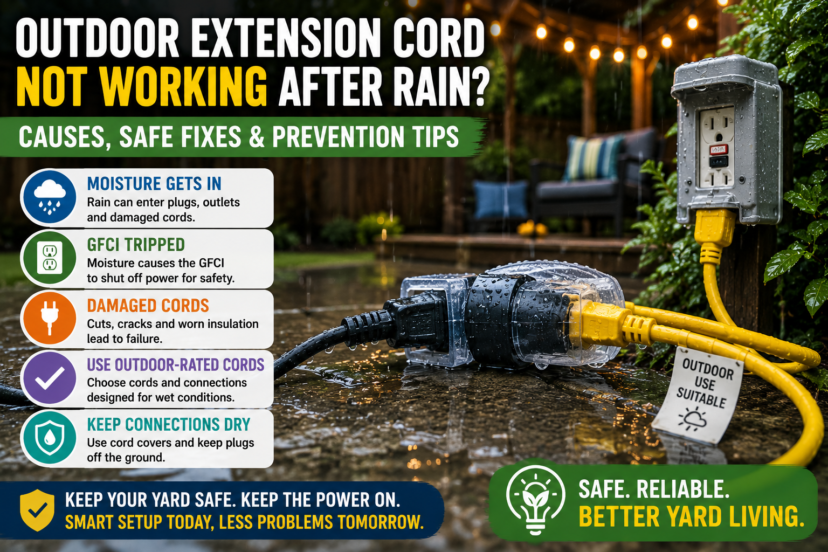
You plug in your patio lights, electric yard tool, or outdoor decorations and everything works perfectly—until it rains. Suddenly, the power disappears. If you have an outdoor extension cord not working after rain, moisture may have reached a connection, a GFCI may have tripped, or the cord itself may no longer be safe to use.
Outdoor electricity deserves more caution than many routine backyard problems. Rain, wet grass, sprinklers, damaged insulation, and exposed plug connections can create shock and fire hazards. The goal isn’t to keep resetting a circuit until the equipment works again. It’s to identify why the power stopped and make sure the setup is suitable for outdoor conditions.
Fortunately, many failures can be prevented through better cord selection, protected connections, proper outlet covers, and smarter placement. Understanding a few basic rules can help you create a safer outdoor power setup without wasting money replacing cords unnecessarily.
⚡ Quick Answer: Outdoor Extension Cord Not Working After Rain
If you have an outdoor extension cord not working after rain, unplug it if it can be done safely and don’t use wet or damaged electrical equipment. A GFCI may have tripped because moisture entered a plug connection, receptacle, or connected device. After everything is safely disconnected and dry, inspect the cord and equipment for damage. Repeated tripping, visible damage, burning smells, heat, or a wet electrical outlet should be evaluated by a qualified electrician rather than repeatedly reset.
Key Takeaways
- Most likely cause: Moisture reached an electrical connection or device and caused GFCI protection to trip.
- Usually serious? Potentially. Wet electrical connections and damaged outdoor cords can create shock or fire hazards and should not be ignored.
- First thing to check: From a safe, dry location, determine whether the outdoor GFCI or circuit protection has tripped, but don’t handle wet plugs or damaged electrical equipment.
- Best solution: If your outdoor extension cord not working after rain and the problem keeps returning, stop using the setup until the cord, outlet, connections, and equipment have been inspected and properly protected.
🌧️ Why Outdoor Extension Cords Fail In Wet Weather
An outdoor extension cord is designed to tolerate tougher conditions than an indoor cord, but that doesn’t make every connection waterproof.
The plug connection between two cords, for example, may still be exposed to moisture. The same is true where an extension cord connects to outdoor lighting or another appliance.
Water can also reveal damage that wasn’t obvious during dry weather.
A small crack in insulation, a deteriorated plug, a loose connection, or a damaged receptacle may cause trouble once moisture is present.
Modern outdoor receptacles are commonly protected by ground-fault circuit interrupters, or GFCIs. A GFCI is designed to interrupt power when it detects an imbalance that could indicate current traveling along an unintended path.
So when outdoor power disappears during rain, the safety system may be doing exactly what it was designed to do.
🔍 10 Reasons An Outdoor Extension Cord Stops Working After Rain
1. The GFCI Has Tripped
This is one of the first possibilities to consider.
Outdoor receptacles are commonly GFCI protected. The protection may be located at the outlet you’re using, another receptacle upstream, or in some installations at the electrical panel.
Moisture reaching a connection or device can cause the GFCI to trip.
What To Do: Safely disconnect the outdoor equipment and allow wet components to dry completely. If you’re uncertain about the condition of the outlet or equipment, don’t reset or reuse it until a qualified electrician has checked the problem.
Repeated GFCI trips indicate that something needs attention.
2. Water Got Into A Cord Connection
The cord itself may be outdoor-rated while the connection between two plugs remains vulnerable.
A plug-to-extension-cord connection lying in wet grass or sitting in a puddle is a poor setup.
Connections should be kept away from standing water and protected using equipment specifically designed for outdoor electrical connections.
Don’t improvise waterproofing using plastic grocery bags or other makeshift materials.
Outdoor-rated cord connection covers are inexpensive and designed specifically for this job.
3. You’re Using An Indoor Extension Cord Outdoors
Indoor cords are not designed for prolonged outdoor conditions.
An indoor cord may lack the jacket and construction required for exposure to moisture, sunlight, temperature changes, and abrasion.
Check the cord’s markings and packaging.
Use extension cords specifically identified by the manufacturer as suitable for outdoor use and appropriate for the equipment you’re powering.
If you can’t determine whether an old cord is outdoor-rated, replacing it with a clearly marked suitable cord is usually the safer choice.
4. The Cord Insulation Is Damaged
Extension cords get dragged across patios, pinched under doors, run over, stepped on, and wrapped tightly around storage hooks.
Eventually, the outer jacket can become damaged.
Inspect cords for:
- Cuts
- Cracks
- Exposed conductors
- Crushed areas
- Melted insulation
- Damaged plugs
- Loose blades
If you see significant damage, remove the cord from service.
Wrapping electrical tape around a badly damaged extension cord isn’t a good substitute for replacing it.
5. The Outdoor Outlet Is Wet
If the outdoor extension cord not working after rain problem occurs even with different cords, the receptacle itself may be involved.
Outdoor receptacles need appropriate weather protection.
A cracked cover, damaged gasket, loose box, or incorrectly installed cover may allow water to enter.
Don’t remove an outlet cover or disassemble a wet receptacle to investigate it yourself unless you’re qualified to perform electrical work.
Have a licensed electrician evaluate suspected water intrusion.
6. The Connected Device Got Wet
The extension cord isn’t always the problem.
Outdoor string lights, decorations, power tools, pumps, speakers, or other devices can develop moisture-related faults.
If a GFCI trips only when one particular device is connected, stop using that device until you determine whether it is suitable and safe for continued outdoor operation.
Never assume something is safe outdoors simply because it has been used outside before.
Check its manufacturer ratings and instructions.
7. The Plug Is Sitting On The Ground
Low connections are more likely to encounter puddles, irrigation water, wet leaves, and saturated soil.
Keep outdoor plug connections elevated and protected when practical.
However, don’t hang cords in a way that strains plugs or connections.
Use products designed to safely protect and support outdoor electrical connections.
Good placement is often one of the cheapest ways to prevent repeat wet-weather problems.
8. The Cord Is Undersized For The Equipment
Not every extension cord is suitable for every electrical load.
Long, light-duty cords can create voltage drop, while undersized cords may overheat when powering higher-demand equipment.
This is especially important with:
- Electric lawn mowers
- Leaf blowers
- Power tools
- Some pumps
- Other higher-wattage equipment
Use a cord gauge and length appropriate for the device according to its manufacturer instructions.
A cord that’s fine for small decorative lights may not be appropriate for a powerful yard tool.
9. The Outdoor Outlet Cover Is Inadequate
An outlet can have a cover yet still be poorly protected while something is plugged into it.
Depending on the installation and applicable code requirements, outdoor receptacles may need weather-resistant components and covers designed to protect them while in use.
If your outlet becomes exposed whenever a cord is plugged in, ask an electrician whether the installation has appropriate weather protection.
Don’t modify an electrical box yourself if you’re not qualified.
10. Water Has Revealed A Larger Electrical Problem
Sometimes rain doesn’t create the fault—it reveals one.
Damaged wiring, deteriorated exterior electrical components, improperly installed receptacles, or faults in connected equipment may only become noticeable during wet weather.
Warning signs include:
- Repeated breaker or GFCI trips
- Burning smells
- Buzzing
- Visible sparks
- Hot plugs
- Discolored receptacles
- Melted plastic
- Electrical shocks or tingling sensations
Stop using the circuit or equipment and contact a licensed electrician if you notice these symptoms.
🛠️ What To Do When An Outdoor Cord Stops Working After Rain
Electrical troubleshooting should always prioritize safety over convenience.
If conditions are wet, avoid touching electrical plugs, outlets, or equipment while standing on wet ground.
Once the situation is safe, use this basic approach:
- Stop Using The Equipment: Don’t keep attempting to power it.
- Disconnect It Safely: Only when you can do so without contacting wet electrical components or standing in wet conditions.
- Allow Components To Dry: Don’t immediately reconnect wet equipment.
- Inspect The Cord: Look for visible deterioration or damage.
- Check The Equipment Rating: Confirm that everything being used is intended for outdoor conditions.
- Identify GFCI Protection: Determine whether the circuit has tripped.
- Call An Electrician When Necessary: Especially if tripping repeats or water has entered electrical equipment.
Avoid bypassing or defeating GFCI protection just to keep outdoor equipment running.
☔ How To Keep Outdoor Extension Cord Connections Dry
Prevention is much easier than dealing with failed power every time a storm arrives.
Start by keeping connections out of low areas where water collects.
Use purpose-built outdoor connection covers where appropriate and arrange cords so water doesn’t naturally collect around the plug connection.
Other smart habits include:
- Use Outdoor-Rated Cords: Check manufacturer markings.
- Keep Connections Off Wet Ground: Avoid puddles and saturated grass.
- Use Appropriate Outdoor Receptacles: Have damaged installations repaired.
- Protect Connections: Use listed products intended for outdoor cord connections.
- Inspect Before Every Season: Replace damaged cords.
- Store Properly: Don’t leave temporary extension cords outside indefinitely unless the product and application specifically allow it.
Temporary extension cords generally shouldn’t become substitutes for permanent outdoor wiring.
🔌 Choose The Right Outdoor Extension Cord
When buying a cord, don’t select one based only on price or length.
Consider the equipment you’re powering.
Check:
- Outdoor-use rating
- Wire gauge
- Cord length
- Maximum electrical load
- Plug configuration
- Manufacturer instructions
Longer isn’t always better.
Using an unnecessarily long cord can create extra clutter and may increase voltage drop.
For frequently used equipment, consider whether a properly installed permanent outdoor receptacle would be safer and more convenient than regularly running a long extension cord across the yard.
🏡 A Permanent Outlet May Be Smarter Long-Term
If you constantly run an extension cord to the same patio, pergola, shed, or outdoor kitchen, it may be time to reconsider the setup.
Extension cords are useful for temporary power, but permanent outdoor living spaces often benefit from professionally installed receptacles.
A qualified electrician can evaluate the circuit, GFCI protection, weather-resistant components, outlet location, load requirements, and applicable electrical codes.
The upfront cost may be higher than buying another extension cord, but a properly designed installation can reduce clutter and make the outdoor area much easier to use.
⚠️ Mistakes To Avoid With Outdoor Extension Cords
Some shortcuts can create unnecessary risks.
Avoid:
- Using indoor-only cords outdoors
- Running damaged cords
- Leaving plug connections in puddles
- Bypassing GFCI protection
- Using undersized cords for high-load equipment
- Daisy-chaining multiple cords unnecessarily
- Using makeshift plastic bags as waterproof enclosures
- Running cords where vehicles can drive over them
- Pinching cords in doors or windows
- Treating extension cords as permanent household wiring
If a setup looks improvised, there’s often a safer way to accomplish the same goal.
👷 When To Consult A Professional
Contact a licensed electrician if outdoor GFCI protection repeatedly trips, an outlet has been exposed to significant water, you see corrosion or heat damage, breakers trip repeatedly, or you notice buzzing, sparks, burning odors, shocks, or other unusual electrical behavior.
Professional installation is also recommended when you need permanent power for a patio, outdoor kitchen, shed, pool area, pergola, or other frequently used outdoor space.
Electrical codes and installation requirements vary by jurisdiction and application. A qualified electrician can determine what your specific property requires.
❓ Frequently Asked Questions
Why Did My Outdoor Extension Cord Stop Working After It Rained?
Moisture may have reached a plug, outlet, cord, or connected device and caused GFCI protection to trip. A damaged cord or outdoor receptacle can also be responsible. Don’t continue using wet equipment until it has been safely disconnected, dried, and checked.
Can Outdoor Extension Cords Get Wet?
Outdoor-rated extension cords are designed for tougher exterior conditions than indoor cords, but that doesn’t mean every plug connection can safely sit in standing water. Follow the cord manufacturer’s instructions and keep connections properly protected.
How Do I Reset An Outdoor GFCI After Rain?
First, make sure the connected equipment has been safely disconnected and there is no obvious wet or damaged electrical equipment. Do not handle a wet outlet. If the GFCI won’t reset or trips again, contact a qualified electrician rather than repeatedly resetting it.
How Do I Protect Outdoor Extension Cord Connections From Rain?
Keep connections away from standing water and use outdoor-rated cord connection protection designed for the purpose. Make sure receptacles and connected devices are also properly rated and protected for outdoor use.
Why Does My GFCI Keep Tripping When It Rains?
Rain-related GFCI tripping can indicate moisture reaching an outlet, connection, cord, or electrical device. It may also reveal damaged outdoor wiring or equipment. Repeated tripping should be investigated rather than ignored.
Can I Leave An Outdoor Extension Cord Outside All Year?
An outdoor rating doesn’t automatically mean a cord should become permanent wiring. Check the manufacturer’s instructions for exposure and storage requirements. For power needed year-round in one location, professionally installed permanent wiring is often the better solution.
How Can I Tell If An Extension Cord Is Safe For Outdoor Use?
Look for manufacturer labeling or markings indicating that the cord is designed for outdoor use, and verify that its gauge, length, and electrical rating are appropriate for the equipment being powered. Don’t rely only on the cord’s color or thickness.
🎯 Conclusion: Outdoor Extension Cord Not Working After Rain
Finding an outdoor extension cord not working after rain can be frustrating, but don’t treat a loss of power as something you simply need to reset and forget.
Wet-weather failures can be an important warning.
Start by making the area safe. Don’t handle wet electrical connections while standing on wet ground, and don’t continue using damaged cords or equipment. Once conditions are safe, inspect the setup and determine whether the problem involves a wet connection, unsuitable cord, connected device, or GFCI protection.
Then think about prevention.
Outdoor-rated equipment, protected connections, sensible cord placement, and properly installed weather-resistant receptacles can make backyard power much more dependable.
And if you’re constantly running temporary cords to the same area, consider having permanent outdoor power installed correctly.
That’s better yard living: not just making your outdoor space more convenient, but creating systems that are safer, smarter, and easier to maintain.
Disclaimer: This article provides general outdoor electrical safety and home improvement information. Electricity can cause serious injury, fire, or death. Do not handle wet electrical components or attempt electrical repairs beyond your qualifications. Electrical codes and requirements vary by location. When in doubt, stop using the equipment and consult a licensed electrician.
 Explore more:
- How To Stop Backyard Mud: 11 Smart Ways
- Energy Efficient Backyard: 12 Smart Ways
- Best Backyard Shade Ideas: 12 Smart Ways